What a pallet grader actually looks at, and in what order
In short
Good grading is a fixed sequence, not an impression. A grader checks structure first, because a cracked stringer ends the decision immediately; then fasteners, because a protruding nail is a safety and quality issue regardless of everything else; then deck completeness, then contamination, then appearance. Appearance comes last because it is the one criterion that does not affect whether the pallet works.
Need help with this?
If this describes a need you have, put it in the message field. We pass your request to partner suppliers in our network, and a partner supplier follows up with a quote.
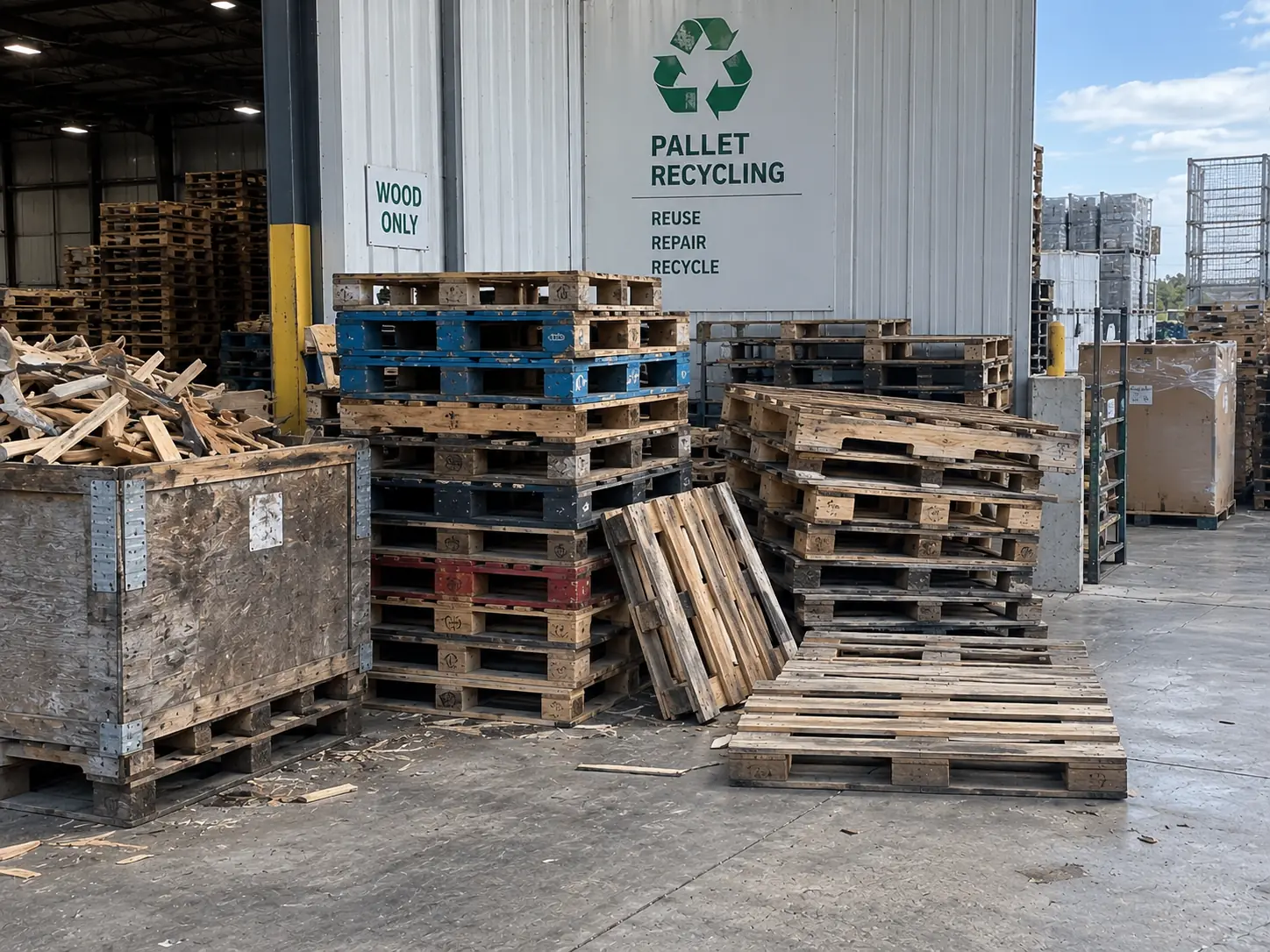
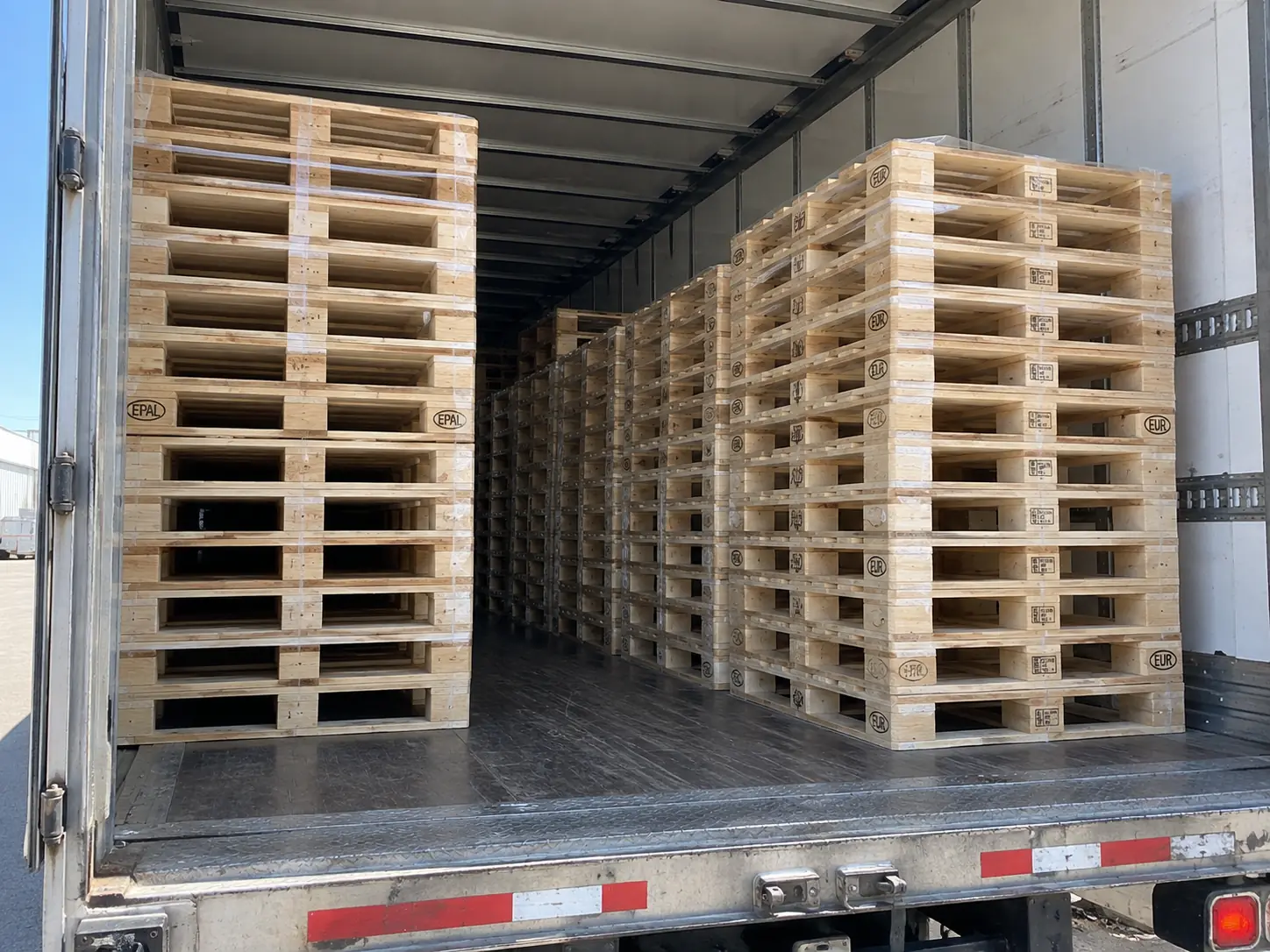
The sequence
- Stringers, both faces
The unit is turned once. A long crack, any through-split, or a previous companion or plate sends it to repair or dismantling. This check comes first because it can end the decision straight away.
- Fasteners
A hand runs across the top deck. Any nail head standing proud is a shiner, and a shiner is a rejection however good the rest of the pallet is. It scratches product, catches conveyors and cuts hands.
- Deck completeness
Board count, board width, gap width. A missing interior board is a repair; a missing lead board is a bigger repair because lead boards take the fork impact.
- Contamination
Staining, odor, residue, mold bloom, visible pest damage or exit holes. This is the check that protects everyone downstream, and graders are generally told to be conservative here.
- Appearance
Color uniformity, weathering, mixed species. This comes only now, and matters mainly to receivers who care how the load looks.
Why the order matters more than the criteria
Any competent grader knows what a bad pallet looks like. What separates a fast, consistent operation from a slow, inconsistent one is that the checks happen in a fixed order, so the decision ends as early as possible. Checking appearance first, which untrained graders naturally do because it is the most visible property, means every unit gets a full inspection whether or not it was already disqualified.
The second reason is drift. A sequence can be checked. If a lot goes out with shiners in it, the question is not "was somebody careless" but "did step two happen". That is a fixable question.
Writing the criteria down
Grade words are not standardized in a way that settles arguments. The practical fix, for a recycler or for a buyer writing receiving criteria, is to put the rejection criteria in writing. When criteria are written, they stop being remembered differently by different people on different days. A workable list looks like this.
- No cracked or split stringer on a load-bearing member beyond a stated length
- No protruding or shiner nails on any deck surface
- No metal plates
- No mold bloom, chemical staining, odor, pest damage or exit holes
- Deck gaps within about 3.5 inches for fork and conveyor compatibility
- Moisture below 19% for stock going to indoor storage or export
- A grade additionally: no plugs, no companion stringers, seven full-width top boards, uniform color
On speed
A few seconds per pallet sounds fast until you watch it. Much of the work is in the hands rather than the eyes: an experienced grader feels the top deck for shiners while looking at the stringer, so two checks happen at once. Learning that overlap takes time.
Variance matters more than speed. A grader slowing at the end of a shift is ordinary fatigue. Rejections drifting down when volume pressure rises is a process failure: the criteria are quietly bending. If quality matters to your application, inspect a sample of what arrives against your written criteria. It keeps everyone honest, and it is the only check a buyer directly controls.