Nine ways we move wood for you
In short
Pallets Recycle operates a complete pallet loop from one yard in Evendale: we buy your used pallets, haul them away on our own trucks, inspect and repair what can be saved, sell graded recycled stock back into the market, build to print when reuse will not do, and recover the last three percent as mulch and biomass. Most customers start with one service and end up with the whole loop, because that is where the money and the carbon actually are.
Which of these do you need?
Describe the problem rather than the service — piling up, running out, breaking too fast, costing too much — and we will tell you which part of the loop fixes it.
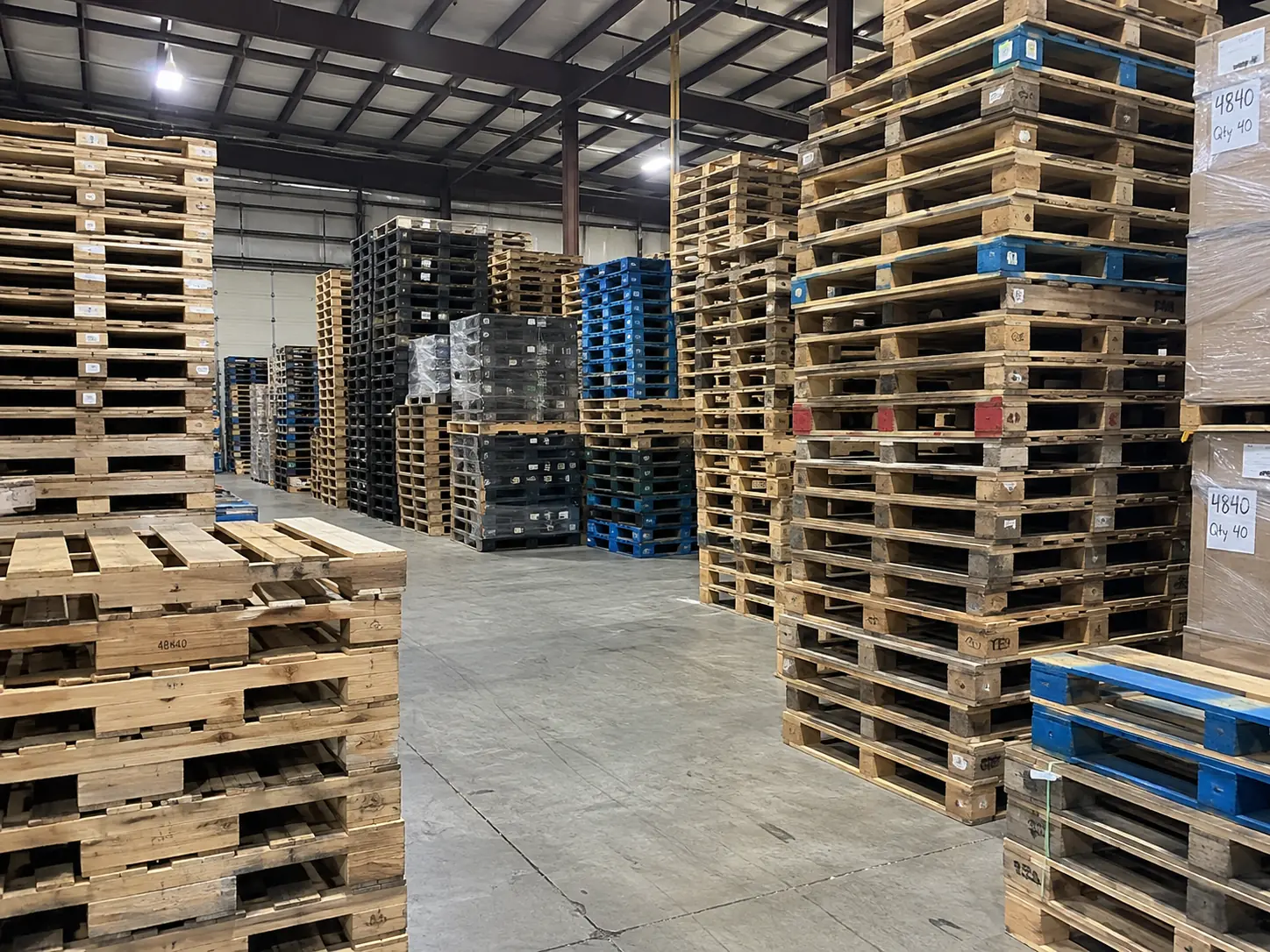
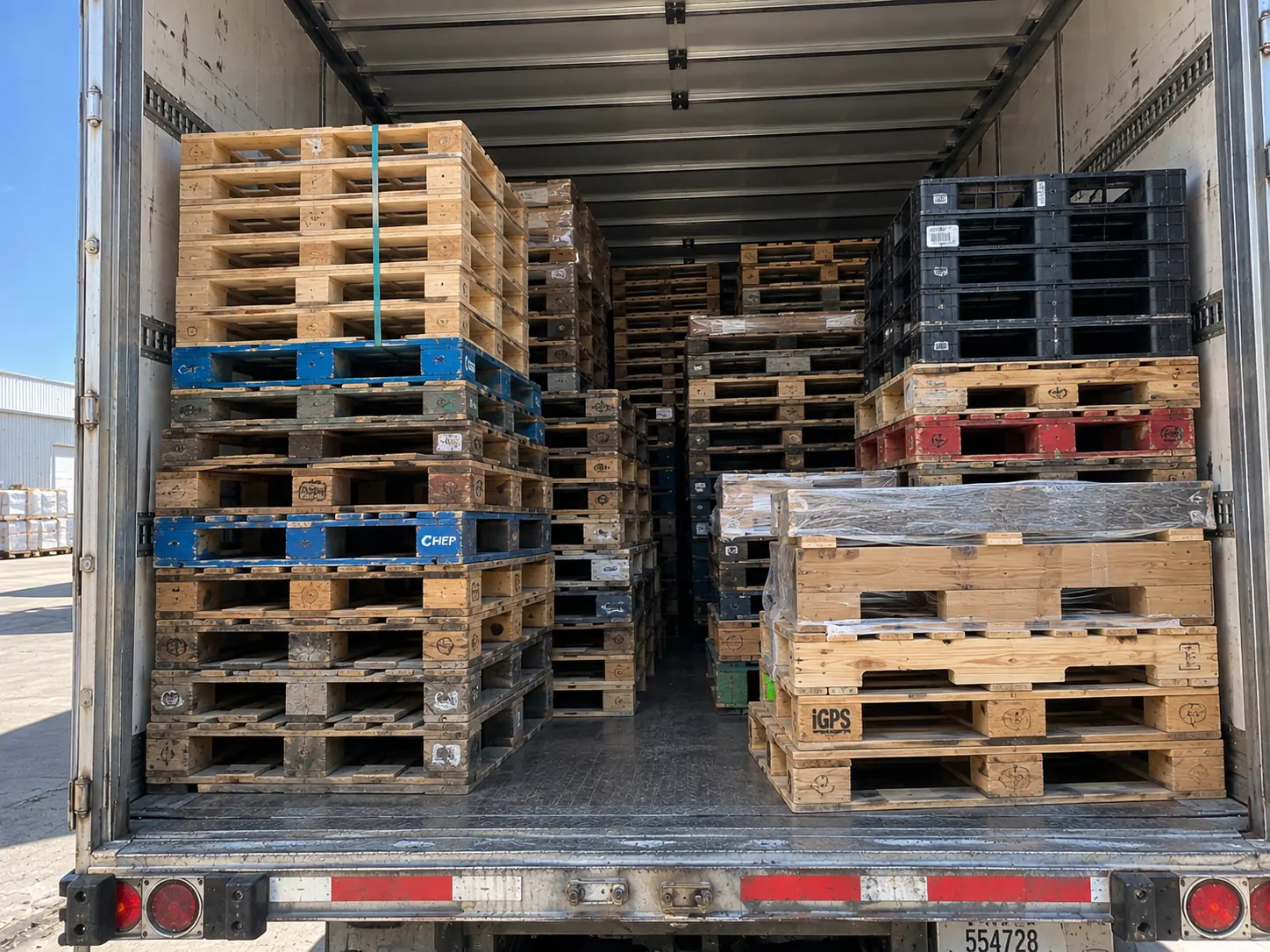
- 01Buy Used PalletsGraded recycled stock delivered by the trailer load, anywhere within 250 miles of Cincinnati.Open →
- 02Sell Us Your PalletsWe buy cores by the load, pay per piece and sweep your dock for free.Open →
- 03Pallet RecyclingZero-landfill dismantling, remanufacturing and fibre recovery for broken wood.Open →
- 04Pallet RepairBench repair and remanufacture back to GMA #1 and #2 specification.Open →
- 05Pallet RetrievalScheduled trailer swaps and on-call pickups that keep your dock doors clear.Open →
- 06Freight & LogisticsOur own dry vans and flatbeds, plus a vetted carrier bench for surge weeks.Open →
- 07Custom Pallet BuildsCut-to-print decks, skids and heavy-duty bases in runs from 25 to 25,000.Open →
- 08Pallet Management ProgramsOne vendor, one invoice, a fully closed loop across every plant you run.Open →
- 09Mulch & BiomassColoured landscape mulch, animal bedding and boiler fuel from the last 3%.Open →
Three common starting points
If pallets are piling up
- Sell Us Your Pallets
We buy the good ones and take the broken ones away free. - Pallet Retrieval
Scheduled routes and drop trailers that keep the dock clear. - Pallet Recycling
Zero-landfill processing with auditable diversion reporting.
If you need pallets
- Buy Used Pallets
Graded recycled stock, 24–72 hour lead time. - Custom Pallet Builds
Cut-to-print decks, skids and heavy-duty bases. - Pallet Repair
Bench and on-site repair back to #1 and #2 grade.
If you want it all handled
- Pallet Management Programs
One vendor, one invoice, a genuinely closed loop. - Freight & Logistics
Company equipment with round-trip routing. - Mulch & Biomass
What happens to the last three percent.
We will tell you when you do not need us
Over-specifying grade is the most expensive habit in pallet purchasing, and most suppliers are happy to let it continue.
If you are buying A grade for pallets that never leave your building, we will say so and quote you a #2. If a new build is genuinely the right answer for your load, we will quote a new build even though the recycled unit is easier for us to supply. Seventeen years of repeat customers came from exactly this and nothing else.
How grades actually workWhich service solves which problem
| The problem you actually have | The service | What changes |
|---|---|---|
| A pile behind the building that got raised in a safety meeting | Retrieval, or Sell Us Your Pallets | Free collection, and usually a payment rather than a charge |
| Running out on a Friday and paying spot rates on Monday | Buy Used Pallets on a standing schedule | Forecast-driven delivery; allocation priority in a tight quarter |
| Pallets breaking faster than they should | Pallet Repair, plus a specification review | Usually a fastener or stringer-count problem, not a grade problem |
| Paying to buy and paying to dispose, same month | Pallet Management | Core value netted against supply on one invoice |
| Product arriving damaged and the pallet getting blamed | Custom Builds | Overhang, deck gaps and point loads designed out |
| A container held at a foreign port | Heat-Treated ISPM-15 | Accredited treatment with a chamber log on file |
| Four vendors and nobody owning the loop | Pallet Management | One vendor, one invoice, one reporting line |
| Freight costing more than the pallets | Freight & Logistics, with round-trip pairing | One truck movement instead of two |
| A sustainability team asking for numbers you do not have | Pallet Recycling with reporting | Weighbridge-based monthly statements |
| Scrap wood you are paying somebody to take | Mulch & Biomass | The last 3% becomes a product rather than a cost |
What a first month with us actually looks like
- Week 1 — you write, we quote
Written, within one business day, with freight as a separate line and photographs of any reserved lot.
- Week 1 — access established
Eleven questions from the route coordinator, or two photographs that answer half of them.
- Week 2 — first movement
The right equipment for your site. Counted and signed jointly; weighbridge ticket issued.
- Week 2–3 — graded result
What your pallets actually were, by outcome stream. Most customers find this more interesting than they expect.
- Week 3 — cadence tuned
Trailer size, collection day and grade split adjusted against what actually happened rather than what was estimated.
- Week 4 — first statement
Tonnage by destination, diversion rate, estimated CO₂e, core credits applied. At no charge.