New Pallets
In short
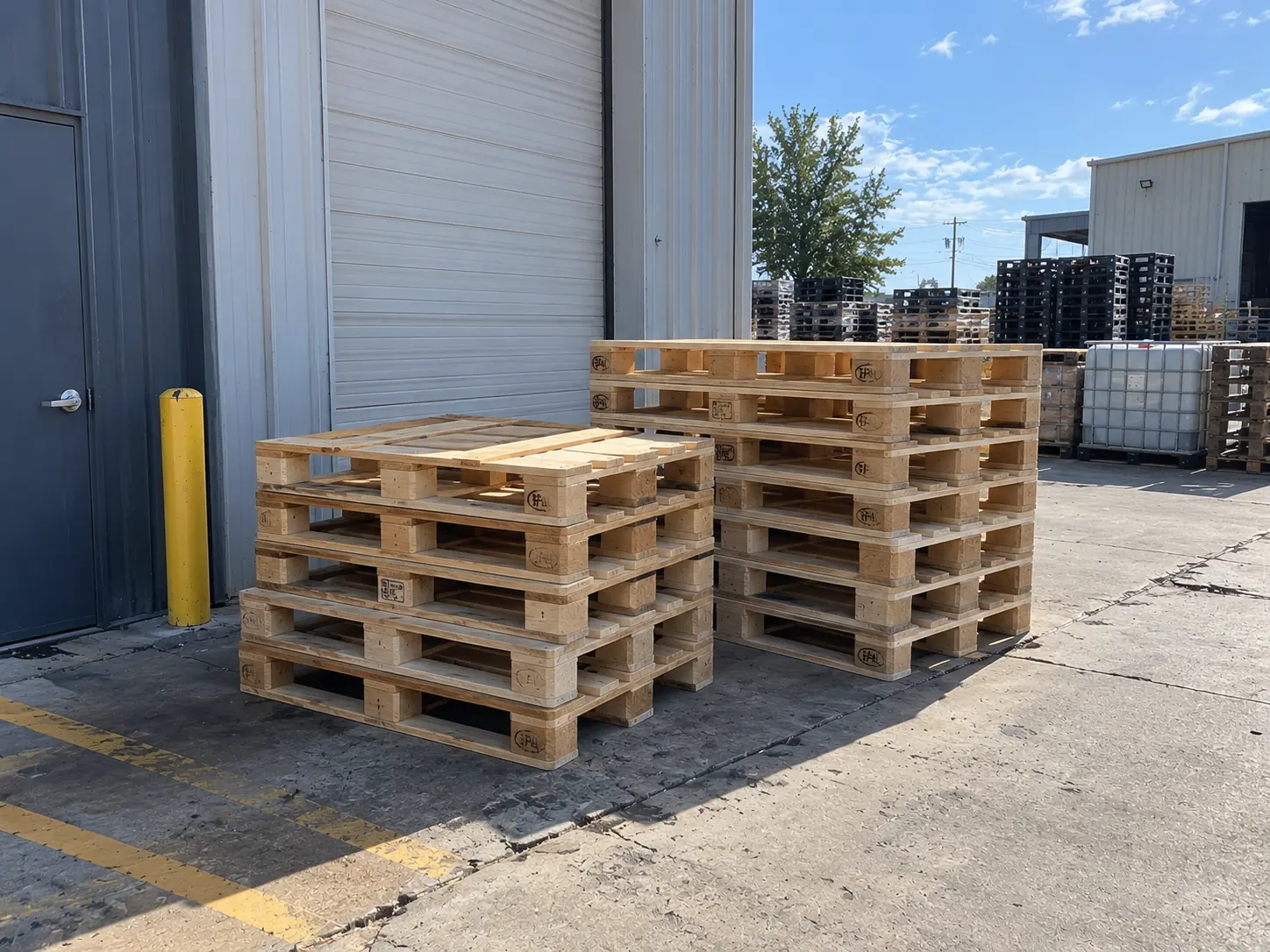
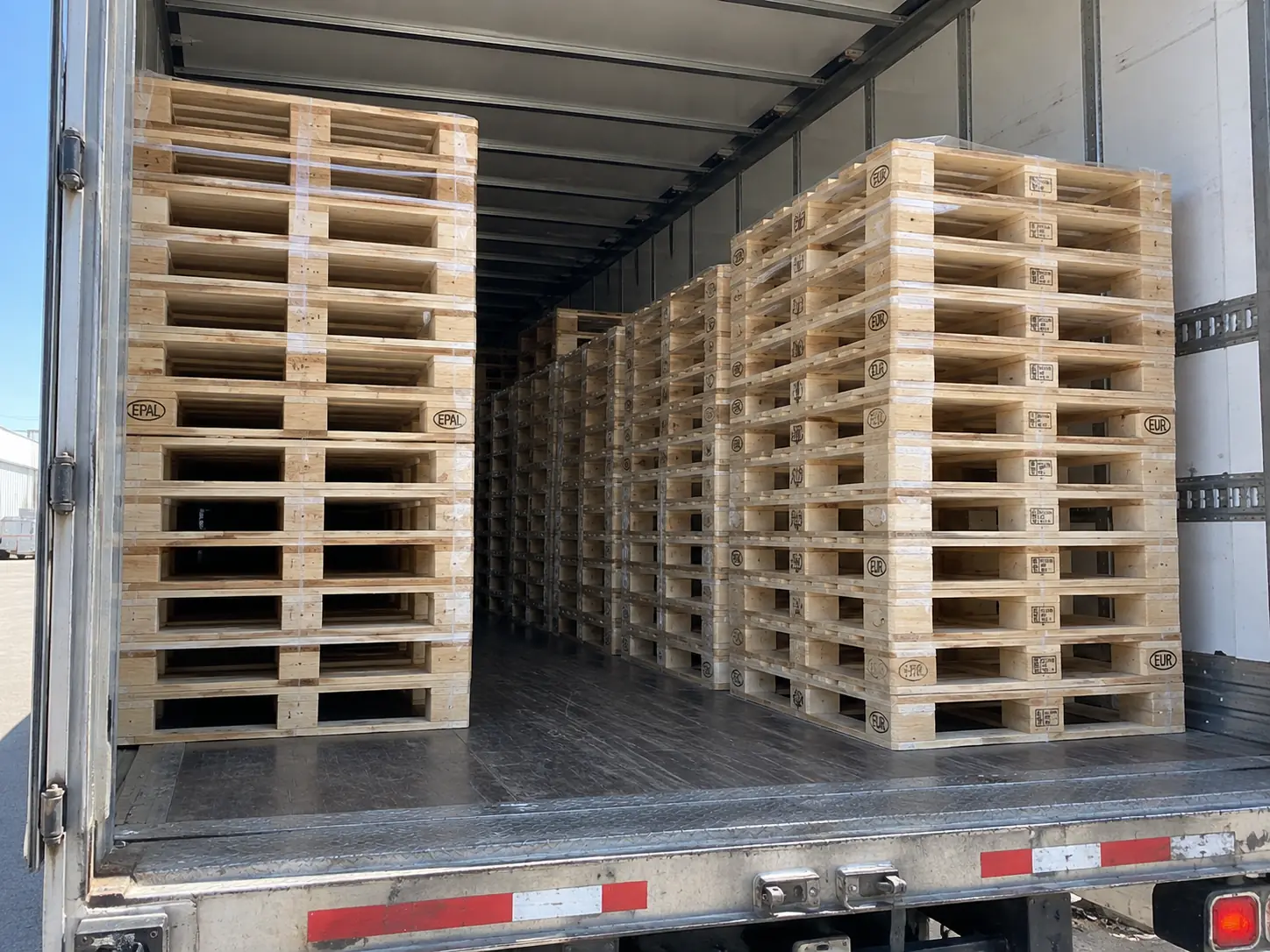
We build new pallets when reuse genuinely will not serve — automated systems with tight tolerances, clean-room and pharmaceutical applications, heavy point loads, or a footprint that simply does not exist in the recovered market. New builds are made to a written spec, on a fixed jig, with a documented fastener schedule and a calculated load rating.
Quote: New Pallets
Send the details and a named person at the Evendale yard replies within one business day with pricing, freight and a piece count — in writing.
When new is the correct answer
We sell recycled pallets for a living and we will still tell you when a new build is right. Specifying recycled into the wrong application costs more in damage and downtime than the saving is worth.
- Automated storage and retrieval systems with dimensional tolerance requirements tighter than ±1/4 inch
- Pharmaceutical, clean-room, medical device and some cosmetics applications where provenance documentation is required
- Point loads above about 4,000 lb concentrated over a small footprint
- Export lanes where the pallet will never return and a documented treatment chain is required
- Uniform-appearance retail displays where the pallet is customer-facing
- Footprints with no recovered supply — genuinely odd dimensions with no aftermarket
Species selection
| Species | Weight (48x40) | Strength | Cost | Best for |
|---|---|---|---|---|
| Mixed hardwood (oak, maple, poplar) | 45–55 lb | Highest | Higher | Heavy loads, racking, multi-trip service |
| Southern yellow pine | 35–42 lb | High for a softwood | Moderate | General distribution, export, good strength-to-weight |
| Spruce / fir / mixed softwood | 30–38 lb | Moderate | Lowest | Light loads, one-way shipping, air freight where weight is billed |
| Combination build | 38–48 lb | Tuned | Moderate | Hardwood stringers with softwood deck — a frequent sweet spot |
Making a new pallet responsibly
A new pallet is not automatically an environmental failure. The failure is a new pallet used once and discarded. We source lumber from regional mills inside a 300-mile radius, we design for repairability rather than minimum cost, and every new pallet we sell is enrolled by default in our retrieval program so it comes back to us at end of first life rather than ending up behind somebody's building.
A full build specification sheet
This is the document we issue before a new build goes to a jig. Reproduced in full so you can see what a specification ought to contain — and so you can ask another supplier for the same fields.
| Field | Example entry |
|---|---|
| Spec number | PR-CB-2141 |
| Footprint | 48.0 × 40.0 in, stringers on the 48-in axis |
| Overall height | 5.75 in ± 1/8 in |
| Construction | 3-stringer, double-notched, four-way partial entry |
| Stringer section | 1.5 × 3.5 in nominal, mixed hardwood, 15% MC max |
| Notch | 9.0 in wide × 1.5 in deep, 2 per outer stringer |
| Top deck | 7 boards; lead 5.5 in, interior 3.5 in; 0.625 in thick |
| Bottom deck | 5 boards, 3.5 in, 0.625 in thick, chamfered leading edges |
| Maximum deck gap | 3.5 in |
| Fastener, deck to stringer | Helically threaded hardened, 2.25 in; 2 per crossing, 3 on lead boards |
| Fastener placement rule | No fastener within 0.75 in of a board end; staggered across stringer width |
| Calculated static | 5,000 lb |
| Calculated dynamic | 2,500 lb |
| Calculated racked | 2,000 lb; derate 25% beyond 90 days |
| Treatment | HT per ISPM-15 if export — adds 5–7 days for kiln scheduling |
| Marking | IPPC mark, two opposite sides, where treated |
| Tolerance | ± 1/4 in footprint; ± 1/8 in height if automation-sorted |
| Lot documentation | Build date, jig number, species mix, grade |
Choosing species by application, not by habit
| Application | Recommended | Why | What people usually specify |
|---|---|---|---|
| Racked multi-trip, heavy load | Mixed hardwood, 4 stringers | Bending strength and fastener retention | Hardwood, 3 stringers — under-built |
| Air freight | Spruce/fir or slip sheets | Billed by weight; every pound displaces revenue product | Hardwood — expensive in freight terms |
| One-way ocean export | Southern yellow pine | Strong for its weight; never coming back | Hardwood — paying for trips that will not happen |
| General domestic distribution | Hardwood stringers, softwood deck | Durability where it matters, weight saved where it does not | All-hardwood — the combination build is rarely asked for |
| Automation and AS/RS | Nine-block, jig-built | Dimensional consistency and consistent openings | Premium-grade stringer — the wrong variable |
| Manual handling sites | Softwood or combination | A 35 lb pallet against 52 lb is a real ergonomic difference | Hardwood, by default |
| Cold chain, frozen | Hardwood, 4 stringers, tight-laid lead boards | Impact resistance; cold makes wood brittle | Standard build, then surprise at breakage |
| Machinery and point loads | Solid deck, 6 runners, engineered | Load concentrates on contact points, not evenly | A standard pallet with blocking |
The fourth row deserves more attention than it gets. Hardwood stringers with a softwood deck is close to optimal for a lot of general distribution — the stringers carry the bending load and take the fork abuse, the deck carries compression and holds nails perfectly well, and the result is meaningfully lighter than an all-hardwood build with most of the durability. We quote it when asked and we are rarely asked.
Why every new pallet we sell is enrolled in retrieval
A new pallet is not automatically an environmental failure. The failure is a new pallet used once and discarded. Every new build we sell is enrolled by default in our free retrieval programme, which means it comes back to us at end of first life rather than ending up behind somebody's building — and it means the embodied carbon of making it gets spread across four to seven trips instead of one.
We also design new builds for repairability rather than for minimum cost, which is a genuine trade-off: a slightly heavier fastener schedule and a board thickness that survives being pried once costs marginally more to build and roughly doubles the number of repair cycles the unit will accept. Over a service life that is not a close decision, but it is one most new-build suppliers make the other way because they are measured on unit price.