A 250-mile radius, run properly
In short
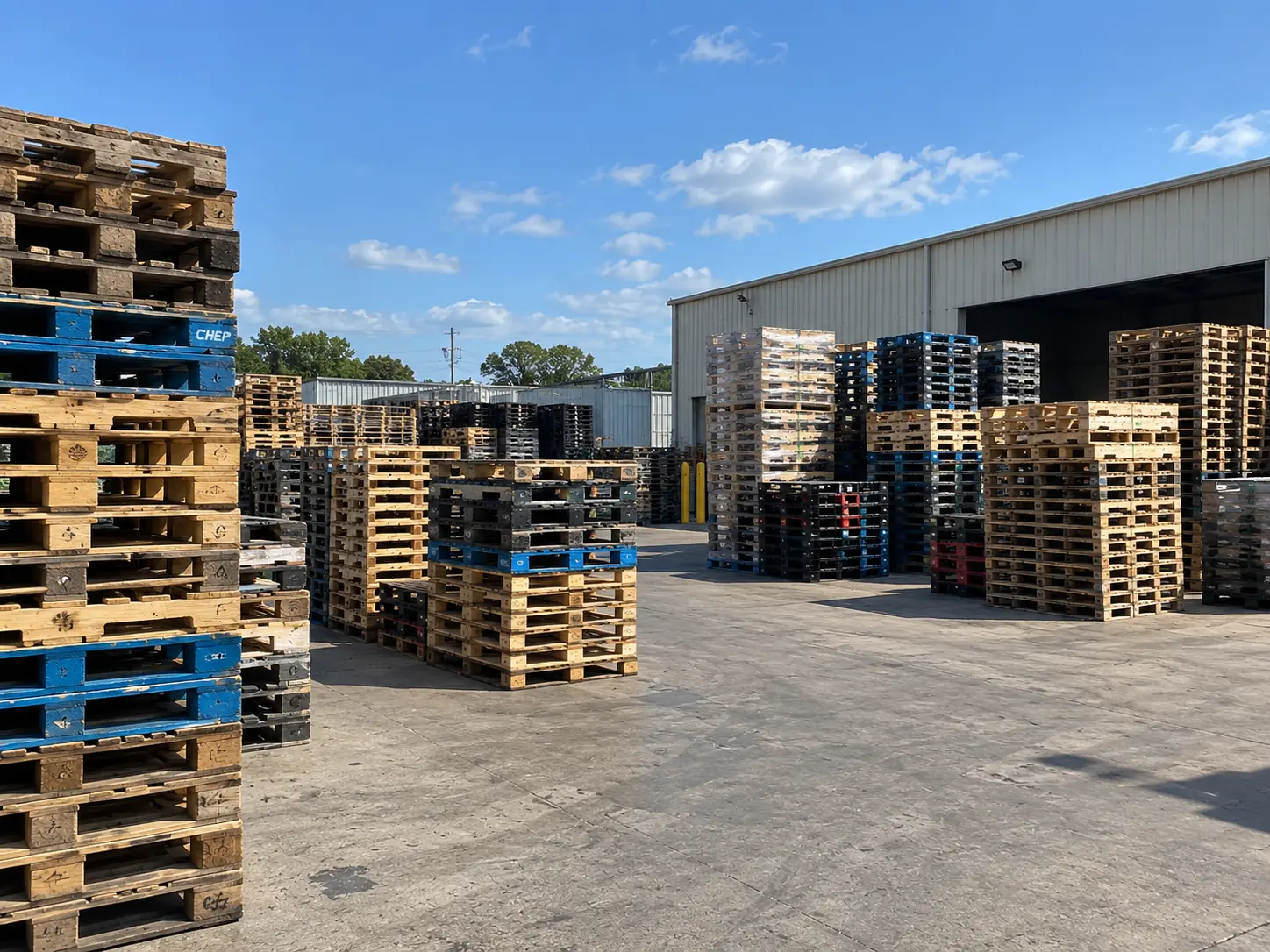
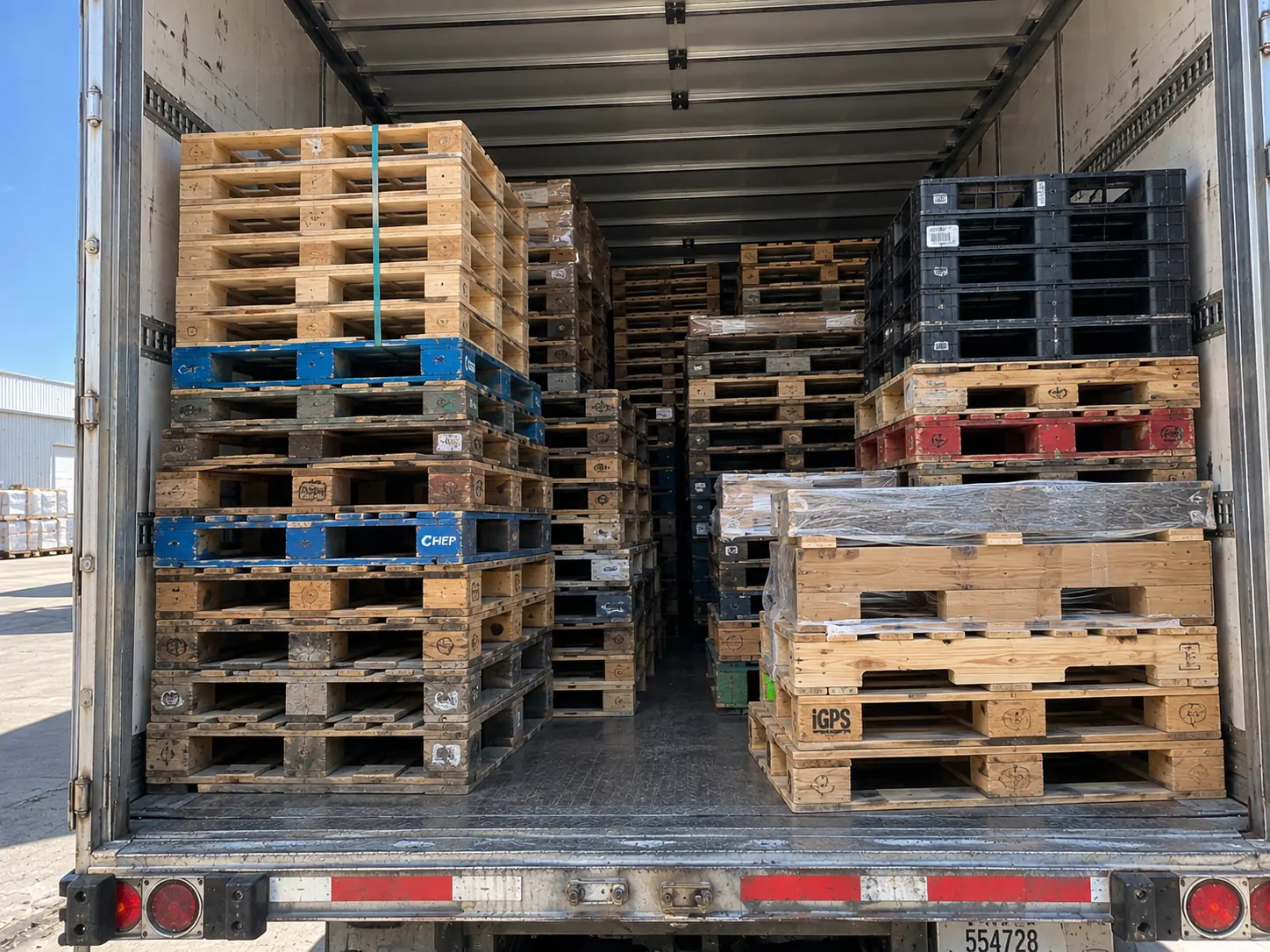
We serve roughly 250 miles from our Evendale yard on our own tractors and trailers — all of Ohio, Kentucky and Indiana, with weekly runs into Michigan, Tennessee, Pennsylvania and West Virginia. Beyond that we broker through vetted carriers at cost plus a disclosed coordination fee. We stay regional on purpose: transport is the dominant emissions cost in a recycled pallet’s life, and a pallet trucked 400 miles undoes much of the benefit of recycling it.
Are we running past your dock?
Send your postal code and rough volume. If you are inside the radius we will give you a day and a window; if you are not, we will tell you honestly what it would cost.
Eight regular routes
Same-day and next-day, daily routesDayton, OH54 mi · 55 minutes
Twice weekly standing routesColumbus, OH107 mi · 1 hour 50 minutes
Weekly full-load routes, more on demandLouisville, KY101 mi · 1 hour 40 minutes
Weekly standing routesLexington, KY83 mi · 1 hour 20 minutes
Weekly, with bedding backhaulIndianapolis, IN112 mi · 1 hour 50 minutes
Weekly full-load routesNorthern Kentucky, KY15 mi · 25 minutes
Same-day and next-day, dailyMiddletown & Hamilton, OH28 mi · 35 minutes
Twice weekly standing routes
State by state
If your address is not listed, ask anyway. Route density changes with the season, and a town that was uneconomic in March is often on a standing route by September.
Ohio
Cincinnati, Dayton, Columbus, Hamilton, Middletown, Springfield, Wilmington, Chillicothe, Portsmouth, Athens, Zanesville, Lima.
Kentucky
Northern Kentucky, Louisville, Lexington, Georgetown, Florence, Covington, Frankfort, Richmond, Bowling Green.
Indiana
Indianapolis, Lawrenceburg, Batesville, Richmond, Columbus, Bloomington, Madison, Greensburg, Shelbyville.
Beyond the core radius
Michigan, Tennessee, Pennsylvania and West Virginia weekly through company equipment and our vetted carrier bench.
10400 Evendale Dr, Cincinnati, OH 45241
Ten minutes from the I-75 and I-275 interchange, which is why almost every industrial address in Greater Cincinnati is inside a thirty-minute drive.
How next week gets built
Every Thursday afternoon the route desk builds the following week. Published because "we will get to you" is not a schedule and this is what actually determines your day.
- Standing accounts placed first
They anchor the week. Everything else is built around fixed points rather than into empty space.
- Every load gets an answer to "what comes back?"
Cores from the same customer, a retrieval nearby, or mulch outbound. Occasionally nothing — and that load costs more, which we say.
- On-call requests slotted by direction, in order received
A pickup on an existing lane costs a fraction of a dedicated run. This is why "when can you come" often gets "which day suits you better".
- Neighbouring accounts consolidated onto a shared day
Industrial parks and multi-tenant sites. It lowers the cost for everyone on the route.
- Fibre outbound fills the remainder
Mulch and bedding are less time-critical, which makes them ideal for a lane that would otherwise run light.
- Confirmation by email Friday
Day and a two-hour window. Windows are held, not estimated.
That process produced a 78.2% backhaul rate across the last twelve months — 82.2% in the best month and 72.4% in January, when core supply outruns demand and more trucks run out loaded and back light.
If you are outside the radius
- Ask anyway. Route density changes with the season, and a town that was uneconomic in March is often on a standing route by September.
- If you are near an existing lane, a shared route day with a neighbouring business frequently makes it work.
- If your requirement is a footprint nobody local will take — metric, drum squares, automotive sizes — distance matters less, because we have the jigs.
- If you are a seller with real volume, the arithmetic is different: we will travel further to buy than to sell, because the return leg is loaded either way.
- If none of that applies, we will say so and, where we can, point you at somebody closer. That is not a courtesy — a pallet trucked too far is a worse outcome for everybody including us.