Freight & Logistics
In short
Wood is heavy, bulky and low-value per cubic foot, which makes freight the deciding cost in almost every pallet transaction. We run our own tractors and trailers out of Evendale, build routes that pair deliveries with retrievals, and keep a vetted carrier bench for weeks when demand outruns our own capacity.
Quote: Freight & Logistics
Send the details and a named person at the Evendale yard replies within one business day with pricing, freight and a piece count — in writing.
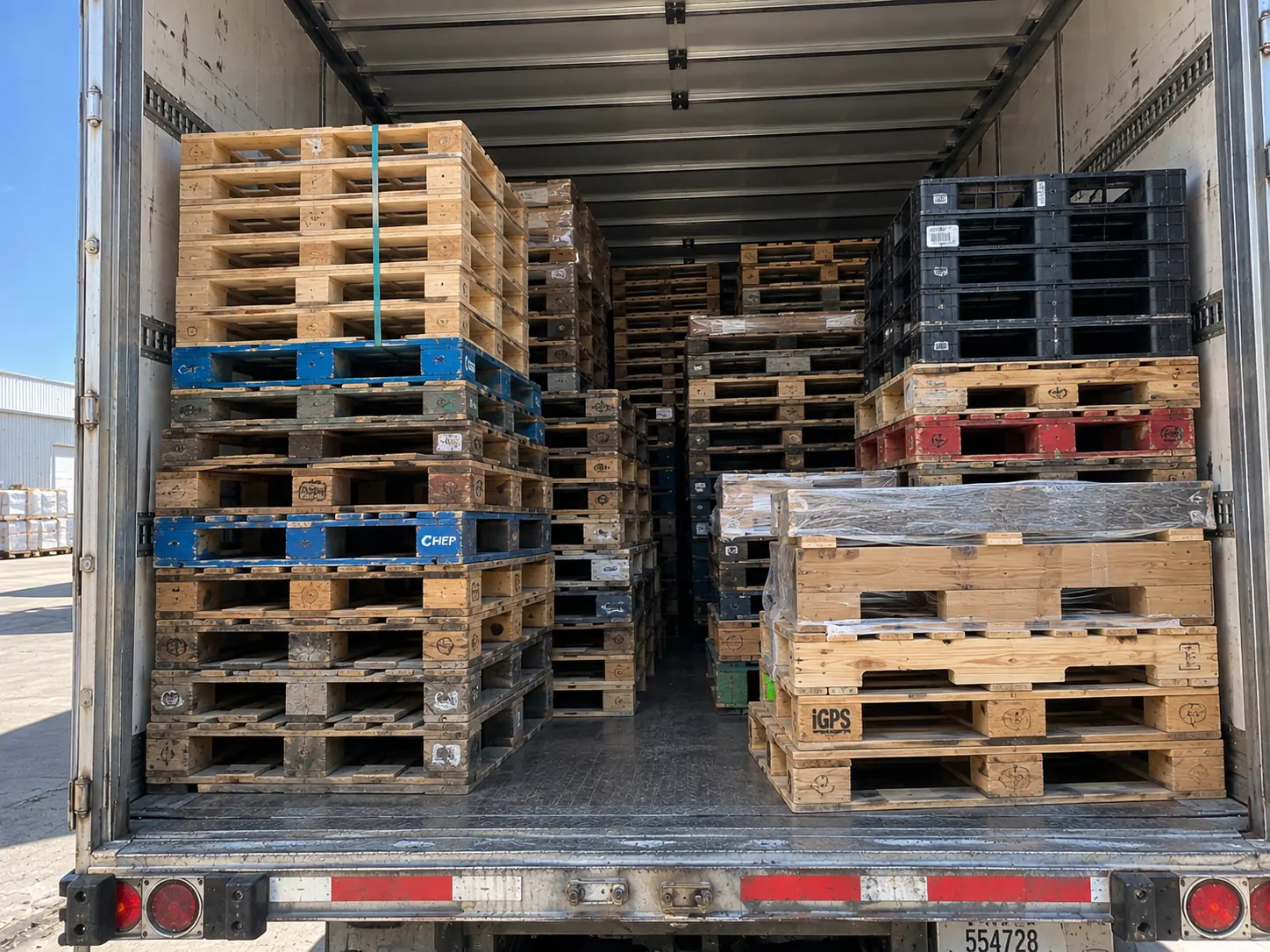
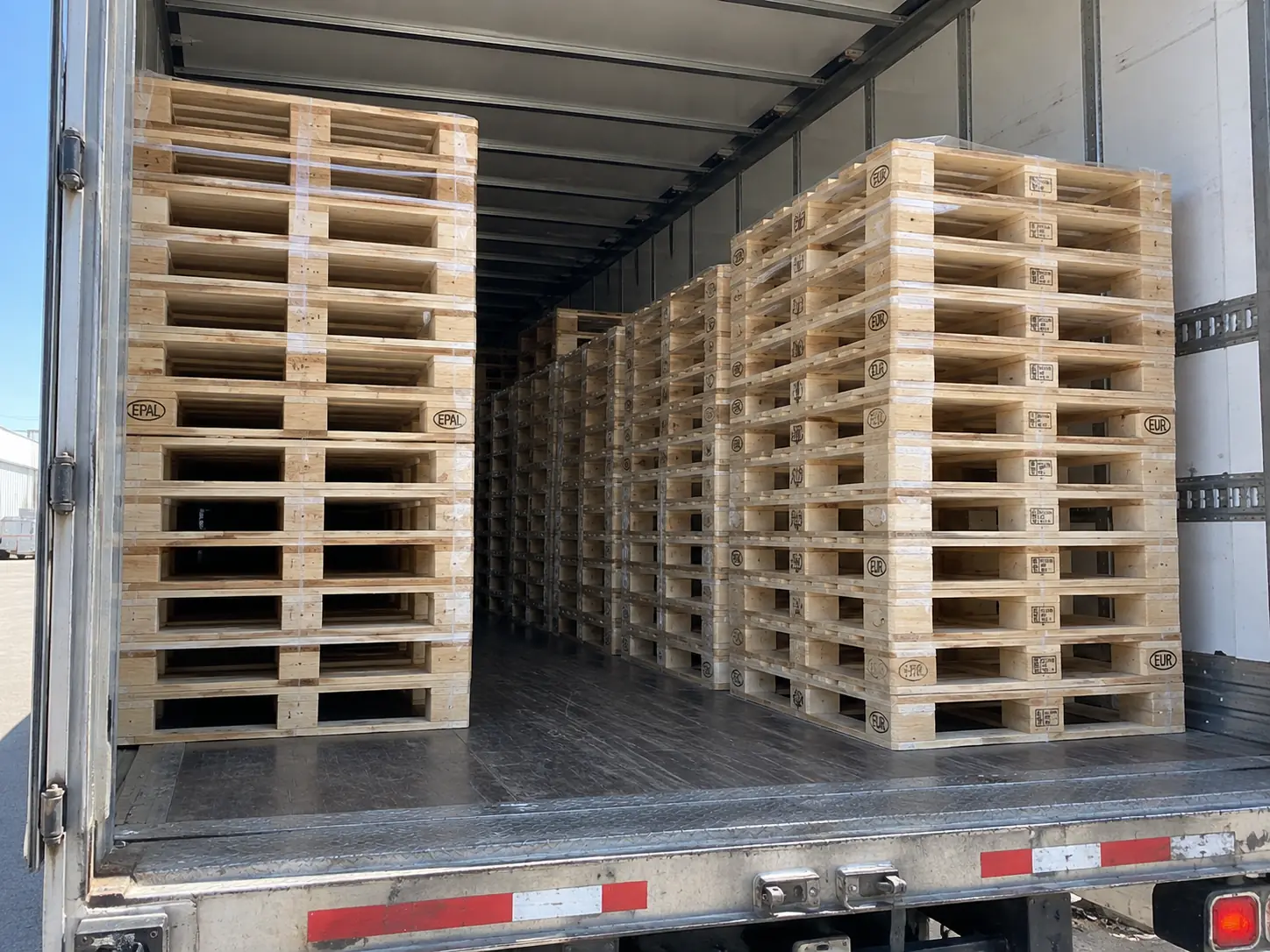
Round-trip routing is the whole argument
A truck that carries pallets one direction and air the other has doubled the cost and doubled the emissions of every pallet on it. Our dispatch is built around a single question asked before any load is assigned: what comes back? Sometimes the answer is cores from the same customer. Sometimes it is a retrieval two miles away. Occasionally it is nothing, and that load costs more — for us and for the customer — and we say so.
What we haul, and for whom
- Recycled and new pallets, banded or loose, dock-to-dock across OH, KY and IN
- Bulk cores and mixed scrap wood on flatbed with straps and corner protection
- Bagged and bulk mulch to landscape yards, garden centres and municipalities
- Crates, collars, accessories and customer-owned returnable packaging
- Occasional general dry freight on backhaul lanes when capacity allows
All company drivers hold current DOT medical certification, our equipment is inspected on a documented preventative schedule, and we carry cargo and general liability coverage at limits that satisfy standard manufacturer vendor requirements. Certificates are available on request to info@palletsrecycle.com.
How scheduling works
- Route planning on Thursday
The following week is built Thursday afternoon. Standing accounts are placed first, then on-call requests in order received, then surge capacity.
- Confirmation by email Friday
You receive the day and a two-hour window. Windows are held, not estimated — if we are going to miss one you will hear from the coordinator, not from the driver.
- Day-of contact
Drivers confirm with your named receiving contact before departure so nobody is loading a trailer into a closed dock.
- Proof of delivery same day
Signed BOL with piece count emailed the day of the movement, not at month end.
Freight as a share of delivered cost, by distance
Wood is heavy, bulky and low in value per cubic foot, which makes freight the deciding cost in almost every pallet transaction. This table is from our own lane accounting and it is the single most useful thing on this page, because it tells you which lever to pull at your distance.
| Distance band | Freight as share of delivered cost | Typical cadence | What to optimise |
|---|---|---|---|
| 0 – 30 miles | ~6% | Same day / next day | Grade right-sizing. Freight barely registers. |
| 31 – 75 miles | ~11% | Twice weekly | Still unit-price led. Avoid split drops. |
| 76 – 130 miles | ~19% | Weekly | Full loads over part loads. The crossover band. |
| 131 – 200 miles | ~27% | Weekly / biweekly | Round-trip pairing. The largest single lever available. |
| 201 – 250 miles | ~34% | Biweekly consolidated | Full loads only. Shared route days with neighbours. |
| 251 – 400 miles | ~41% | Consolidated / partner | Question whether a closer supplier serves you better. |
| Over 400 miles | ~48% | Partner lane | Freight exceeds the wood. We will usually say so. |
The fleet, and what each unit is actually for
| Equipment | Empty stacked | Loaded floor positions | Apron needed | Right for |
|---|---|---|---|---|
| 53-ft dry van | ~560 | 28 | 110–130 ft | Dock-height volume, dry cores, banded stock |
| 53-ft flatbed with straps | ~480 | 26 | 90–120 ft | Outdoor piles, wet stock, mixed and oversize loads |
| 48-ft dry van | ~500 | 24 | 95–115 ft | Older sites with shorter aprons |
| 26-ft box truck with liftgate | ~140 | 12 | 45–70 ft | Urban docks, alleys, retail, no forklift on site |
| Drop trailer, customer loaded | ~560 | 28 | Parking space only | Irregular accumulation, weather protection, no live load |
| Walking floor | n/a | n/a | 100–130 ft | Bulk mulch, bedding and hog fuel by the cubic yard |
The box truck is the unit that gets least attention and solves most problems. A great many sites that "cannot take a delivery" can take a box truck with a liftgate, and would rather have four of those than none of the other.
How 78% backhaul actually happens
Seventy-eight percent of our outbound miles carry a paying return load. That is not luck and it is not a fleet size effect — it is one rule applied at dispatch and a Thursday afternoon spent building the following week properly.
- No load is assigned without an answer to "what comes back?"
Sometimes it is cores from the same customer. Sometimes a retrieval two miles away. Occasionally nothing — and that load costs more, for us and for the customer, and we say so.
- Standing accounts are placed first
They anchor the week. Everything else is built around fixed points rather than into empty space.
- On-call requests are slotted in order received, by direction
A pickup that sits on an existing lane costs a fraction of one that requires a dedicated run. This is why "when can you come" often gets the answer "which day suits you better".
- Neighbouring accounts are consolidated onto a shared day
Industrial parks, retail plazas and multi-tenant sites. We arrange this more often than people expect and it lowers the cost for everyone on the route.
- Mulch and fibre outbound fills the remainder
Landscape and biomass deliveries are less time-critical, which makes them ideal for filling a lane that would otherwise run light.