No wrong orientation
A square pallet cannot be loaded the wrong way round. On a busy drum line that removes an entire class of error.
The 42 × 42 inch square pallet (1067 × 1067 mm) exists because a square deck handles cylindrical loads better than a rectangle does. It is the long-standing footprint for 55-gallon drums in a three-drum configuration, for cable and wire reels, and across large parts of the paint, chemical and telecommunications sectors.
Send the details and a named person at the Evendale yard replies within one business day with pricing, freight and a piece count — in writing.
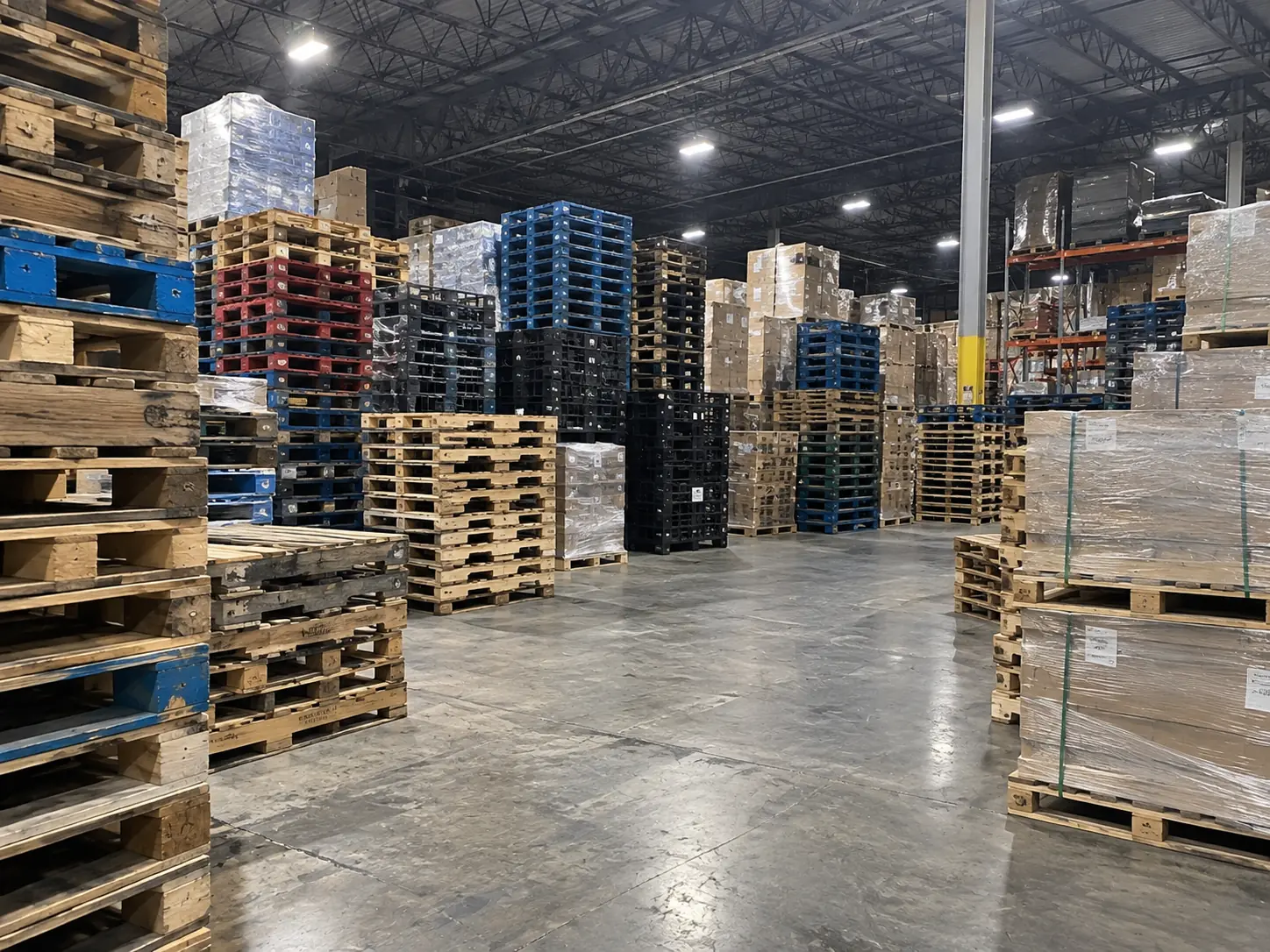
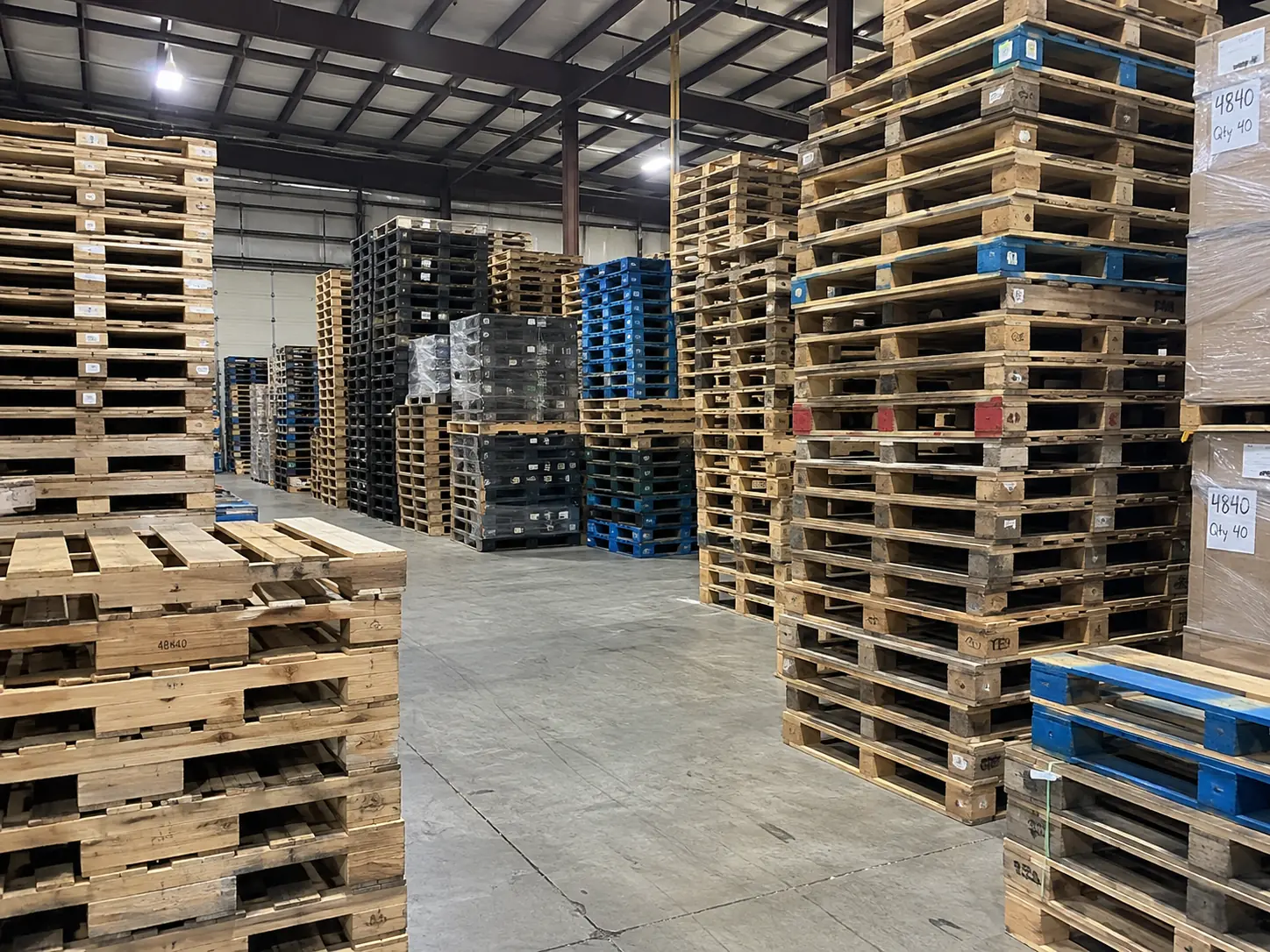
A 55-gallon steel drum has a diameter of roughly 23 inches. Place four on a 48 × 40 rectangle and two of them overhang. Place four on a 48 × 48 square and they seat cleanly. Place three in a triangle on a 42 × 42 and you get a stable, compact unit that fits legacy racking sized before 48-inch became universal. That is the whole logic of this footprint, and it is why it persists despite being non-standard by every other measure.
A square pallet cannot be loaded the wrong way round. On a busy drum line that removes an entire class of error.
Many chemical and paint facilities have racking on 42-inch bay centres from an earlier era. Retrofitting racking costs vastly more than sourcing the right pallet.
Cable reels, wire coils and strapping reels sit centred and stable on a square deck without blocking.
Three drums on a 42 × 42 is a standard chemical distribution unit, particularly for smaller batch shipments.
| Attribute | Value |
|---|---|
| Footprint | 42 × 42 in (1067 × 1067 mm) |
| Height | 5.5 in (140 mm) |
| Empty weight | 35 – 45 lb |
| Top deck boards | 7 |
| Bottom deck boards | 5 |
| Stringers | 3, double-notched |
| Static capacity | 5,000 lb |
| Dynamic capacity | 2,500 lb |
| Racked capacity | 1,800 lb |
| Per 53-ft trailer (empty) | ~600 |
| Floor positions per 53-ft trailer | 26 (loaded, straight) |
For drum service we strongly recommend a solid or tight-laid deck rather than standard 3.5-inch gapping. A drum chime resting across a 3.5-inch gap concentrates load exactly where the deck is weakest.
Recovered supply of 42 × 42 is thinner than 48 × 40 by an order of magnitude, which historically has made this footprint expensive. We remanufacture it from recovered 48-inch stringers, which yield a clean 42-inch member after trimming past the damaged end. That single fact is why our 42 × 42 pricing sits much closer to standard than a new-build supplier can offer.
A 55-gallon steel drum is roughly 23 inches in diameter and 34 inches tall, weighing 40–50 lb empty and 400–500 lb filled depending on contents. Everything about drum pallet selection follows from those numbers.
| Footprint | Drums | Arrangement | Overhang | Gross load |
|---|---|---|---|---|
| 42 × 42 | 3 | Triangular, with handling clearance | None | ~1,350 – 1,500 lb |
| 42 × 42 | 4 | Square — does not fit | Yes, significant | Not recommended |
| 48 × 48 | 4 | Square, clean fit all round | None | ~1,800 – 2,000 lb |
| 48 × 40 | 4 | Two overhang the 40-in axis | ~3 in on two units | Avoid — overhang costs ~30% stack strength |
| 44 × 44 | 4 | Tight square, minimal clearance | None, but no handling room | ~1,800 – 2,000 lb |
The 42 × 42 persists for a reason that has nothing to do with pallets: a great many chemical and paint facilities have racking on 42-inch bay centres installed before 48 inches became universal. Retrofitting a rack system costs orders of magnitude more than sourcing the right pallet, so the pallet follows the building.
That last point is the one that affects your price. Because a damaged 48-inch stringer trims to a clean 42-inch member, we can build this footprint from recovered lumber on a fixed jig at a premium of roughly 10–18% over a recycled 48×40 — rather than the 100%+ a milled new build would cost.
The 42 × 42 Drum in plan and elevation, rendered at true proportion against a ghosted 48×40 GMA. Switch units if your drawing speaks millimetres.