Mulch & Biomass
In short
Roughly three percent of the wood we collect cannot be reused as a pallet or a board. That fraction is ground, magnet-separated twice, screened and turned into coloured landscape mulch, animal bedding and boiler-grade biomass. It is the last step of the cascade, and it is what allows us to say zero-landfill without an asterisk.
Quote: Mulch & Biomass
Send the details and a named person at the Evendale yard replies within one business day with pricing, freight and a piece count — in writing.
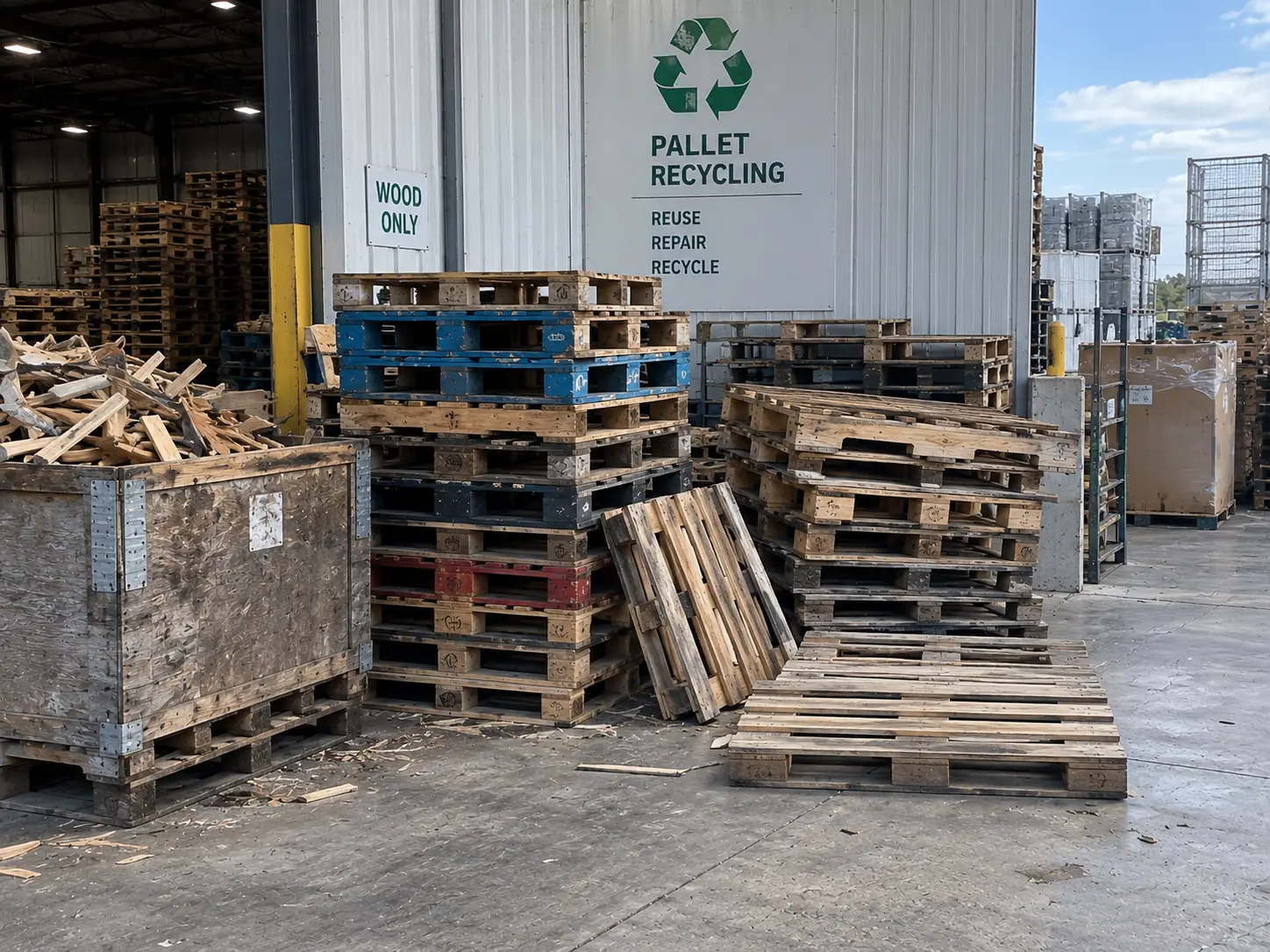
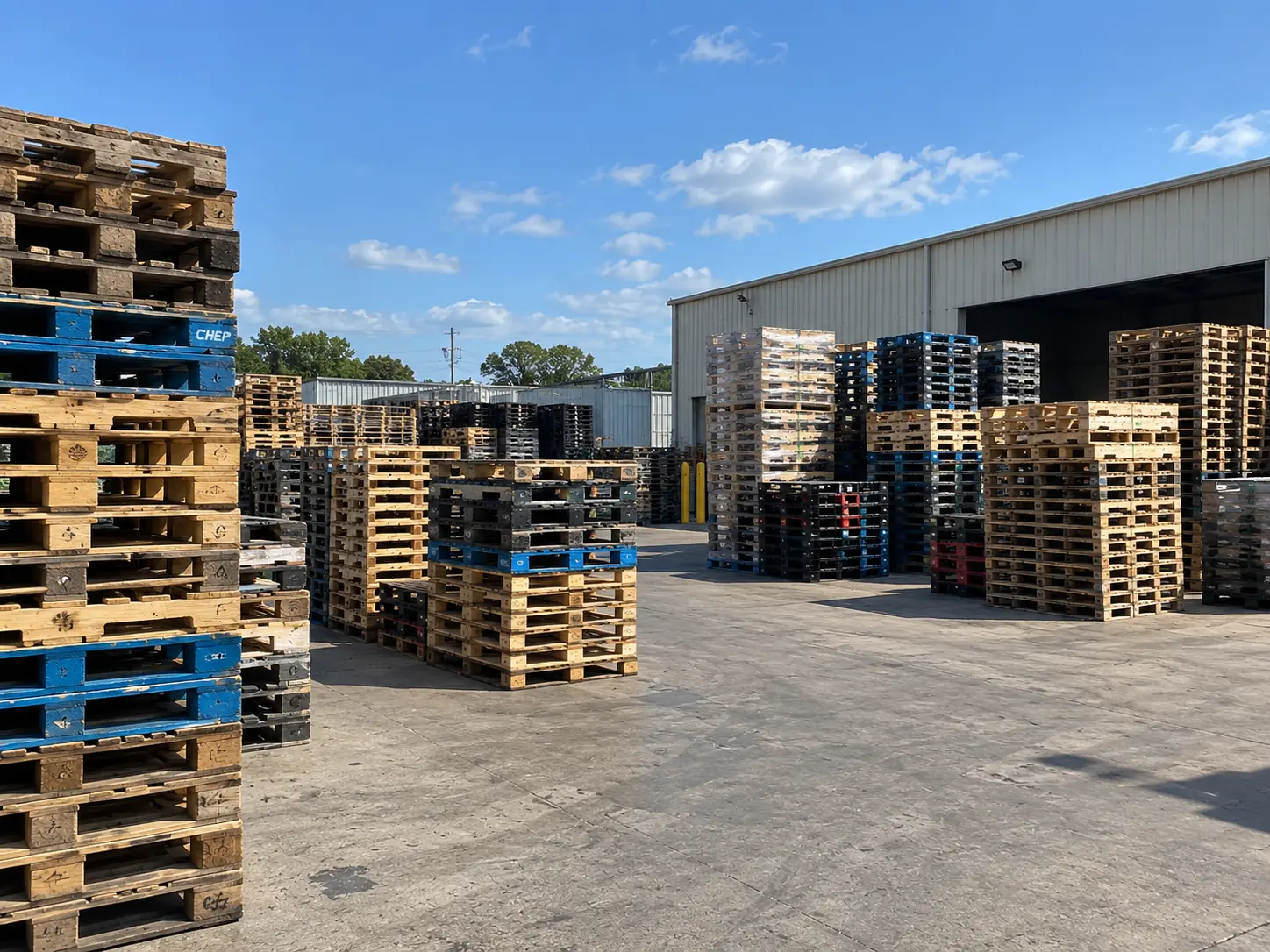
What comes off the grinder line
| Product | Screen size | Typical buyer | Sold as |
|---|---|---|---|
| Natural landscape mulch | 3/4 in minus | Garden centres, landscapers, municipalities | Bulk yard / walking floor |
| Coloured mulch — brown, black, red | 3/4 in minus, pigmented | Retail garden centres, commercial landscape | Bulk yard / bagged |
| Playground fibre | 1 in minus, engineered | Schools, parks, daycare facilities | Bulk yard |
| Animal bedding | 3/8 in minus, low dust | Equestrian, poultry, small livestock | Bulk / tote |
| Hog fuel / biomass | Unscreened 2 in minus | Regional biomass boilers and CHP plants | Walking floor trailer |
We do not grind treated, painted or chemically contaminated wood into any product sold for landscape or animal use. Suspect material is segregated at intake and disposed of through a licensed handler — which is the one place our zero-landfill figure carries a genuine exception, and we report it by weight.
Why pallet-derived mulch has a reputation problem, and how we fix it
Landscapers are rightly suspicious of mulch made from pallets. The concerns are nails, treated wood and unidentified painted stock. All three are real, all three come from yards that grind indiscriminately, and all three are avoidable with process rather than luck.
- Intake segregation: painted, treated and chemically stained wood is pulled before it reaches the grinder, by a human, at the belt.
- Primary magnet: an overhead drum magnet on the grinder infeed removes banding and loose fasteners.
- Secondary magnet: a cross-belt magnet on the discharge catches nails freed by the grinding action itself — this is the stage most yards skip.
- Screening: a trommel removes oversize and fines, producing a consistent particle size that holds colour and does not blow away.
- Colouring: iron-oxide and carbon-based pigments only, applied at a controlled moisture content so colour holds through a season.
Buying mulch from us
Bulk mulch is sold by the cubic yard for pickup at 10400 Evendale Dr or delivered by walking-floor trailer within our regional radius. Landscape contractors and garden centres run seasonal supply agreements with locked pricing from March through June, which is the only sensible way to buy in a market where demand triples in eight weeks. Use the form on this page with a quantity in cubic yards and we will quote delivered.
Coverage arithmetic, so you order once
The commonest mulch ordering error is buying by area without deciding a depth. One cubic yard covers about 324 square feet at one inch. Everything below follows from that.
| Depth | Coverage per cubic yard | Typical use |
|---|---|---|
| 1 in | 324 sq ft | Top-dressing an established bed |
| 2 in | 162 sq ft | Annual refresh over existing mulch |
| 3 in | 108 sq ft | Standard new installation — the usual specification |
| 4 in | 81 sq ft | Weed suppression on a problem bed |
| 6 in | 54 sq ft | Playground fibre, before compaction |
| 12 in | 27 sq ft | Engineered playground fibre to impact-attenuation depth |
For a 1,000 square foot bed at the standard three inches, that is a little over nine cubic yards — round to ten. A 40-yard walking floor load covers roughly 4,300 square feet at three inches. Playground installations are the exception: those are specified to a compacted depth for impact attenuation, and you should order to the engineered figure rather than the visual one.
Minimum delivered quantity is typically 40 cubic yards by walking floor. Smaller quantities are pickup at Evendale, by the yard, loaded while you wait.
What we test before a coloured batch ships
Colour retention is decided before the product leaves the plant, not by the weather afterwards. These are the checks, and they are the difference between mulch that holds through a season and mulch that is grey by July.
- Moisture at application. There is a fairly narrow window: too dry and the pigment sits on the surface and sheds; too wet and the binder dilutes into an uneven coat. A plant running to schedule rather than to condition will colour whatever is in the hopper.
- Pigment type. Iron oxide for brown and red, carbon black for black — the same inert mineral pigments used in concrete and roofing tile. Never water-soluble dye, which looks identical in a bag and is gone after two heavy rains.
- Particle size consistency after trommel screening. Oversize takes pigment unevenly; fines blow away in the first dry week and take their colour with them.
- Wet-rub check on a sample. Colour that transfers to a gloved hand has not bonded and the batch goes back through.
- Magnet verification on the discharge sample — a visual check plus a handheld sweep before anything is coloured.
- Provenance confirmation. No MB-stamped, painted or chemically stained wood has entered the grinder feed, verified at the intake belt by a person.
Screen sizes, and what each product is actually for
| Product | Screen | Bulk density | Sold as | Notes |
|---|---|---|---|---|
| Natural landscape mulch | 3/4 in minus | ~400–500 lb/yd³ | Bulk yard, walking floor | Uncoloured. Preferred by many growers for food gardens. |
| Coloured mulch — brown | 3/4 in minus, iron oxide | ~450–550 lb/yd³ | Bulk yard, walking floor | The volume seller, March to June. |
| Coloured mulch — black | 3/4 in minus, carbon | ~450–550 lb/yd³ | Bulk yard, walking floor | Highest contrast; shows fading fastest if applied badly. |
| Coloured mulch — red | 3/4 in minus, iron oxide | ~450–550 lb/yd³ | Bulk yard, walking floor | Most sensitive to moisture at application. |
| Playground fibre | 1 in minus, engineered | ~500–600 lb/yd³ | Bulk yard | Graded for impact attenuation. Specify compacted depth. |
| Animal bedding | 3/8 in minus, low dust | ~350–450 lb/yd³ | Bulk, tote | Equestrian, poultry, small livestock. Dust fraction screened out. |
| Hog fuel / biomass | Unscreened 2 in minus | ~350–450 lb/yd³ | Walking floor | Boiler feedstock for regional biomass and CHP plants. |
Seasonal supply agreements with locked pricing from March through June are the only sensible way to buy in a market where demand triples in eight weeks. Landscape contractors and garden centres on an agreement are allocated first when the yard is running flat out, which in late April it is.