Circular wood, measured honestly
In short
Ninety-six percent of the wood arriving at our Evendale yard re-enters service as a pallet or a component. Three percent becomes mulch, animal bedding or biomass fuel. Under one percent reaches landfill, and we report that fraction by weight with the exceptions named. Every claim on this page is derived from weighbridge tickets in and out, and every constant in our carbon arithmetic is published so you can disagree with us specifically rather than generally.
Get reporting for your site
Monthly diversion tonnage, destination streams, estimated CO₂e and a year-end letter suitable for a corporate responsibility report. It costs nothing and it starts with this form.
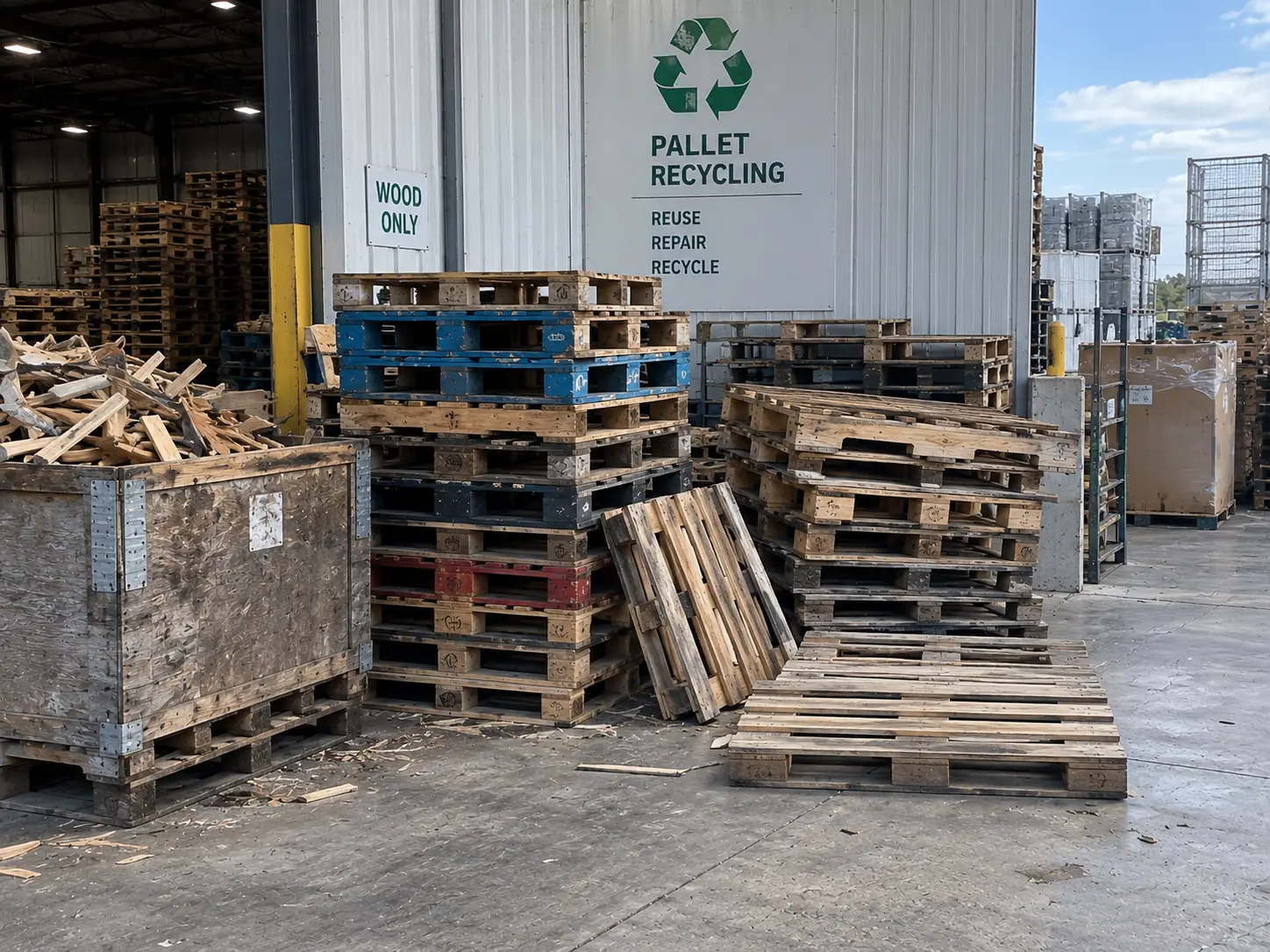
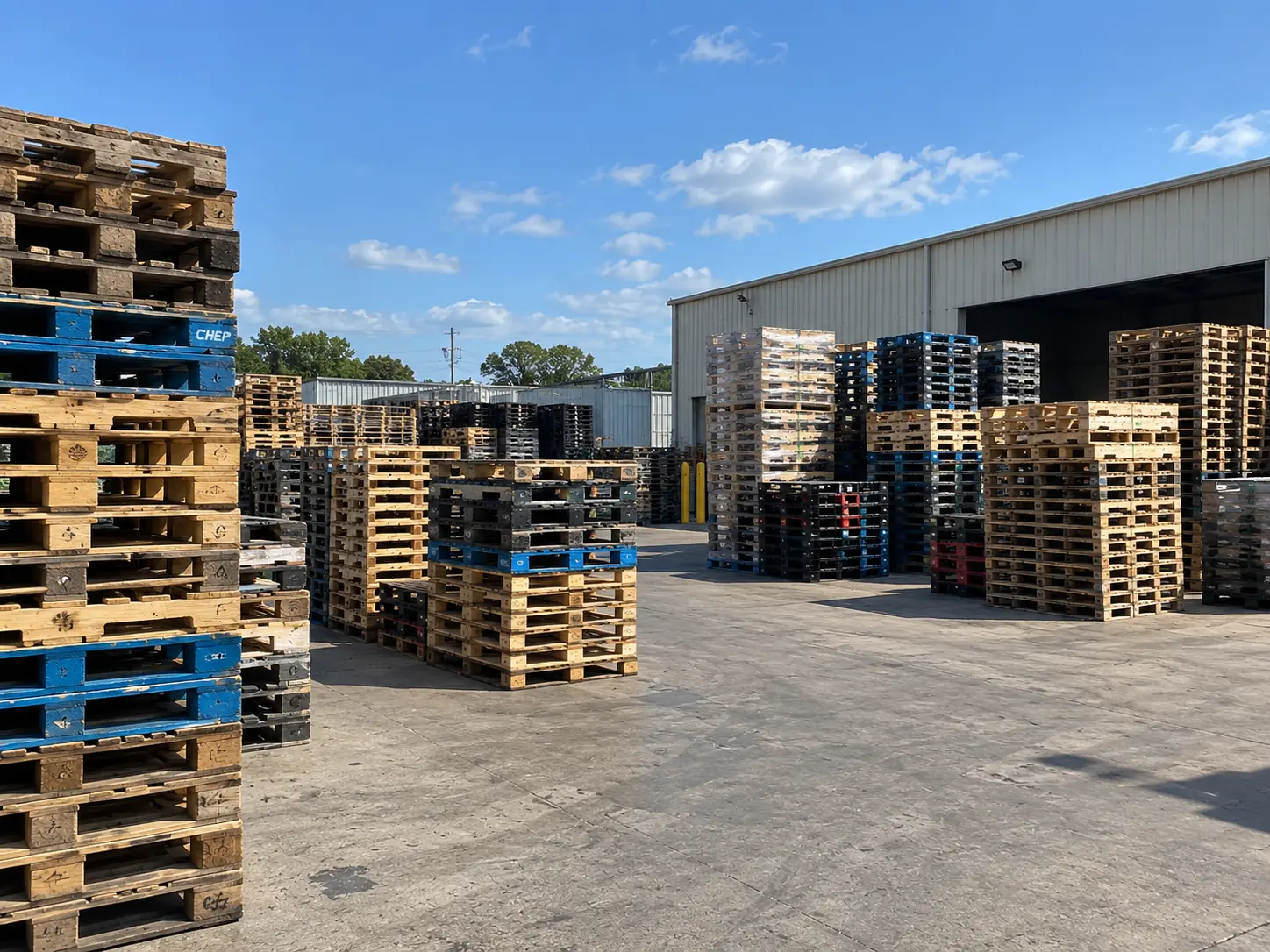
Four things we believe
Reuse beats recycling, every time
“Recycled” is not a single outcome. A pallet reused intact has an environmental cost close to zero. The same pallet ground into mulch has released most of its value and will release its carbon within a few years. Treating those two outcomes as equivalent is the most common piece of dishonesty in this industry, and it is why we publish the cascade percentages rather than one diversion number.
Local beats national
Transport is the dominant emissions cost in a recycled pallet’s life. A pallet trucked four hundred miles has undone much of the benefit of recycling it. We run a 250-mile radius on our own equipment and pair deliveries with retrievals wherever the geography allows, because an empty return leg doubles both the cost and the emissions of everything on the outbound.
Measurement beats narrative
Every inbound trailer is weighed. Every outbound stream is weighed. The two are reconciled monthly and reported by destination. We publish the methodology openly, including the constants we use and the things we deliberately exclude, so an auditor can check our arithmetic rather than accept our adjectives.
Saying no is part of it
We do not grind chemically treated or MB-stamped wood into landscape or animal products. We do not metal-plate stringers. We do not sell a higher grade than the application needs. And we do not claim that reuse multiplies carbon savings — it retains the same carbon longer, which is substantial enough without inflation.
Twelve months, measured
Where the wood went, by weight
By weight, not piece count. Piece counts flatter, because the material most likely to reach the disposal stream is also the wettest and heaviest.
- Direct reuse55.3%
Back out as a graded pallet, no tool used
- Repair and return27.0%
Bench repair, regraded, banded
- Board harvest9.1%
De-nailed lumber into our own repair stock
- Remanufacture5.2%
Jig-built into 42×42, 36×36, 48×45 and custom
- Fibre recovery2.9%
Mulch, playground fibre, animal bedding, hog fuel
- Licensed disposal0.5%
Chemically treated, MB-stamped and non-wood debris
Direct reuse rate by month
From 51.4% in April to 59.1% in July — the same customers and the same pallets. It tracks inbound moisture almost exactly, which is why covered storage is the first thing we raise with anybody selling cores.
Read this chart as a table
| Period | Value (percent of intake) |
|---|---|
| Sep | 57.4 |
| Oct | 56.2 |
| Nov | 54.8 |
| Dec | 53.9 |
| Jan | 55.1 |
| Feb | 54.3 |
| Mar | 52.6 |
| Apr | 51.4 |
| May | 54.7 |
| Jun | 57.9 |
| Jul | 59.1 |
| Aug | 58.3 |
The Reclaim Meter
Your monthly volume, converted into carbon, timber, trees, landfill space and recovered steel — with every constant published rather than hidden.
Equivalent to taking 138 average US passenger vehicles off the road for a year. Every constant used here is published on our carbon methodology page so you — or your auditor — can check the arithmetic rather than trust it.
The asterisks, stated plainly
Every sustainability page in this industry has caveats. Most of them are in a footnote. Ours are here.
We exclude transport from the calculator
Freight varies too much by lane to estimate honestly at the tool level. For a lane-specific figure, ask and we will calculate against your actual mileage.
We do not count carbon twice
Reuse retains the same carbon longer; it does not create new savings on each trip. Suppliers claiming otherwise are counting one tonne repeatedly.
Contaminated wood is a real exception
Chemically treated and MB-stamped material goes through a licensed handler. That tonnage is named and weighed rather than hidden inside a rounding.
Our radius is a limit, not a slogan
We serve roughly 250 miles well rather than claiming a national network we would have to broker anyway.
Sustainability, answered
What does zero-landfill mean at Pallets Recycle?
Are wood pallets actually sustainable?
Do you have certifications?
Can I use your reporting in our ESG disclosure?
What is the single biggest environmental lever in pallets?
The full accounting, including what makes us look worse
Most sustainability pages publish the flattering half. Here is the whole ledger for the twelve months to August 2026, with the unflattering lines in it.
| Line | Figure | Direction |
|---|---|---|
| Wood returned to service as a pallet or component | 96.6% by weight | Good |
| Wood recovered as fibre products | 2.9% by weight | Acceptable — the last rung |
| Wood to licensed disposal | 0.5% by weight | Reported rather than hidden |
| Ferrous recovered and baled | 1,186 tons | Good |
| Outbound miles carrying a paying return load | 78.2% | Good — and 21.8% did not |
| Worst backhaul month | 72.4% (January) | Core supply outruns demand |
| Mean inbound moisture | 17.1% | Higher than we would like |
| Wettest month | 22.1% (April) | Drives the seasonal reuse dip |
| Yard energy, kiln fuel, forklift propane | Not deducted from our carbon figures | This makes our numbers slightly flattering — we say so |
| Transport emissions | Excluded from the Reclaim Meter | The largest single emissions line in a recycled pallet's life |
Claims we could make and do not
Each of these is common in our industry, defensible-sounding, and wrong. We list them because knowing what a supplier refuses to claim is more informative than knowing what they do claim.
- "Each reuse saves the full embodied carbon of a new pallet." It does not. Reuse retains the same carbon longer and avoids one manufacture. Multiplying by trip count counts the same tonne repeatedly.
- "100% diversion." Non-wood debris arrives mixed into loads and has to go somewhere. Ours is under 1% and it is weighed and reported.
- "Carbon negative." Wood in service holds carbon. Mulch releases it over years; fuel releases it immediately. Ours is retention, not permanent sequestration, and we say which.
- "Nationwide coverage." We run 250 miles on company equipment and broker beyond it at a disclosed fee. A pallet trucked 400 miles has undone much of the point of recycling it.
- "Sustainably sourced timber" as a headline. The overwhelming majority of what we sell was never newly sourced at all. New lumber comes from within 300 miles, which is a smaller and truer claim.
- "Certified." We hold accredited ISPM-15 treatment status because export requires it. For environmental claims we publish weight tickets and methodology instead, because a certificate does not tell you what happened to your tonnage.
What you can do that matters more than what we do
| Action | Effect | Effort |
|---|---|---|
| Keep the pile under any existing roofline | Large — wet cores grade materially worse and are worth less | None |
| Shorten the collection interval | Large — stock that sits three days gets wet once, not repeatedly | One email |
| Right-size grade by application | Large — usually the biggest single cost and material saving available | An afternoon with a clipboard |
| Pair delivery with collection | Large — one truck movement instead of two | Mention it once |
| Stop paying to dispose of wood | Large — roughly a third of new accounts were paying at both ends | Read one invoice |
| Stack on runners, not on concrete | Moderate — ground contact wicks moisture upward continuously | Negligible |
| Repair rather than replace | Moderate — most "broken" pallets need one deck board | A sort step |
| Release cores in Q4, not Q1 | Moderate — same pallets, materially better market | A calendar note |
| Never film-wrap damp stock | Moderate — prevents a drying problem becoming a mould problem | None |