Guide · Economics

Buying vs Renting Pallets

In short

There are three ways to get a pallet under your product: buy it, rent it from a pool, or buy a cheap one and let it go. The right answer depends almost entirely on one variable — whether the pallet comes back. Pooling wins on closed loops with high-value pallets and cooperative trading partners. Owned recycled whitewood wins on open loops, mixed destinations and cost-sensitive freight.

Quote: Buying vs Renting Pallets

Send the details and a named person at the Evendale yard replies within one business day with pricing, freight and a piece count — in writing.

We reply by email only — no marketing list.

US or Canada, 10 digits — format as (513) 555-0142.

US ZIP like 45241, or Canadian like K1A 0B1.

Required fields are marked *. Your details go to our Evendale team and nowhere else — see the privacy policy.

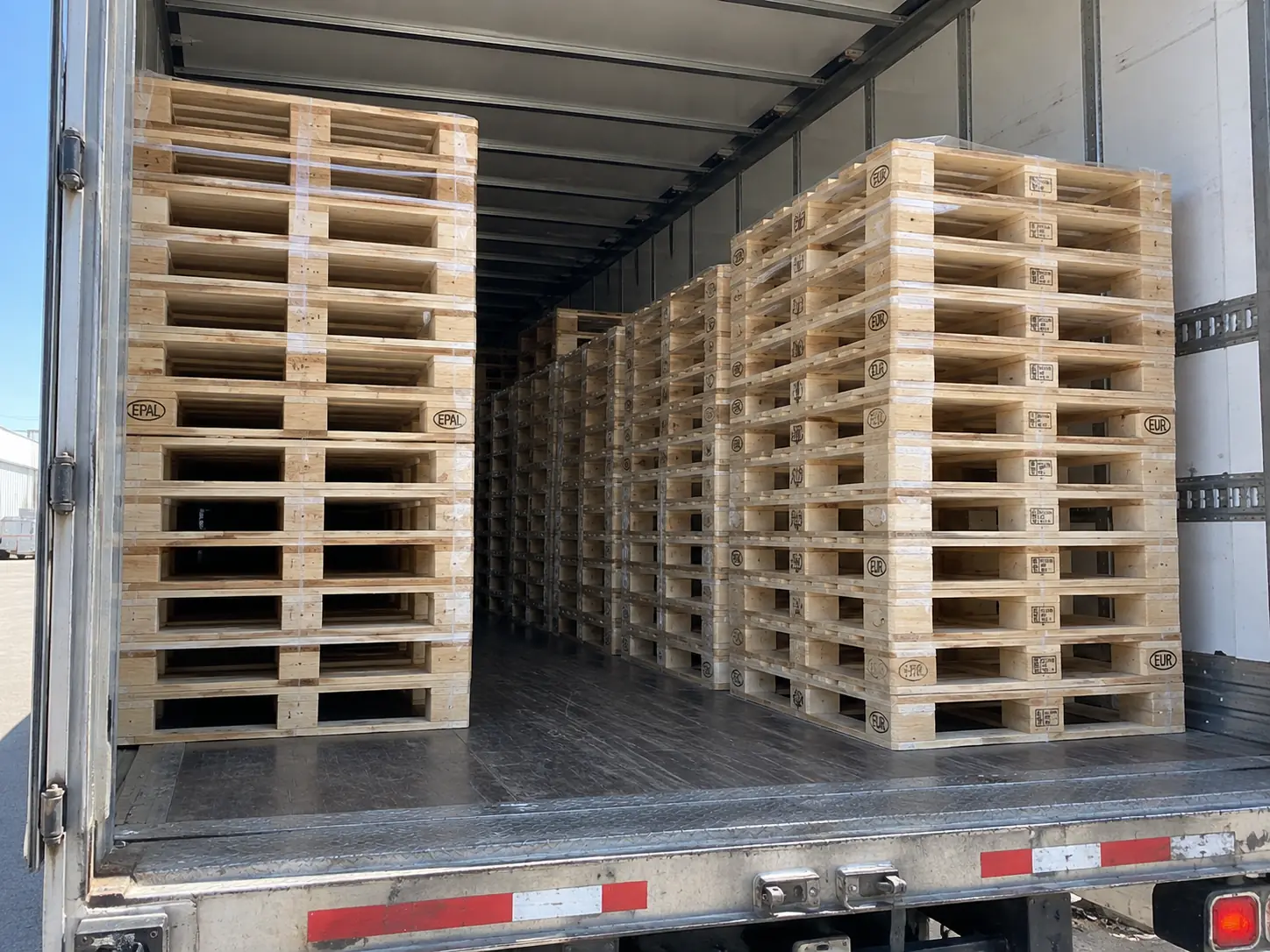
Looking into a loaded trailer stacked with new EPAL and EUR-stamped Euro block pallets, banded and strapped in rows.
A trailer of EPAL block pallets loaded two-across. Every unit stamped, banded and counted before the doors close.
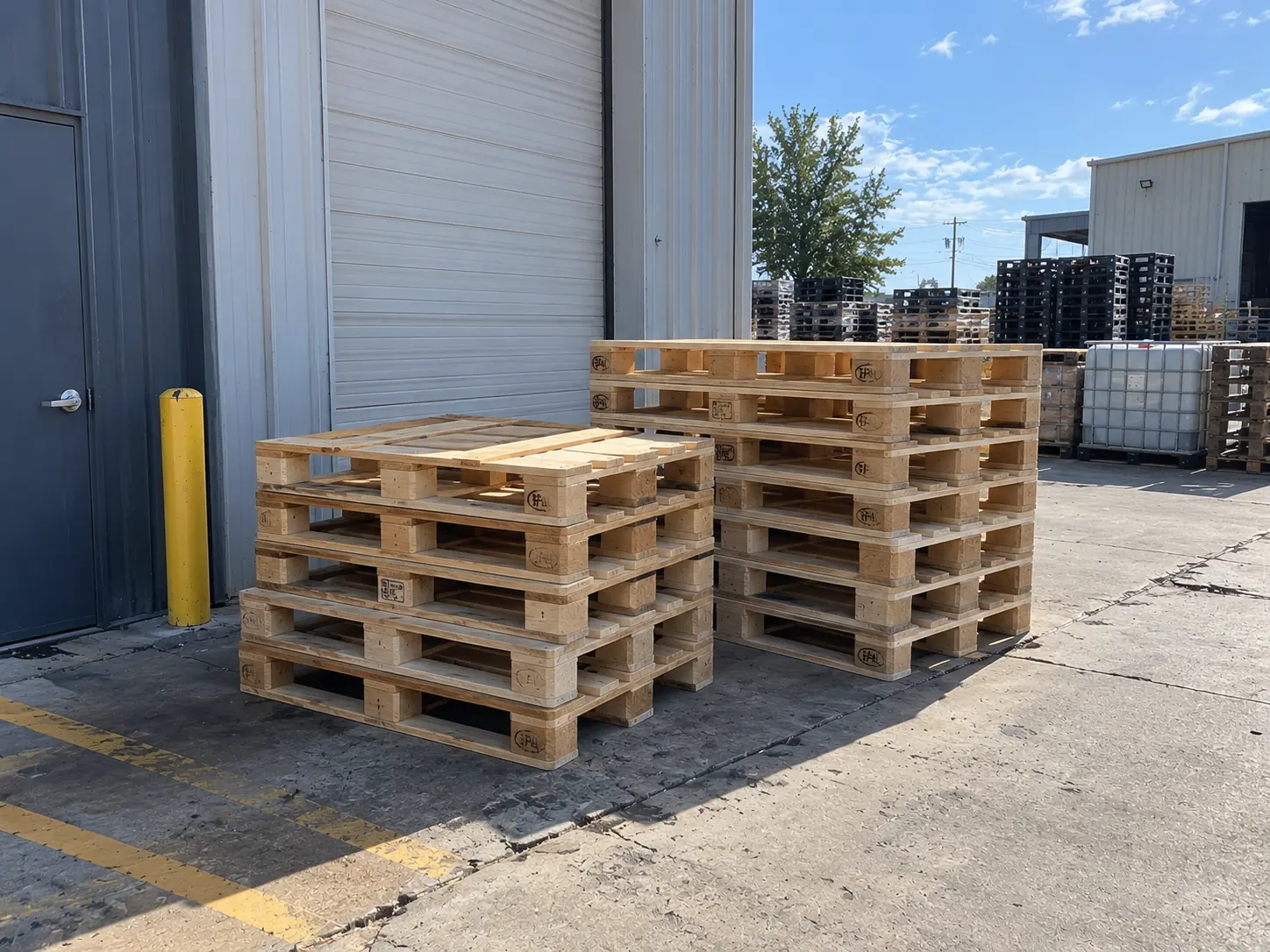
Two short stacks of new heat-treated block pallets standing on the concrete outside a roller door, with the yard behind.
New block pallets outside the kiln door. Nothing ships for export until the treatment record is filed against the order.

The three models

01

Pooled rental

You rent a high-quality block pallet per trip from a pooling provider. They own it, maintain it and recover it. You pay an issue fee, a daily or per-trip rate, and you carry responsibility for it until a receiver formally accepts transfer.

02

Owned whitewood

You buy recycled or new pallets outright. They are yours, they have residual value, and you decide what happens to them. Recovery is your problem and your opportunity.

03

One-way / expendable

You buy the cheapest pallet that will survive a single trip and you never think about it again. Common for export and for shipments to receivers who will not return anything.

Where the real cost lives

Cost elementPooledOwned recycledOne-way
Capital outlayNoneModerate — fleet purchaseNone
Per-trip costFixed issue + daily ratePurchase ÷ trips + repairFull purchase each trip
Retrieval costProvider's problemYours — or ours, on a programmeNone
Loss exposureHigh — non-transfer fees are severeModerate — you lose an assetNone
Administrative overheadHigh — transfer reconciliation is real workLowNone
Residual valueNone to youReal — cores have a market priceNone
Quality consistencyHighGrade-dependentLow
FlexibilityConstrained to pool footprintsAny footprintAny footprint

A decision framework

  1. Does the pallet come back to you, reliably, more than 70% of the time? If yes, owning is almost certainly cheaper. If no, continue.
  2. Do your receivers already participate in a pool, and will they accept transfer without friction? If yes, pooling is viable. If no, pooling will cost you in non-transfer charges.
  3. Is your load high value or damage-sensitive enough that pallet quality materially changes damage rates? If yes, pooling or new is justified. If no, recycled whitewood.
  4. Does the shipment cross a border one-way? If yes, expendable or export-grade recycled, treated and stamped.
  5. Do you have volume and dock space to run recovery yourself, or a partner who will? If yes, owned recycled with a retrieval programme is the lowest total cost available.

Most operations are not in one category. A typical manufacturer runs pooled pallets into two large retail customers, owned recycled whitewood for everything domestic, and expendable softwood for export. That is not indecision — it is correct.

The total cost model, line by line

Most comparisons stop at per-trip fee against unit price, which is the smallest part of the picture. This is the full line list. Fill it in for your own operation and the answer usually falls out without further argument.

Cost linePooledOwned recycledOne-way
Capital outlayNoneModerate — the fleetNone
Per-trip costIssue fee + daily ratePurchase ÷ trips + repairFull purchase, each trip
Retrieval costProvider's problemYours, or your recycler's on a programmeNone
Loss and non-transfer exposureHigh — charges exceed pallet valueModerate — you lose an assetNone
Reconciliation labourReal and recurring; needs a named ownerMinimalNone
Residual valueNone to youReal — cores have a market priceNone
Quality consistencyHighGrade-dependent, and specifiableLow
Footprint flexibilityConstrained to pool sizesAny footprintAny footprint
Floor space for emptiesSomeSome — managed by collection cadenceNone
Disposal costNoneNone — negative, if you sell coresYours, unless recovered
Administrative overheadHighLowVery low
Exposure to seasonalityLow — provider absorbs itModerate — manageable with an agreementHigh — spot buying at peak

A decision tree you can actually follow

  1. Does the pallet come back to you reliably, more than about 70% of the time? If yes, owning is almost certainly cheapest. If no, continue.
  2. Do your receivers already participate in a pool, and will they accept transfer without friction? If no, pooling will cost you in non-transfer charges regardless of the headline rate.
  3. Will you staff the reconciliation — a named person, monthly, against the provider statement? If no, do not pool. This is where the surprises come from.
  4. Is your load high-value or damage-sensitive enough that pallet quality materially changes damage rates? If yes, pooling or new is justified. If no, recycled whitewood.
  5. Does the shipment cross a border one-way? If yes, expendable or export-grade recycled, treated and stamped.
  6. Do you have volume and dock space to run recovery, or a partner who will? If yes, owned recycled with a retrieval programme is the lowest total cost available.
  7. Are you actually several operations at once? Almost certainly. Run a mixed fleet deliberately rather than by accident.

Governing a mixed fleet without creating a liability

  • Physically separate at receiving. Paint a floor area. Pooled pallets never touch the whitewood pile — this single control prevents most of the trouble.
  • Train receiving to recognise pool branding on sight. It is distinctive and it takes five minutes to teach.
  • Name an owner for reconciliation, with it in their objectives. Not "the shipping team".
  • Reconcile monthly against the provider statement, not annually. A monthly discrepancy is a question; an annual one is an investigation.
  • Check whether a receiver participates before you ship pooled, not after.
  • Tell your recycler you run a mixed fleet. We will not collect pooled units and we would rather find them in a photograph than in a trailer.
  • Audit the scrap stream occasionally. Pooled pallets being broken up alongside whitewood is a quiet and expensive failure.

The commonest conversation we have on a first collection is our driver spotting pooled units in the pile and stopping to ask. Nearly every time the answer is that nobody knew they were in there. We will not take them — not out of virtue, but because taking them creates a liability on your account that you did not agree to.

Common questions

Is pooling always more expensive?
No. On a genuinely closed loop with cooperative trading partners and a high-value pallet requirement, pooling can be the lowest total cost because the provider absorbs recovery and repair entirely.
What happens if I lose a pooled pallet?
You are charged. Rates vary by provider and contract, but the charge substantially exceeds the value of an equivalent whitewood pallet, which is the point.
Can I mix pooled and owned pallets?
Yes, and most operations do. The discipline required is keeping them physically separated at receiving so pooled units do not get scrapped or sold.
How many trips do I need to justify owning?
With recycled whitewood at typical market pricing, the crossover against per-trip pooling costs usually arrives somewhere between three and five recovered trips — which is well inside a hardwood pallet's service life.