Overhang
Product hanging past the deck edge loses roughly 30% of its compression strength in a stack. If your load overhangs a 48x40, a 48x48 or a purpose-built footprint pays for itself in damage avoidance alone.
When a standard footprint does not fit the product, the right answer is a pallet built to the product rather than a product wrestled onto a pallet. We design and build custom wood pallets, skids and bases from your drawing, your sample or a photograph of the load — runs from 25 prototypes to 25,000 production units, with a first article on your dock in about a week.
Send the details and a named person at the Evendale yard replies within one business day with pricing, freight and a piece count — in writing.
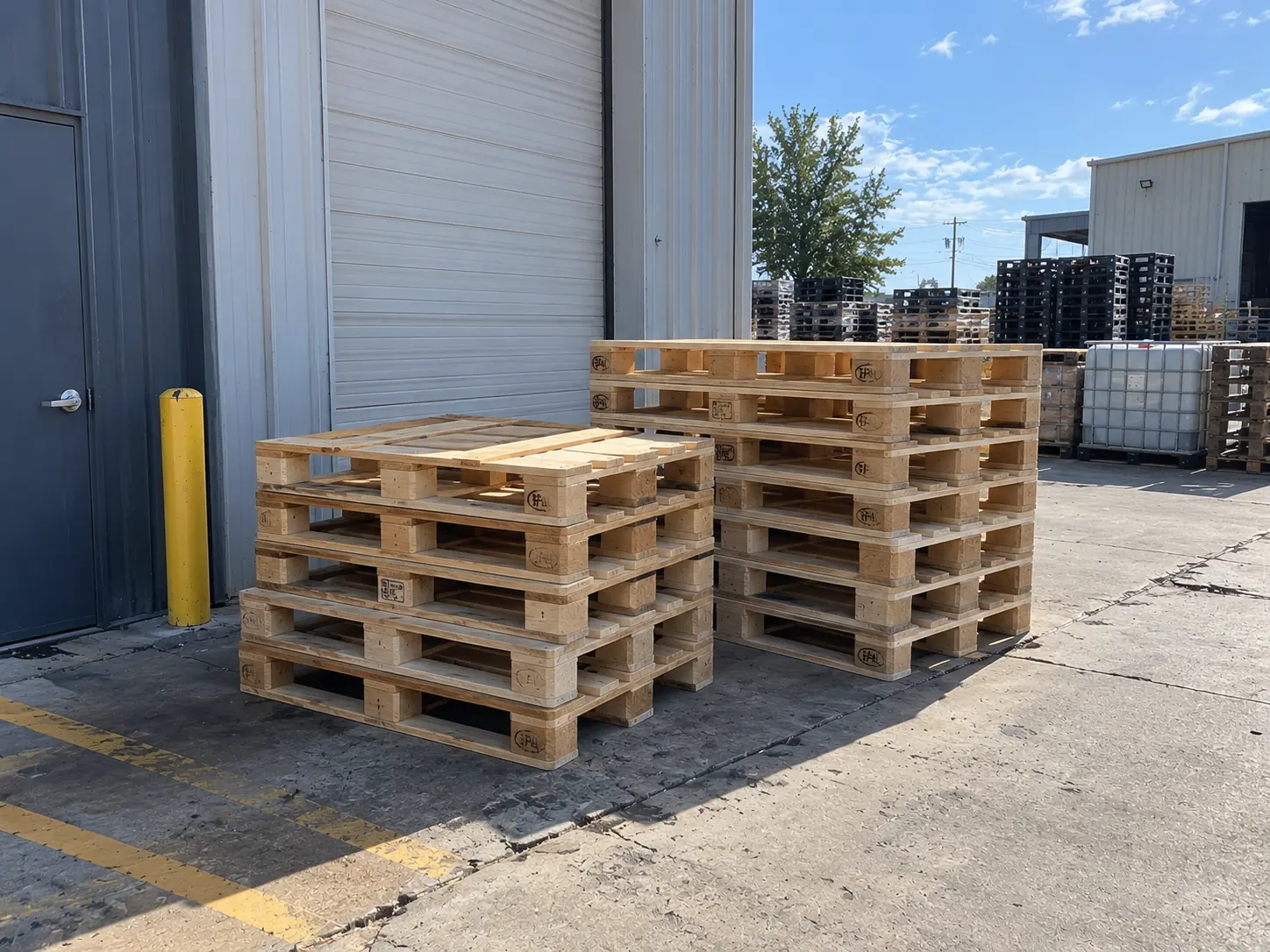
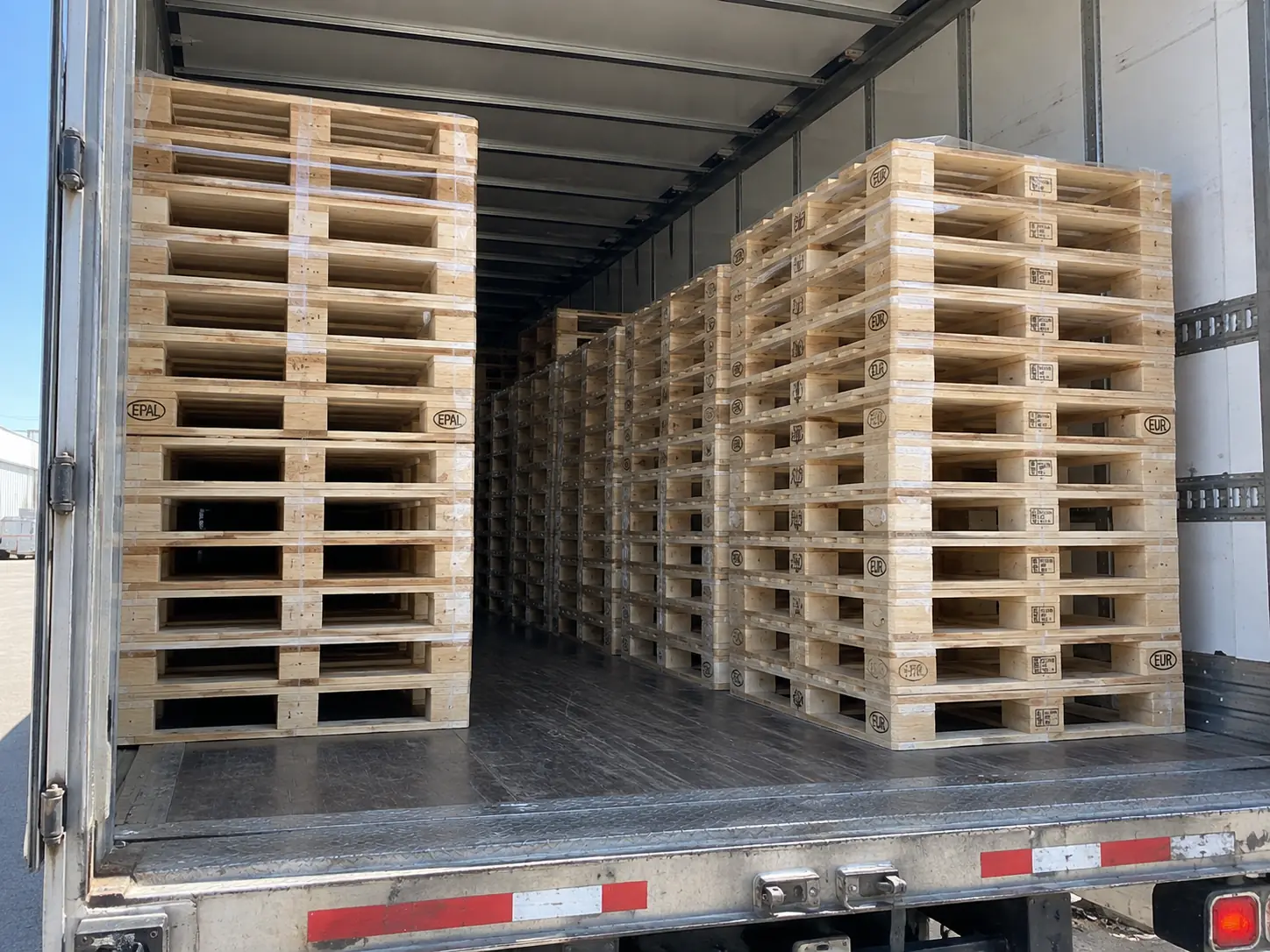
Custom builds cost more per unit than recycled standards, so the honest advice is to use a standard footprint whenever one works. These are the situations where it does not.
Product hanging past the deck edge loses roughly 30% of its compression strength in a stack. If your load overhangs a 48x40, a 48x48 or a purpose-built footprint pays for itself in damage avoidance alone.
Machinery, castings, transformers and coils concentrate weight over a small area. These need extra stringers, doubled deck boards or a solid deck — not a standard grocery pallet.
A footprint tuned to a 40-ft container floor plan can add an entire extra row per container. On a regular export lane that is the fastest payback in packaging.
AS/RS, shuttle systems and robotic cells impose tolerances a recycled pallet cannot reliably hold. Custom builds hold ±1/8 inch.
When the pallet is never coming back, the right build is the minimum structure that survives one trip — often lighter and cheaper than a standard.
Retail floor displays and farm-market fixtures where the pallet is visible to a customer. Sanded, cleaned, sometimes stencilled.
Weight, weight distribution, stack height, whether it racks, whether it goes in a container, whether it crosses a border. We would rather over-ask than under-build.
Deck configuration, stringer count and dimension, board thickness, species, fastener schedule and estimated static, dynamic and racked ratings. Sent as a drawing, not a paragraph.
One to five units built on a temporary jig and delivered for a physical load test at your site. This step catches the things a drawing never does.
On approval the jig is fixed and the run scheduled. Standard production lead time is 10–15 business days depending on quantity and species availability.
The jig and spec stay on file. Reorders skip straight to scheduling, and your spec number appears on every future quote and BOL.
| Configuration | Description | Typical rating | Common application |
|---|---|---|---|
| Four-way notched stringer | Standard stringers notched for fork entry on all four sides | 2,500 lb dynamic | General distribution with mixed handling equipment |
| Block pallet | Nine blocks with top and bottom deck boards; true four-way entry | 4,000 lb dynamic | Automation, export, heavy or unstable loads |
| Heavy-duty solid deck | Full plywood or tight-laid board deck over 4–6 stringers | 6,000+ lb static | Machinery, castings, transformers |
| Two-way skid | No bottom deck boards; runners only | 2,000 lb dynamic | One-way shipments, floor storage, low-cost export |
| Nestable / winged | Deck boards overhanging the stringers on two sides | Varies | Bar-lift handling, strap-over loads |
| Double-face reversible | Identical top and bottom decks | 3,000 lb dynamic | Both faces usable, longer service life |
Ratings shown are typical for hardwood construction and are confirmed per build. We do not publish a rating we have not calculated for your actual spec.
Custom work goes wrong in predictable places. This is the gate list we work through, and each gate exists because skipping it cost somebody a production run at some point.
Gross weight, weight distribution, contact points, stack height, whether it racks, whether it goes in a container, whether it crosses a border. We would rather over-ask than under-build.
Forklift, pallet jack, clamp, crane, AGV, conveyor. And critically: what equipment exists at the destination, which is the question most often not asked.
Deck configuration, stringer count and section, board thickness, species, fastener schedule, and calculated static, dynamic and racked ratings. Issued as a drawing, not a paragraph.
Built on a temporary jig in 5–7 business days and delivered for a physical load test at your site. This step catches what a drawing never does.
Your load, your handling equipment, your rack if applicable. We ask for photographs of the loaded prototype. Changes at this stage are free; changes after gate 6 are not.
The jig is built and the specification gets a number that appears on every future quote, BOL and grade sheet.
10–15 business days for a standard run, plus kiln time if the build is export-treated.
Jig and spec stay on file indefinitely for active accounts. Reorders skip straight to scheduling.
| Configuration | What it solves | Typical rating | Cost against a standard |
|---|---|---|---|
| Four-way notched stringer | Mixed handling equipment on one site | 2,500 lb dynamic | Baseline |
| Four-stringer | Loads near the rating limit; centre-of-deck point loads | 3,200 lb dynamic | Modest increase — the cheapest safety margin available |
| Tight-laid or solid deck | Drums, bulk bags, small cartons that bridge a 3.5-in gap | 2,700 lb dynamic | Moderate increase |
| Nine-block construction | Automation, true four-way entry, European lanes | 3,300 lb dynamic | 30–60% increase |
| Heavy-duty solid deck, 6 runners | Machinery, castings, transformers, point loads | 6,000 lb dynamic | Substantial — built to a drawing every time |
| Two-way skid, no bottom deck | One-way export where minimum structure is correct | 2,000 lb dynamic | Reduction |
| Nestable / winged | Bar-lift and sling handling, strap-over loads | Varies | Moderate increase |
| Double-face reversible | Both faces usable; longer service life in a closed loop | 3,000 lb dynamic | Moderate increase |
| Container-tuned footprint | Recovering the wasted floor strip in a 40-ft container | Per build | Moderate — pays back fastest of anything here |
| Display / brand-facing | Retail floor displays where the pallet is customer-facing | Light duty | Varies with finish |
Ratings shown are typical for hardwood construction and are calculated per build. We do not publish a rating we have not worked out for your actual specification.
Most custom quotes are delayed because the request describes a pallet rather than a requirement. Fill this in — with us or with anybody — and you will get a specification back rather than a list of questions.