Paid — standard cores
48x40 GMA stringer pallets, repairable, dry, no contamination. The backbone of the recycled market and the highest per-piece value on our schedule.
If empty pallets are stacking up behind your building, they are an asset sitting in the wrong place. We buy used wood pallets by the piece, arrange free pickup with our own trailers, and pay on a published per-core schedule. Most sites go from first email to first cheque inside two weeks, and the pile never comes back.
Send the details and a named person at the Evendale yard replies within one business day with pricing, freight and a piece count — in writing.
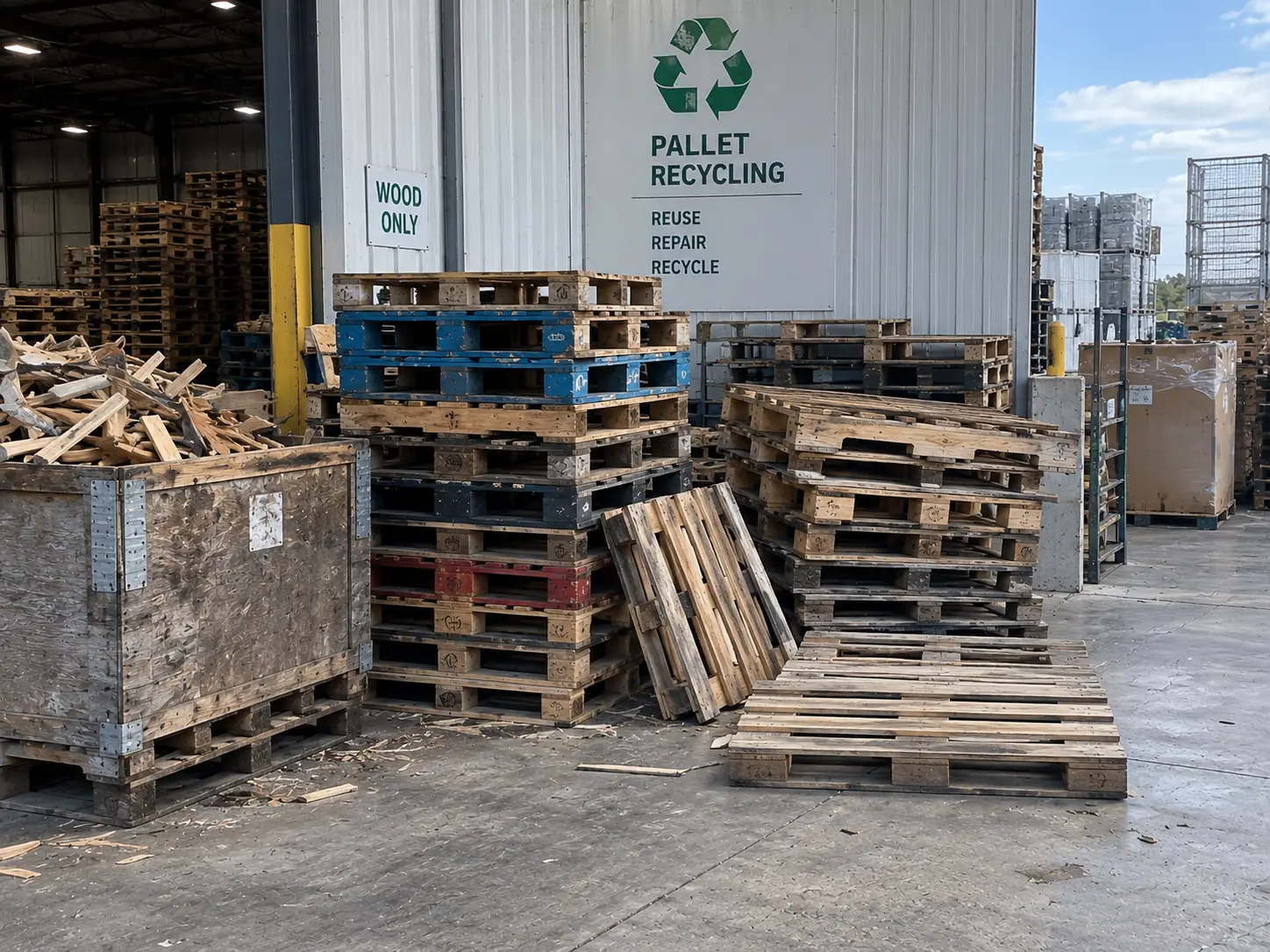
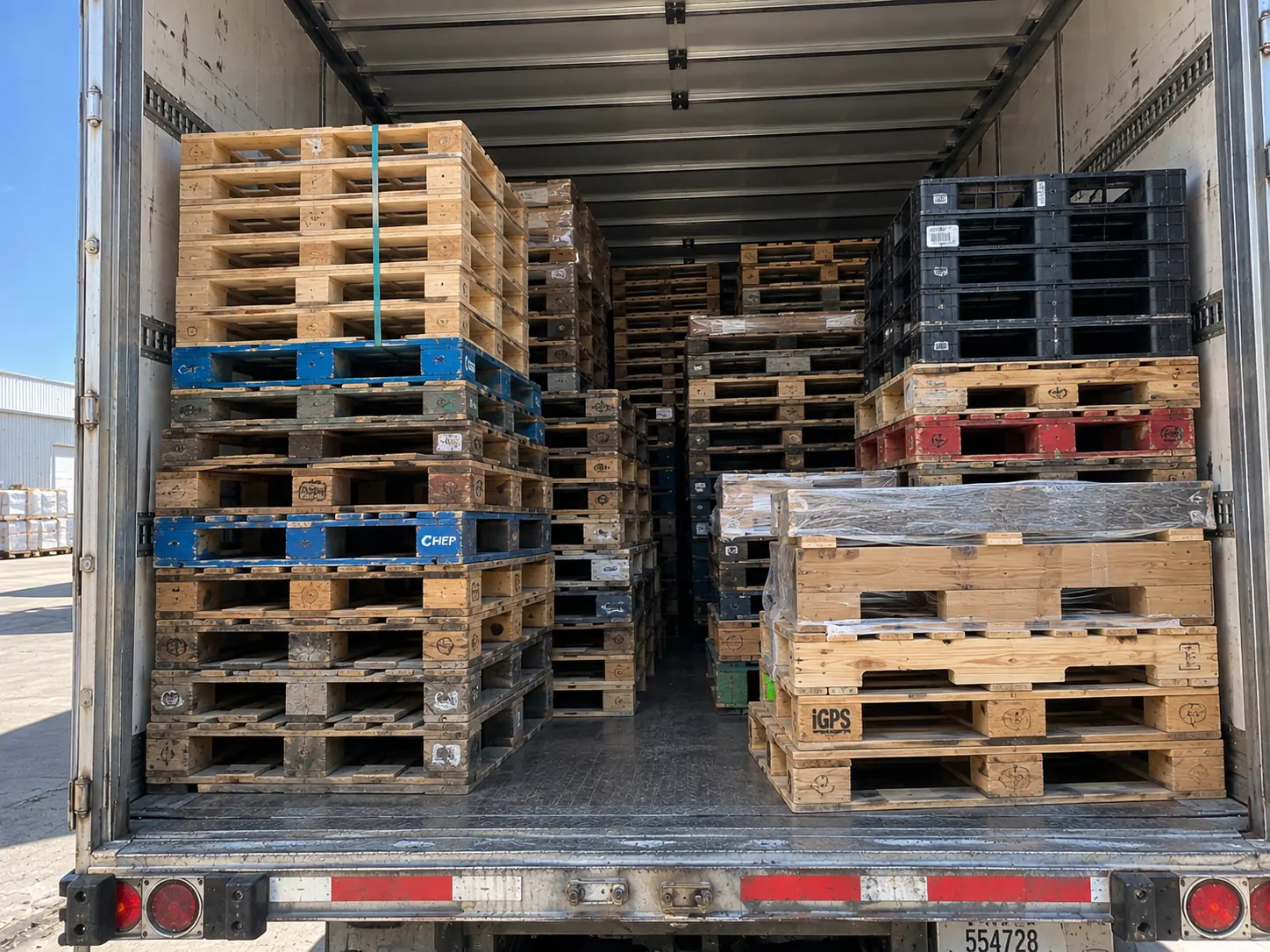
The honest answer is that a pallet pile is never uniform. There are good 48x40s at the top, an increasingly strange assortment underneath, and at the bottom a layer that has been rained on since spring. We price the first two categories and remove the third at no charge, because leaving it behind defeats the purpose of the visit.
48x40 GMA stringer pallets, repairable, dry, no contamination. The backbone of the recycled market and the highest per-piece value on our schedule.
48x48, 42x42, 36x36, 48x45, block pallets and Euro/EPAL. Scarcer than GMA, so frequently worth more per piece despite being harder to move.
Unsorted piles containing a workable percentage of recoverable wood. Quoted per trailer after a photo review or a site visit.
Shattered, mould-bloomed, nail-stripped or soaked units. These go to our grinder line and become mulch, bedding and boiler fuel rather than landfill.
We do not buy pallets that have carried hazardous chemicals, raw meat, or anything with an active spill. If you are not sure, send a photo — a two-minute look saves a wasted trailer.
Two structures, both simple. Which one suits you comes down to whether your volume is steady enough to justify sorting labour on your side.
| Structure | You do | We do | Best when |
|---|---|---|---|
| Per-piece sorted | Keep 48x40 cores separate from odd sizes and scrap | Count on the trailer, pay the published rate per core within 15 days | You generate 300+ cores a month and have dock space |
| Per-load mixed | Nothing — pile it wherever it already goes | Photo-quote the pile, pay a flat rate per trailer | Volume is irregular or labour is tight |
| Net-of-service credit | Buy replacement pallets from us | Apply core value directly against your purchase invoice | You both buy and generate pallets — the cleanest closed loop |
Use the form on this page — the quantity and message fields are enough. Phone-camera photos of the pile from two angles tell us more than any description.
Same or next business day. We will tell you the per-core rate or the per-load rate, and the earliest pickup window we can hold.
Dry van for clean cores, flatbed with straps for outdoor piles, 26-ft box truck for tight urban docks and alleys.
Our driver counts with your receiving contact, both parties sign the tally sheet, and payment or credit follows on the agreed terms.
Recurring customers move to a standing schedule — a fixed day each week or a trailer parked on site that we swap when it fills. The trailer option is popular with manufacturers who would rather never touch a pallet stack twice.
Every pickup is logged by piece count, grade split and destination — reuse, remanufacture or fibre recovery. Once a month we roll it up into a one-page statement showing tonnage diverted from landfill, estimated embodied carbon retained, and board feet of virgin timber displaced. It is the kind of document a sustainability manager can actually cite, and it costs nothing.
Core value is not one number. It is a base rate adjusted by six things, and five of them are within your control. We publish the direction and rough magnitude of each so you can see where your pile sits before you ask.
| Factor | Effect on value | What to do about it |
|---|---|---|
| Dry versus rained-on | Large positive | Move the pile under any existing roofline. This is the biggest free lever there is. |
| Sorted 48×40 versus mixed | Moderate positive | Only worth it if you have dock space and steady volume. Otherwise let our graders sort. |
| Hardwood versus softwood mix | Moderate positive | Not controllable — but worth knowing, because it explains price differences between sites. |
| Season released | Moderate positive in Q4 | Release in October, not January. Same pallets, better market. |
| Volume per pickup | Moderate positive | Around 100 makes a dedicated trip work; a full trailer is materially better. |
| Contamination present | Large negative | Keep chemical and food-spill units out of the main pile. One bad unit can downgrade a load. |
| Pooled units mixed in | Blocks the load | Separate at receiving. We will not take them — they are a liability that stays on your account. |
The bottom two or three units in any pile stood directly on asphalt wick moisture upward continuously. Stacking on runners or a sacrificial base pallet recovers them entirely, and costs nothing.
Wrapping a wet bundle traps the water against the wood. What was a drying problem becomes a mould problem inside a week, and mould disqualifies a unit from food, pharmaceutical and export use.
Late-autumn soaking followed by a hard freeze splits wood along the grain. This is where genuinely destroyed stock comes from in our territory, and it is entirely a storage question.
Clamping a stack of empties crushes the deck boards on the outer units. We see it most at sites without a dedicated pallet handler.
A pile that has not moved since spring has birds, rodents or insects in it. Anything with visible pest activity is segregated and cannot enter the export or studio stream.
Anonymised from an actual Butler County account, with their permission and their numbers. A food-processing plant with a pile behind the building that had reached the point of being raised in a safety meeting.
Sent from a phone at 4:12pm: the pile from the dock side and from the yard side. Rough count given as "maybe 1,500".
From the photographs: predominantly 48×40, roughly a quarter visibly weathered, three IBC frames and a stack of pooled blue units in the middle of it. We flagged the pooled units before dispatching anything.
Per-core rate on sorted 48×40, per-load rate on the mixed remainder, free removal of the scrap layer. Next available window on the existing Hamilton route day, four days out.
Flatbed with straps rather than a dry van, because the pile was outdoors and half of it was wet. Two loads. Actual count 1,806, not 1,500 — piles are almost always undercounted.
Counted with their shipping lead, both parties signed. Pooled units left behind, stacked separately, with a note on how to raise them with the provider.
61% direct reuse, 24% to the repair bench, 11% dismantled, 4% to fibre. The weathered quarter graded materially lower, which is the whole argument for covered storage.
Net 15 from the signed tally. They now run a standing monthly route and have moved the pile under the dock canopy.
We issue the weighbridge ticket because piece counts flatter. The material most likely to end up in the disposal stream is also the heaviest, so counting pieces systematically understates it. If a recycler reports your diversion by piece count, ask why.