Old fastener holes
Every deck board that has been pried off leaves two to four holes per stringer crossing. They darken with age and oxidation, so a fresh repair reads pale against old scars.
A hardwood 48×40 typically supports four to seven repair cycles before accumulated nail holes make the stringers unreliable. You can estimate where a given pallet sits in that range by counting old fastener scars along the stringer face, looking for plug shadows, and checking whether the lead boards have been replaced. It takes about ten seconds and it is the most useful skill a receiving inspector can learn.
If this piece describes a problem you actually have, describe it back to us in the message field. You will get a written answer from a person within one business day.
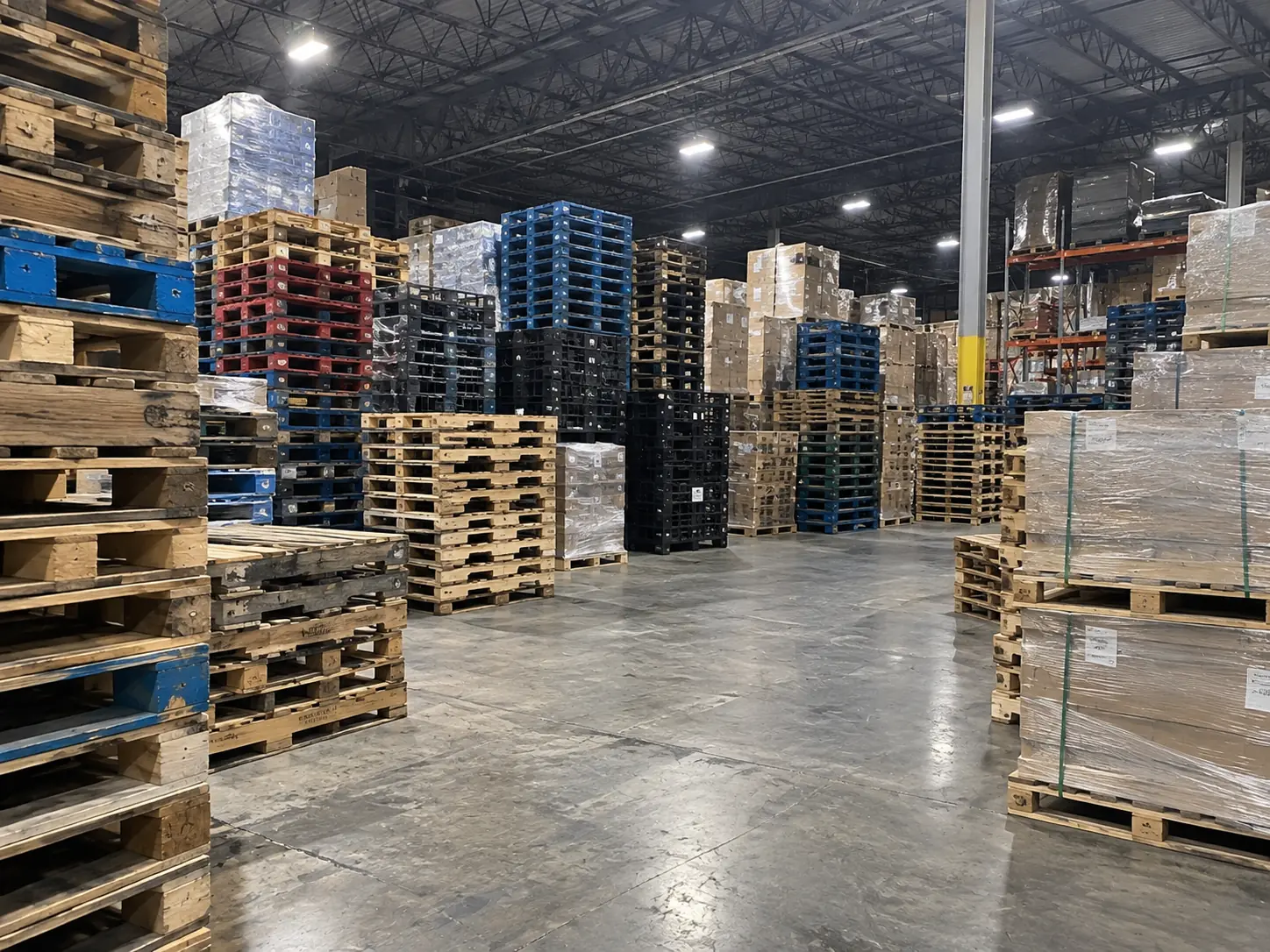
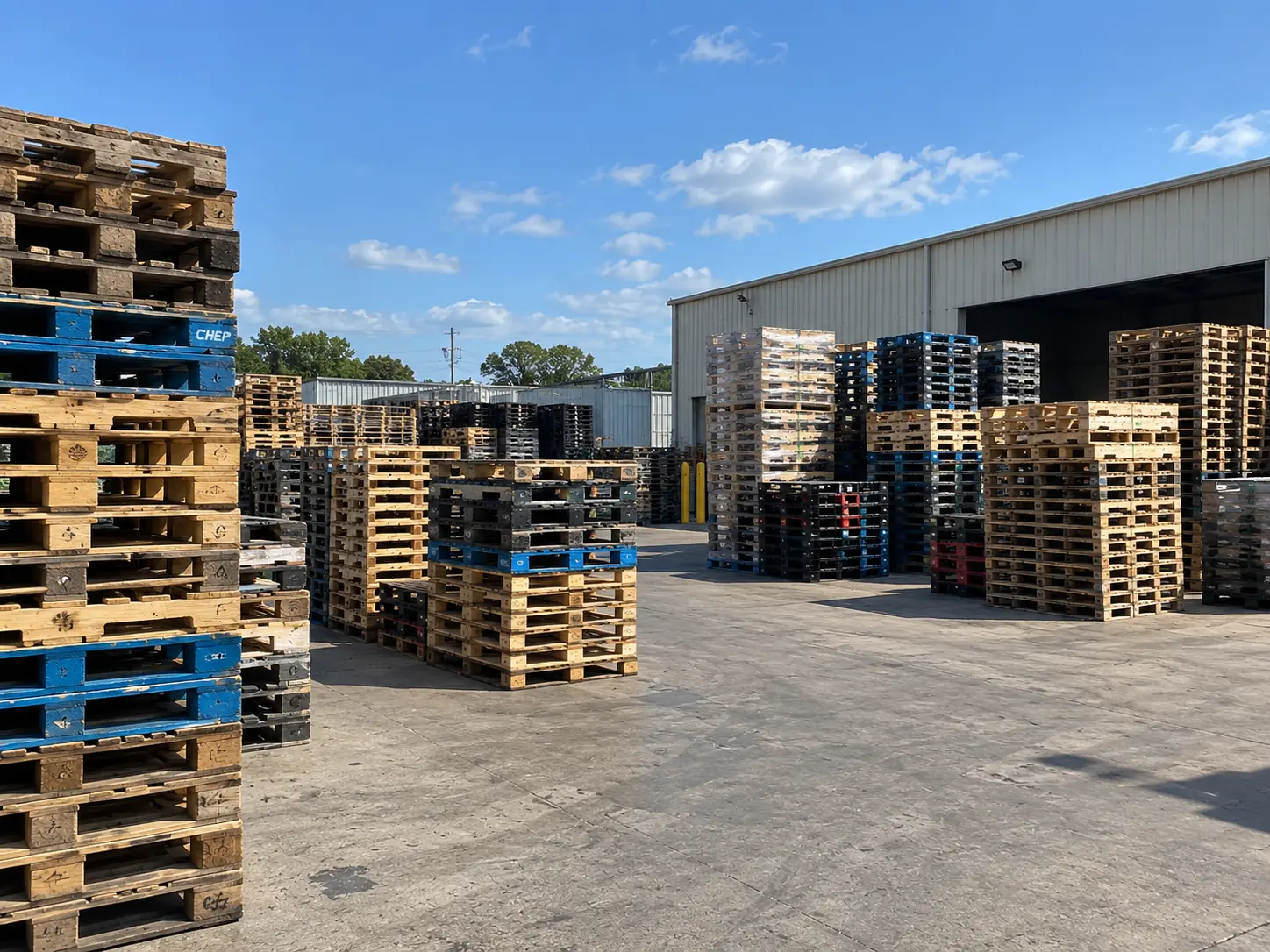
Every deck board that has been pried off leaves two to four holes per stringer crossing. They darken with age and oxidation, so a fresh repair reads pale against old scars.
A hardwood plug glued into a fork puncture is visible as a rectangle of differently oriented grain. It means that stringer has already survived one significant hit.
Where a companion stringer has been removed or replaced, a line of paired holes runs the full length. This is a pallet on its last repair cycle.
Boards weather at different rates. Wide colour variance across a deck usually means multiple repair visits rather than mixed species at build.
Rounded, splintered bottom board edges indicate heavy pallet jack use. Not a defect in itself, but a proxy for total trips.
Smooth shanks alongside helically threaded shanks means the pallet has been repaired by more than one operation, to more than one standard.
| What you find | Approximate cycles used | What it is still good for |
|---|---|---|
| Clean stringers, uniform boards, no old holes | 0–1 | Anything, including racking |
| One or two old hole rows, no plugs | 1–3 | General distribution, racking |
| Multiple hole rows, one plug shadow | 3–5 | Floor storage, one-way freight |
| Plug plus companion marks | 5–7 | Internal movement only |
| Stringer face perforated along its length | 7+ | Dismantle — the wood is worth more as boards |
These are working figures from our own repair benches, not a published standard. They hold well for mixed hardwood and less well for softwood, which tends to fail before it accumulates this much history.
Cosmetic grade tells you what a pallet looks like today. Repair history tells you how long it will keep working. Those are different questions, and the second one usually matters more. A clean-looking B grade with four repair cycles behind it will outlast an A grade that has been through six, and no grading vocabulary in this industry distinguishes between them.
If you are buying recycled stock for a closed loop where the pallet comes back to you repeatedly, ask to inspect a sample and read the stringers. If you are buying one-way stock that leaves and never returns, do not bother — you are paying for exactly one trip and history is irrelevant.
Every piece on this site closes with the slice of our operating record that bears on what it argues. The full record is published at /resources/operating-record.
Each of these repairs leaves a different signature in the wood. The share column tells you which signatures you are most likely to be reading.
| Repair | Share | Bench minutes | Grade after | Racking |
|---|---|---|---|---|
| Deck board replacement (1–2 boards) | 48.6% | 2.1 | A / #1 | Approved |
| Deck board replacement (3+ boards) | 17.2% | 4.4 | B / #1 | Approved |
| Stringer plug | 14.9% | 3.8 | B / #2 | Case by case |
| Companion stringer | 9.3% | 3.2 | B / #2 | Not recommended |
| Bottom deck / chamfer repair | 5.7% | 2.6 | B / #1 | Approved |
| Full teardown and jig rebuild | 4.3% | 9.7 | Per build spec | Per spec |