Nestable
Stack inside one another when empty, cutting return freight volume by up to 75%. Light duty, usually not rackable. The right choice for one-way and reverse-logistics-heavy programmes.
Plastic pallets make sense in a narrow set of applications: closed-loop systems where the pallet reliably returns, hygienic environments that require washdown, and automated systems that demand dimensional consistency. Outside those, wood is usually cheaper, stronger per dollar and far less carbon-intensive. We sell both and we will tell you which one your application actually needs.
Send the details and a named person at the Evendale yard replies within one business day with pricing, freight and a piece count — in writing.
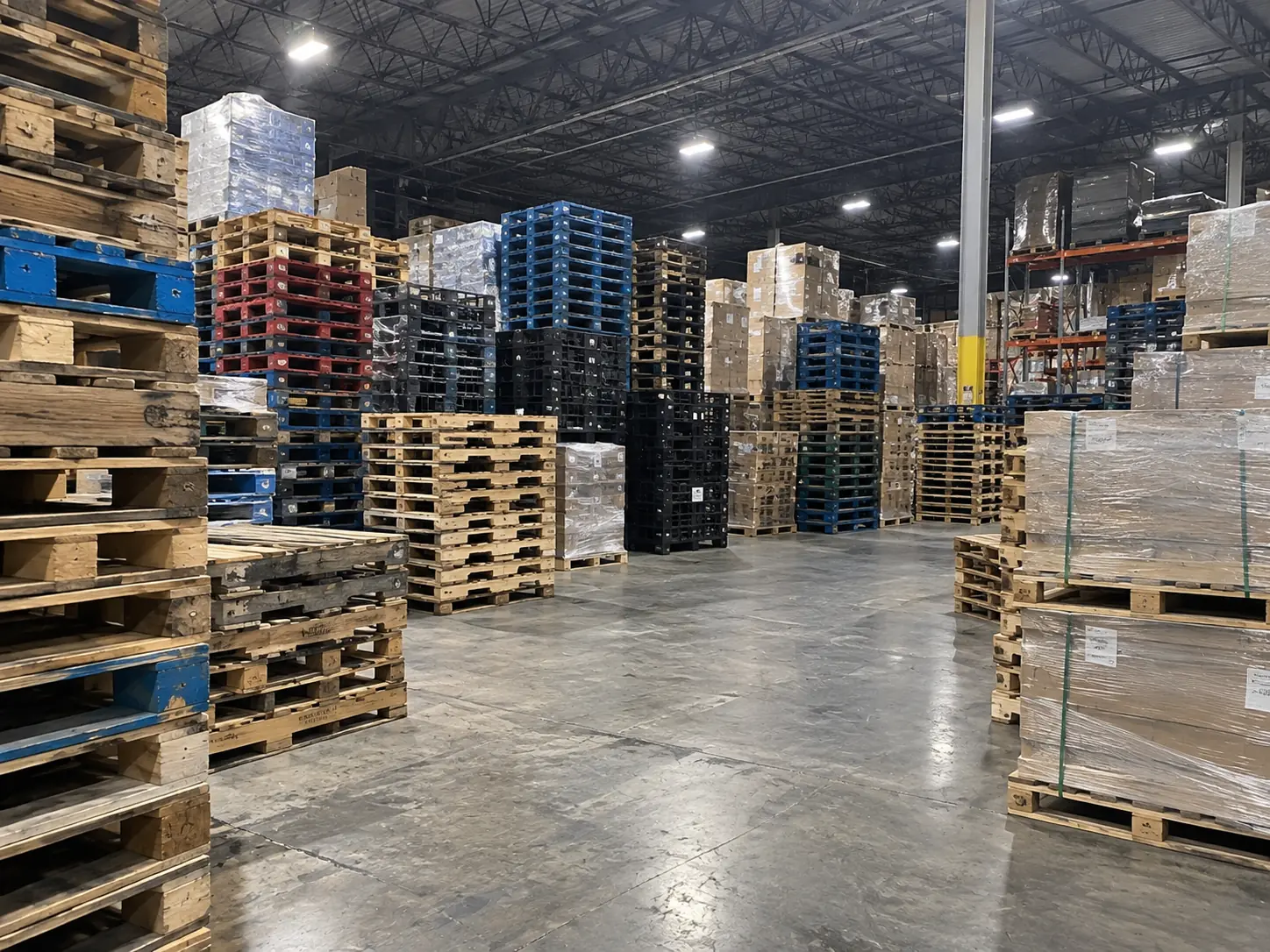
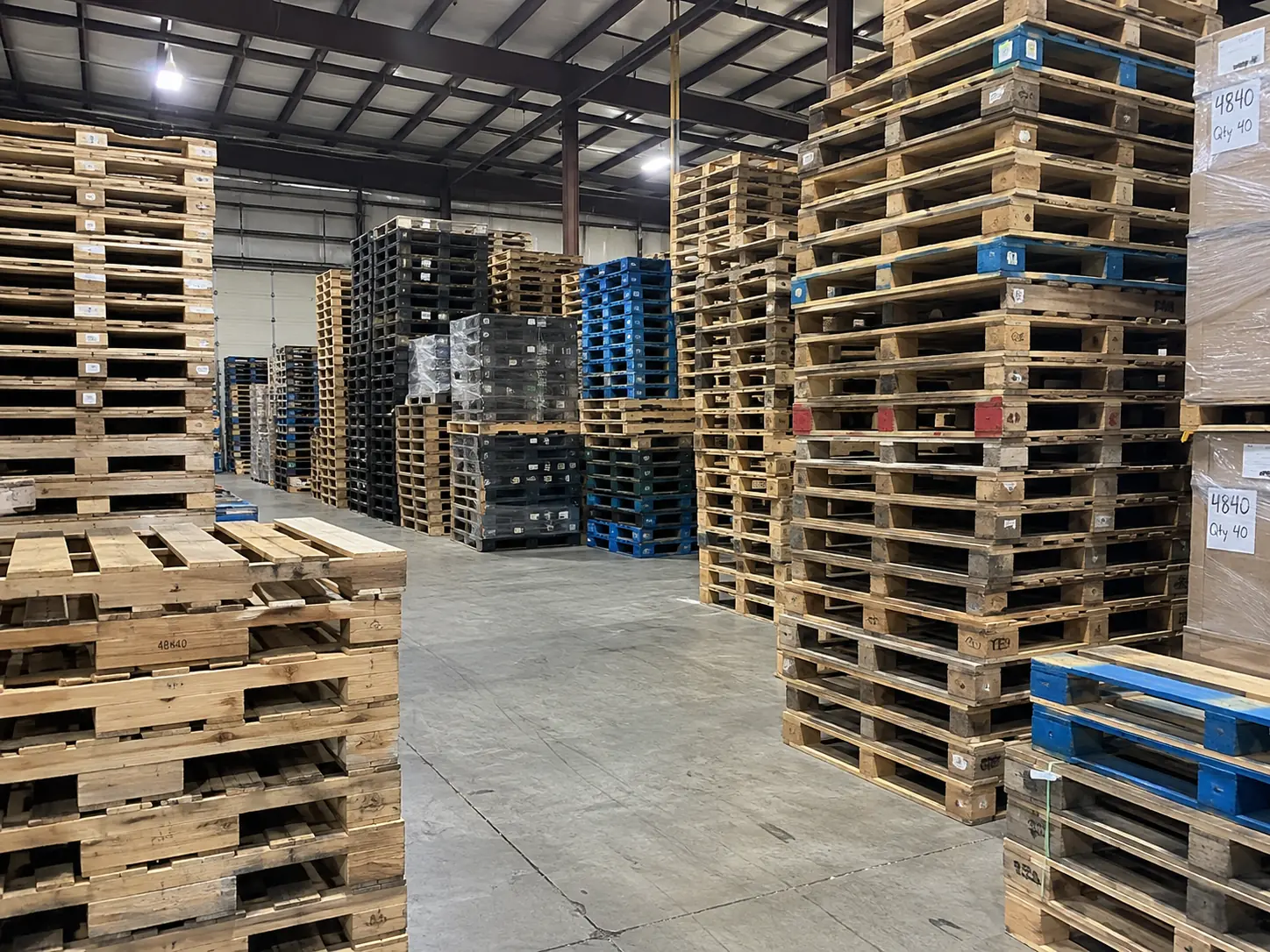
Stack inside one another when empty, cutting return freight volume by up to 75%. Light duty, usually not rackable. The right choice for one-way and reverse-logistics-heavy programmes.
Flat bottom deck, stack vertically when empty. Medium duty, good general-purpose choice, moderate cost.
Reinforced, often with steel or fibreglass rods moulded in. Rated for edge-rack support at 1,500–3,000 lb. The heaviest and most expensive family.
Thin-wall, low-cost, ISPM-15 exempt because they contain no solid wood. Designed to be recycled at destination rather than returned.
| Factor | Wood | Plastic |
|---|---|---|
| Purchase cost | Low — recycled units are a fraction of plastic | High — 5 to 15× a recycled wood pallet |
| Service life | 4–7 trips typical before repair; repairable indefinitely | 30–100+ trips if it returns; not repairable |
| Repairability | Excellent — boards and stringers replaced individually | Effectively none; a cracked deck is a regrind candidate |
| Hygiene | Porous, cannot be washed down | Non-porous, steam and chemical washdown capable |
| Dimensional consistency | ±1/4 in typical | ±1/16 in — better for automation |
| Fire behaviour | Burns predictably; standard sprinkler design accounts for it | Higher heat release; may require sprinkler system review |
| End of life | Repair, remanufacture, mulch, biomass | Regrind into new plastic product, if a taker exists |
| Embodied carbon | Low — biogenic, sequestering | High — petroleum feedstock, energy-intensive moulding |
A cracked plastic pallet has no repair path, which means the environmental case for plastic collapses entirely if end-of-life units are landfilled. We buy back end-of-life HDPE and PP pallets from our customers regardless of where they were originally purchased, consolidate them and move them to regional plastics reprocessors for regrind. It is a small programme and a necessary one.
| Resin | Characteristics | Best for | Watch for |
|---|---|---|---|
| HDPE | Tough, good impact resistance, flexible at low temperature | Cold chain, general reusable, washdown | Softens at elevated temperature; creeps under sustained load |
| Polypropylene (PP) | Stiffer, better at high temperature, lighter | Hot-fill environments, autoclave-adjacent, hygienic | More brittle below freezing |
| HDPE with steel/fibreglass rods | Reinforced for edge-rack support | Rackable applications, 1,500–3,000 lb | Heaviest and most expensive family; not repairable |
| Recycled-content HDPE | Lower cost, slightly lower impact resistance | One-way export, light duty, closed loops with low abuse | Colour variation; batch-to-batch property variation |
The resin question matters most in cold chain, where HDPE keeps flexibility that PP loses, and in hot environments where the reverse is true. Buying on price without asking which resin is the commonest way a plastic conversion disappoints.
| Factor | Wood | Plastic |
|---|---|---|
| Purchase cost | Low; recycled is a fraction of plastic | 5 – 15× a recycled wood pallet |
| Service life | 4 – 7 trips before repair; repairable indefinitely | 30 – 100+ trips if it returns; not repairable |
| Repairability | Excellent — boards and stringers replaced individually | Effectively none; a cracked deck is a regrind candidate |
| Hygiene | Porous; cannot be washed down | Non-porous; steam and chemical washdown capable |
| Dimensional consistency | ± 1/4 in typical | ± 1/16 in — better for automation |
| Weight | 33 – 55 lb | 15 – 60 lb depending on family |
| Cold behaviour | Stiffer and more brittle; impact failures | HDPE stays flexible; PP becomes brittle |
| Fire behaviour | Burns predictably; standard sprinkler design accounts for it | Higher heat release; may require sprinkler design review |
| ISPM-15 | Required on export; adds kiln time | Exempt entirely |
| End of life | Repair, remanufacture, mulch, biomass | Regrind into new plastic product, if a taker exists |
| Embodied carbon | Low — biogenic, sequestering while in service | High — petroleum feedstock, energy-intensive moulding |
| Residual value to you | Real — cores have a market price | Low to none |
| Theft and loss exposure | Modest | High — they are worth stealing |
The most consequential unforced error in a plastic conversion is treating it as a packaging decision. Idle pallet storage is a special hazard in fire protection standards because empty pallets present enormous surface area with air gaps between every board. Plastic has a substantially higher heat release rate than wood, burns with dripping molten material that spreads fire downward, and produces dense smoke that impairs detection.
Ten minutes with your fire protection engineer or insurer before the purchase order occasionally changes the entire business case. It is far better to find out at the evaluation stage than at the next survey.
A cracked plastic pallet has no repair path, which means the environmental case for plastic collapses entirely if end-of-life units are landfilled. We buy back end-of-life HDPE and PP pallets from any customer regardless of where they were originally purchased, consolidate them, and move them to regional plastics reprocessors for regrind.
Rough count, resin if you know it, and whether they are contaminated. A photograph of the stack is enough.
Clean, sorted single-resin loads have value. Mixed or contaminated loads we will usually still take, at no charge, rather than see them buried.
Held by resin type until there is a full load for a reprocessor. This is why single-resin sorting is worth something to you.
Moved to regional plastics reprocessors. Reported in your monthly statement as a separate line from the wood streams.