Manufacturers
Inbound raw material arrives on pallets that do not match the outbound footprint. We take the mismatch away and supply what the outbound line actually needs.
Pallet recycling is not one process, it is a cascade. A returned pallet is first tested for direct reuse, then for repair, then for dismantling into reusable boards, then for remanufacture into a smaller footprint, and only after all four fail does it become fibre. We run the whole cascade in-house at Evendale, which is why 96% of the wood we collect goes back into service instead of into a dumpster.
Send the details and a named person at the Evendale yard replies within one business day with pricing, freight and a piece count — in writing.
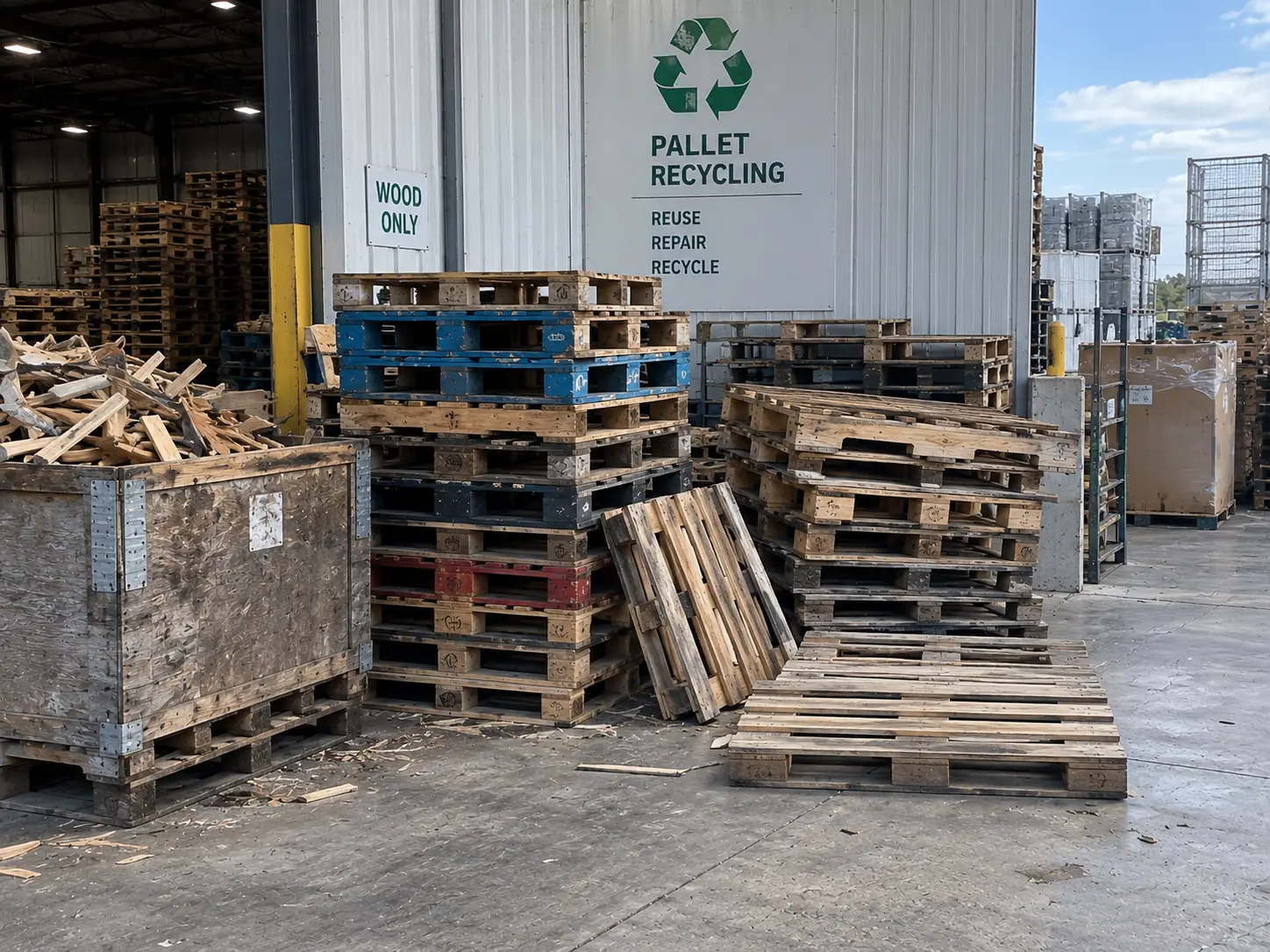
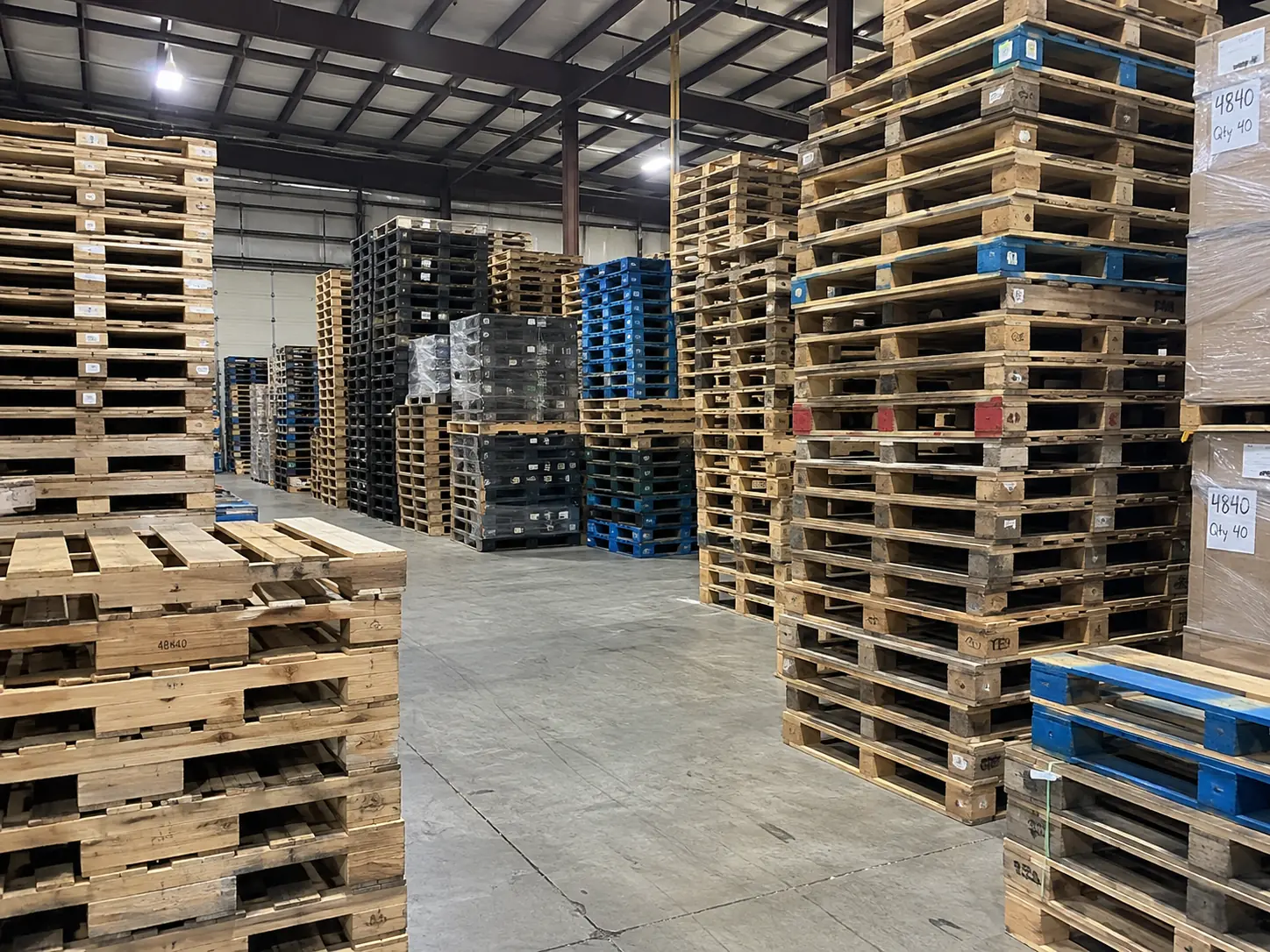
Recycling wood well means resisting the urge to grind. Grinding is fast, it is easy to sell, and it destroys roughly 90% of the value and most of the carbon benefit locked in a pallet. Every stage we can delay the grinder by is a stage that keeps a board doing the job it was milled for.
A core arrives sound. It is cleaned, inspected, graded and banded. No tools touched it. This is the highest-value and lowest-energy outcome, and it applies to roughly 55% of what comes in.
One cracked stringer or two missing deck boards. A bench technician plugs, plates or replaces the failed member using harvested wood and the unit re-enters service at #1 or #2 grade. About 27% of intake.
The frame is beyond saving but the lumber is not. A dismantler bar strips the deck; sound boards are de-nailed, trimmed and stacked as repair stock. Roughly 9%.
A destroyed 48x40 still contains enough clean length to build a 36x36 or a 42x42. Remanufactured pallets are how odd sizes stay affordable. Around 5%.
What is left is ground, screened and either coloured into landscape mulch, sized into animal bedding, or sold as boiler fuel to regional biomass plants. The final 3%.
Inbound raw material arrives on pallets that do not match the outbound footprint. We take the mismatch away and supply what the outbound line actually needs.
High volume, high grade-mix variability, tight dock windows. We schedule around receiving peaks rather than through them.
Multiple clients, multiple pallet standards, no ownership of any of it. We sort by owner where required and report by account.
Keg and case footprints, frequent moisture exposure, seasonal surges. Our 36x36 and 48x48 lines exist largely because of this sector.
Wood pallets are the single most-recoverable item in a construction and demolition stream. We pull them before they are ever tipped.
Retail plazas and industrial parks where nobody owns the pile but everybody trips over it. One scheduled sweep, one invoice.
A standard 48x40 stringer pallet contains between 70 and 100 nails, roughly 1.5 to 2.5 pounds of steel. Across our annual volume that is hundreds of tons of ferrous metal that would otherwise be buried inside buried wood. Our dismantling line runs magnetic separation on the discharge conveyor and on the grinder outfeed; recovered nails and banding are baled and sold to regional scrap processors. It is a small revenue line and a large environmental one.
Sustainability claims are only worth what the underlying data can survive. Every inbound trailer is weighed and counted, every outbound stream is weighed, and the two are reconciled monthly. You receive tonnage by destination, a diversion rate, estimated CO₂e retained in reused wood and displaced by avoided virgin lumber, and the methodology behind those numbers in plain language.
One person stands at the intake belt and pulls material before it can reach any downstream process. It is the least automated step in the building and the one we are least willing to automate. This is the catalogue they work from.
| What they are looking for | Why it matters | Where it goes |
|---|---|---|
| MB stamp (methyl bromide) | Chemically fumigated. Must never enter mulch, bedding or the studio line. | Segregated; licensed handler |
| Painted or coated wood | Unknown coating chemistry. Cannot be ground into landscape product. | Segregated; licensed handler |
| Chemical staining or residue | Common on drum pallets from the Kanawha Valley lanes. | Segregated; licensed handler |
| Food spill, organic residue | Attracts pests, produces odour, disqualifies the clean-core line. | Cleaned or scrapped by condition |
| Live pest activity or exit holes | Ends the unit immediately. Never enters export or studio stock. | Segregated; destroyed |
| Pooled units (CHEP, PECO, iGPS) | Not ours and not the customer's to sell. A liability, not an asset. | Returned to the customer, stacked separately |
| Metal plates from prior repairs | Survive dismantling, damage grinder knives, end up as metal in mulch. | Plate removed or unit scrapped |
| Non-wood debris in the load | Film, banding, broken product, occasionally an entire pallet jack. | Weighed, reported back, disposed |
That last row is why our published landfill figure is under one percent rather than zero. Non-wood debris arrives mixed into loads, it has to go somewhere, and we weigh it and report it rather than quietly absorbing it into a rounding. A recycler claiming a flat 100% diversion has either never received a mixed load or is not weighing what leaves.
A standard 48×40 stringer pallet contains between 70 and 100 fasteners. We used to quote 1.6 lb of steel per pallet from a published average; after a year of weighing our own bales against the pallets that produced them, we revised it up to 2.0 lb and changed the constant on our methodology page. The likely reason is repair history — a unit that has been through several repair cycles carries the original fasteners plus every subsequent one, and the recovered pool skews toward repaired units.
Removes loose banding, strapping and fasteners that have already worked free of the wood.
Catches nails freed by the grinding action itself. This is the stage most yards skip, and it is the reason people find nails in cheap mulch.
Separate stream from teardown, where fasteners are pulled rather than broken out.
Consolidated and baled on site. Sold to regional ferrous processors — a small revenue line and a large environmental one.
Most zero-landfill language in supply agreements is unenforceable, because it commits to an outcome without defining the measurement. If you are writing one — with us or with anybody — these are the clauses that make it real.