Specify dry stock
Ask for sub-19% moisture content on delivery. It will not stay there, but starting dry buys you a service life.
The 36 × 36 inch pallet (914 × 914 mm) is the beverage industry's compact square. It carries four half-barrel kegs, fits short-bay racking and cooler doors that a 48-inch pallet cannot clear, and weighs about a third less than a GMA — which matters a great deal when a delivery driver is moving it by hand truck into a bar basement.
Send the details and a named person at the Evendale yard replies within one business day with pricing, freight and a piece count — in writing.
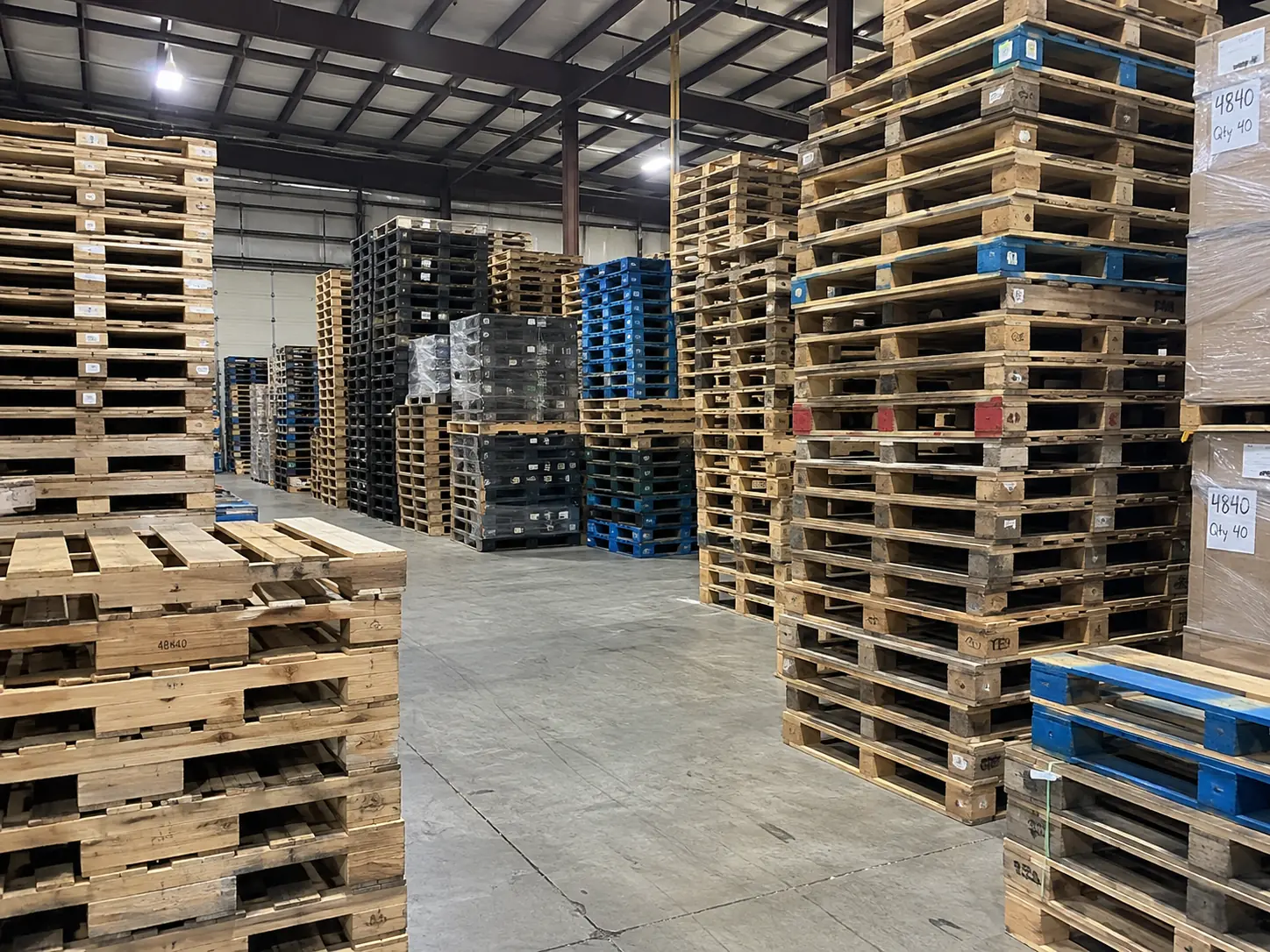
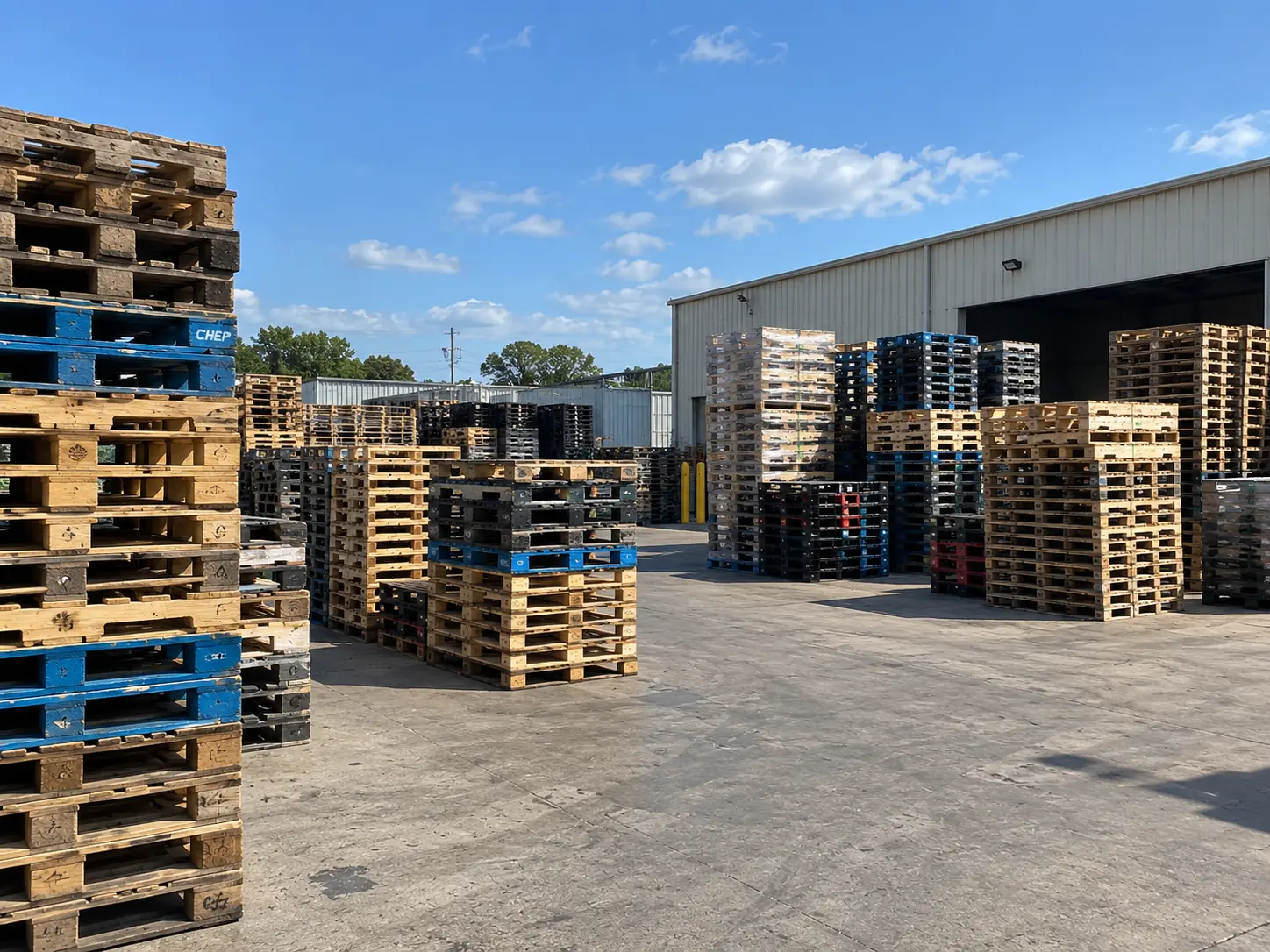
Beverage distribution has a constraint almost no other sector shares: the last hundred feet. A pallet of beer does not end its journey at a dock. It ends in a walk-in cooler behind a bar, down a cellar ramp, through a 42-inch doorway, in a building constructed long before pallets existed. The 36 × 36 exists because it fits through that door.
| Attribute | Value |
|---|---|
| Footprint | 36 × 36 in (914 × 914 mm) |
| Height | 5.5 in (140 mm) |
| Empty weight | 26 – 36 lb |
| Top deck boards | 6 |
| Bottom deck boards | 4 |
| Stringers | 3, double-notched |
| Static capacity | 4,000 lb |
| Dynamic capacity | 2,000 lb |
| Racked capacity | 1,400 lb |
| Per 53-ft trailer (empty) | ~700 |
| Half-barrel kegs per pallet | 4 |
Beverage pallets live wet. Condensation from cold product, washdown in cooler rooms, spillage and outdoor staging all raise moisture content, and wet wood loses strength, grows mould and gains weight. A pallet at 30% moisture can be 20% weaker than the same pallet at 15%.
Ask for sub-19% moisture content on delivery. It will not stay there, but starting dry buys you a service life.
A pallet that sits wet in a cooler for a month is a mould problem. Fast rotation is the cheapest control there is.
Outdoor staging in Ohio weather is the single largest destroyer of beverage pallets. A roof pays for itself annually.
If the pallet genuinely returns every time, a washable plastic 36 × 36 amortises. If it does not return, it does not.
Beverage distribution has a constraint almost no other sector shares: the pallet does not end its journey at a dock. It ends in a walk-in cooler behind a bar, down a cellar ramp, through a doorway in a building constructed long before pallets existed. These are the dimensions that decide it.
| Constraint | Typical dimension | 48 × 40 fits? | 36 × 36 fits? |
|---|---|---|---|
| Commercial single doorway | 36 in clear | No | Tight — needs care |
| Commercial double doorway | 42 – 48 in clear | Tight, with no handling room | Yes, with room |
| Walk-in cooler door | 34 – 42 in clear | No | Yes, usually |
| Cellar hatch / ramp | Varies, often under 40 in | Rarely | Frequently |
| Short-bay racking, older facility | 42 in bay depth | No | Yes |
| Standard dock door | 96 in | Yes | Yes |
The weight matters as much as the footprint. At 26–36 lb empty against 33–48 lb for a GMA, and with a shorter load on top of it, a 36 × 36 is something a single driver can manage with a pallet jack on an uneven cellar floor. That is the whole argument, and it is invisible from a distribution centre.
Beverage pallets live wet. Condensation from cold product, washdown in cooler rooms, spillage and outdoor staging all raise moisture content, and wet wood loses strength, grows mould and gains weight. A pallet at 30% moisture can be around 20% weaker than the same pallet at 15%.
| Control | Effect | Cost |
|---|---|---|
| Specify sub-19% MC on delivery | Buys a service life before the environment takes over | None — just ask |
| Rotate aggressively | Mould needs time; fast rotation is the cheapest control there is | None |
| Store under cover | The single largest destroyer of beverage pallets is outdoor staging | A roof, paid back annually |
| Never film-wrap damp stock | Film traps water against the wood and creates an incubator | None |
| Stack on runners, not on concrete | Ground contact wicks moisture into the bottom units continuously | Negligible |
| Consider plastic on genuinely closed loops | Washable and non-absorbent — but only if it returns | High capital |
Our 36 × 36 intake peaks June to September, tracking the beverage season. If you need this footprint in spring, ask early — recovered supply is thinnest exactly when the brewing calendar is quietest.
The 36 × 36 Beverage in plan and elevation, rendered at true proportion against a ghosted 48×40 GMA. Switch units if your drawing speaks millimetres.