Zero shiners
A protruding nail on an automotive pallet is a quality incident, not an inconvenience. Our automotive line runs a dedicated final nail inspection.
The 48 × 45 inch pallet (1219 × 1143 mm) is the automotive sector's standard footprint across much of the North American Midwest. The extra 5 inches over a GMA accommodates the returnable containers, dunnage racks and stamped-part trays that tier-one suppliers ship in, and it aligns with automotive plant racking and sequencing systems.
Send the details and a named person at the Evendale yard replies within one business day with pricing, freight and a piece count — in writing.
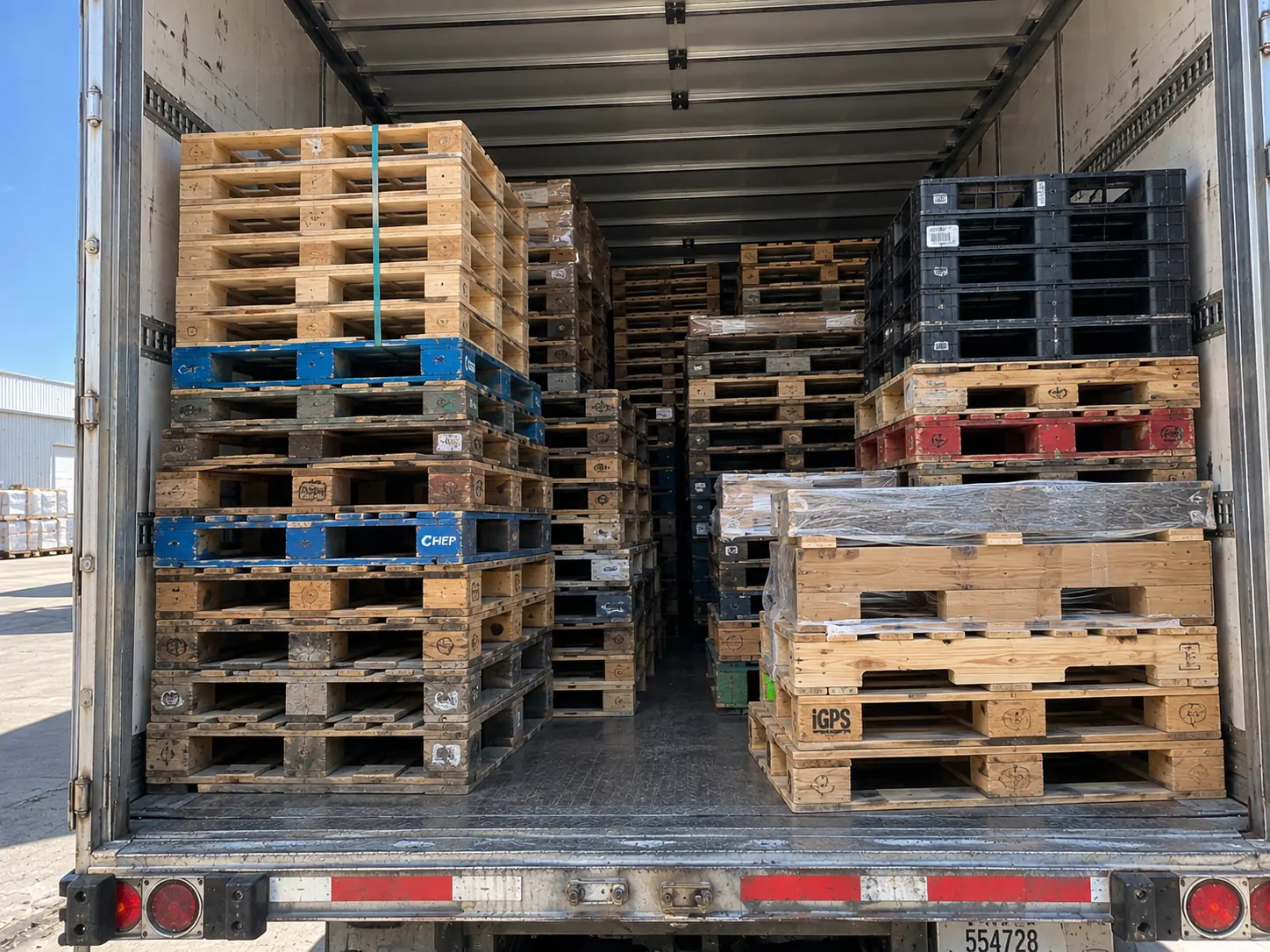
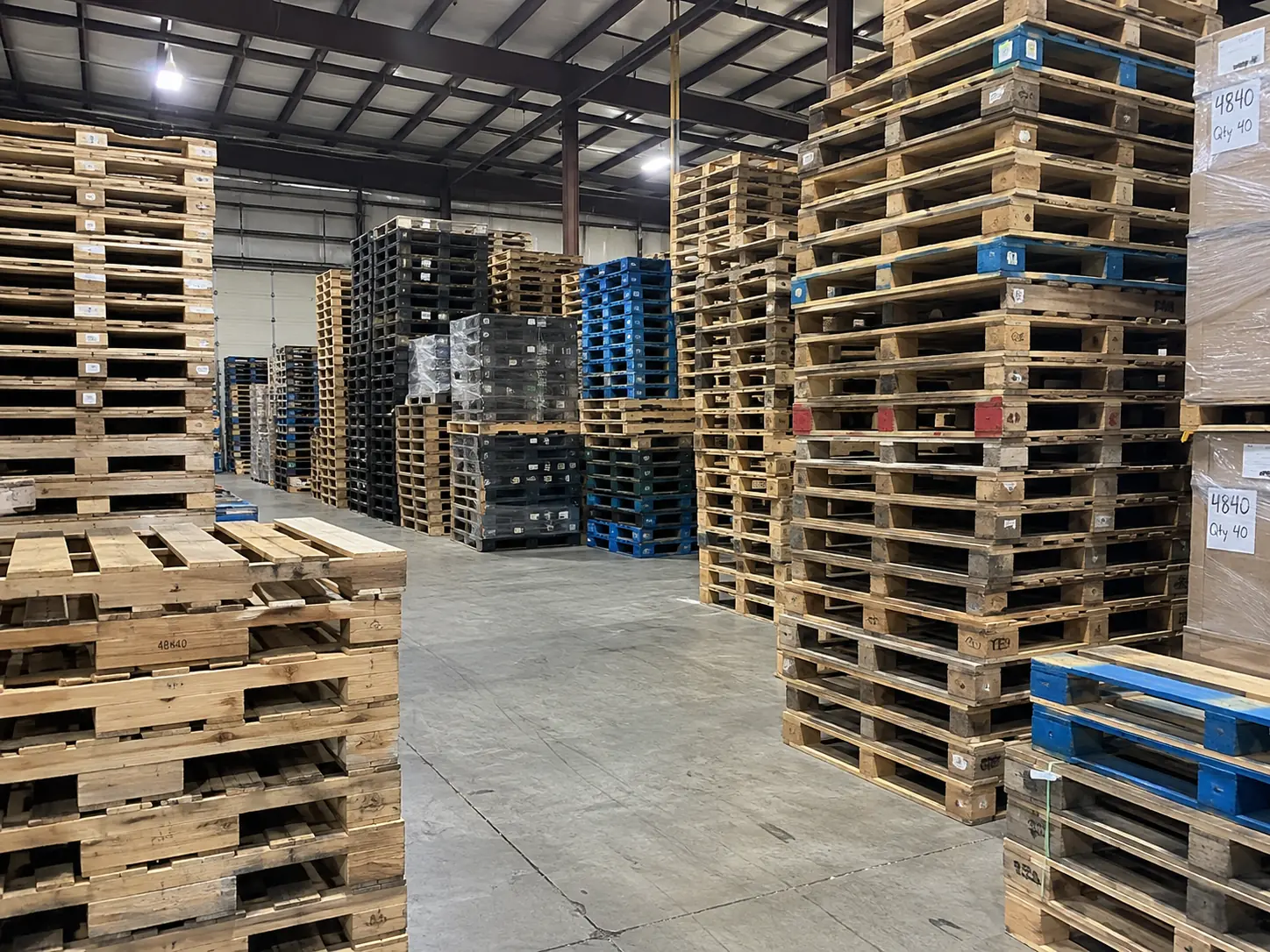
Automotive logistics is built around returnable containers rather than pallets. Plastic totes, collapsible bulk containers and steel dunnage racks are the primary unit, and the pallet is a base that those containers sit on. The 48 × 45 dimension comes from container module geometry, not from trailer width — which is why it looks arbitrary from the outside and is completely rational from the inside.
| Attribute | Value |
|---|---|
| Footprint | 48 × 45 in (1219 × 1143 mm) |
| Height | 6.0 in (152 mm) |
| Empty weight | 38 – 50 lb |
| Top deck boards | 7 (tight-laid common) |
| Bottom deck boards | 5 |
| Stringers | 3 standard; 4 for heavy stamped-part service |
| Static capacity | 5,500 lb |
| Dynamic capacity | 2,800 lb |
| Racked capacity | 2,000 lb |
| Per 53-ft trailer (empty) | ~520 |
| Floor positions per 53-ft trailer | 26 |
Automotive customers apply supplier quality systems to packaging that most sectors apply only to parts. If you supply into an assembly plant, expect your pallet to be part of a PPAP submission, expect dimensional tolerance requirements, and expect a corrective action request if a shiner nail scratches a painted panel.
A protruding nail on an automotive pallet is a quality incident, not an inconvenience. Our automotive line runs a dedicated final nail inspection.
Typically ±1/4 inch on footprint. Achievable with jig-built new or remanufactured units; unreliable with straight recycled stock.
Build date, jig number and grade recorded per lot and supplied with the shipment where the customer requires it.
AGV and conveyor systems care about height variance far more than about footprint. We sort to height where the application demands it.
Automotive customers apply supplier quality systems to packaging that most sectors reserve for parts. If you supply into an assembly plant, your pallet may form part of a PPAP submission, and a shiner that scratches a painted panel is a corrective action request rather than an inconvenience.
| Requirement | What it means in practice | How we supply it |
|---|---|---|
| Zero shiners | No protruding fastener on either face, inspected | Dedicated final inspection pass, both faces, on a separate line |
| Dimensional tolerance ±1/4 in | Footprint held across a lot, not just nominally | Jig-built or remanufactured stock; straight recycled will not hold it |
| Height consistency | AGV and conveyor systems index on height | Sorted to ±1/4 in with a gauge, not by eye |
| Lot traceability | Build date, jig number, grade recorded per lot | Supplied with the shipment where the plant requires it |
| No foreign material | No plates, no staples, no wire | We do not plate, inbound or outbound |
| Consistent construction | Same build across a delivery | One jig per specification; no mixing recovered and built stock in a lot |
Automotive logistics is built around returnable containers rather than pallets. Plastic totes, collapsible bulk containers and steel dunnage racks are the primary unit, and the pallet is a base those containers sit on. The 48 × 45 dimension comes from container module geometry — which is why it looks arbitrary from outside the sector and is entirely rational inside it.
Recovered supply of 48 × 45 is thin nationally — it was 3.4% of our intake and almost all of it came from the Detroit and Bowling Green lanes. We remanufacture it on a fixed jig from recovered 48-inch stringers, which is why it prices at a modest premium over standard rather than as a milled short run.
The 48 × 45 Automotive in plan and elevation, rendered at true proportion against a ghosted 48×40 GMA. Switch units if your drawing speaks millimetres.