Pallets in Chicago, IL
In short
Chicago is the densest pallet market in North America and the hardest one to serve cheaply. Everything about it is decided by rail. We serve Chicago weekly consolidated loads from 10400 Evendale Dr, Cincinnati, OH 45241, 296 miles and roughly 4 hours 40 minutes away — buying used pallets and cores, delivering graded recycled and custom-built stock, and recycling everything that cannot be resold.
Request a quote for Chicago
Send your volume and postal code (606xx, 604xx, 601xx and nearby) and we will come back within one business day with pricing, freight as a separate line, and the next window on the Chicago lane.
What makes Chicago different
Six of the seven Class I railroads meet in Chicago, and roughly a quarter of all US rail freight touches the terminal district. That produces two things a pallet recycler cares about: enormous inbound volume on non-standard international footprints, and intermodal drayage windows that make dock scheduling unusually rigid. A trailer that misses a Chicago appointment does not get squeezed in later — it gets rescheduled.
How we run the lane
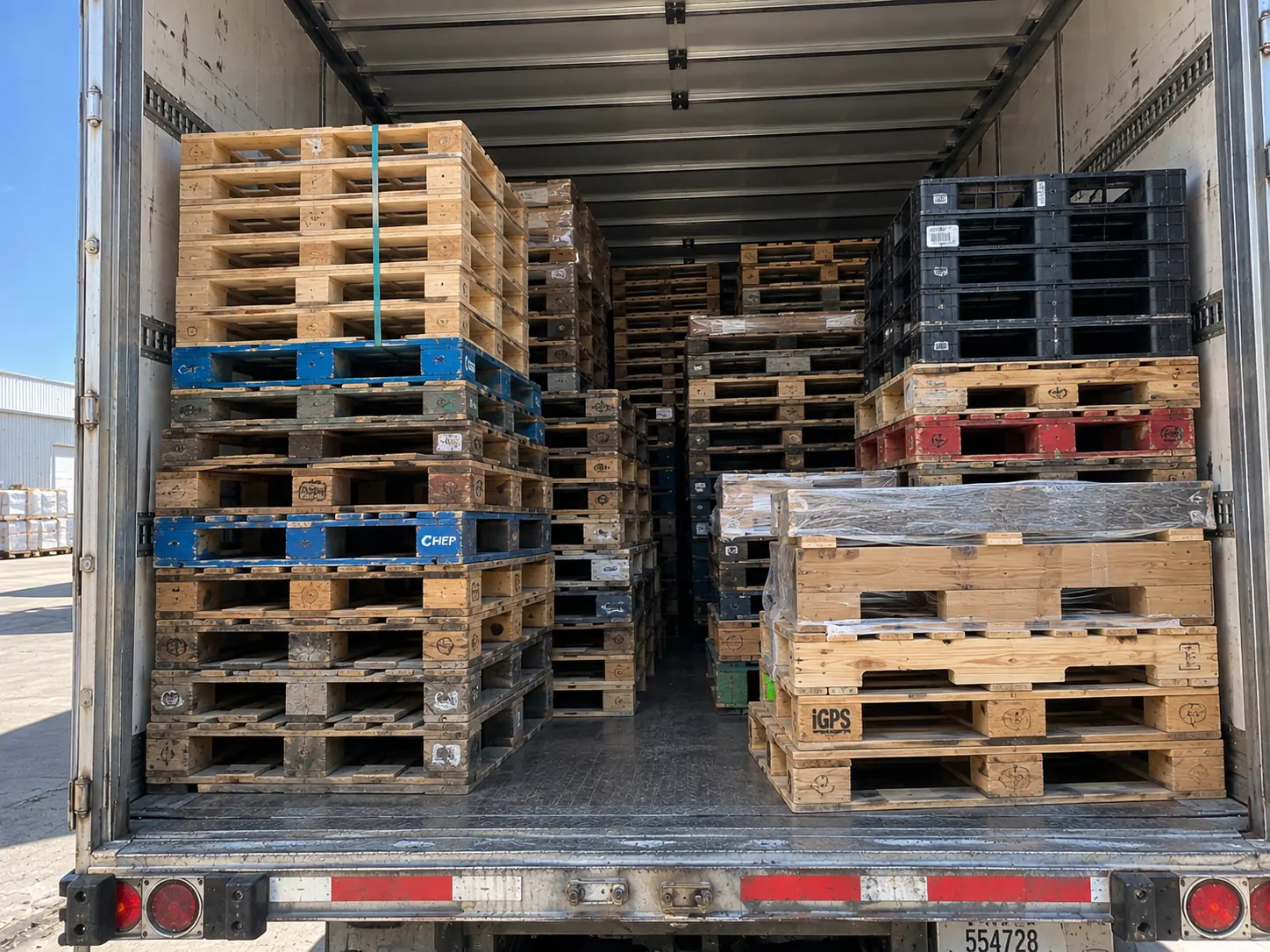
We run consolidated weekly loads rather than ad-hoc trips, because a 296-mile lane only makes environmental or financial sense at full-trailer density. Elk Grove Village, Bedford Park, Bolingbrook, Romeoville and the Joliet intermodal corridor are the usual stops. Chicago customers who also generate cores get the round-trip rate, which on this lane is the difference between viable and not.
The local pallet market
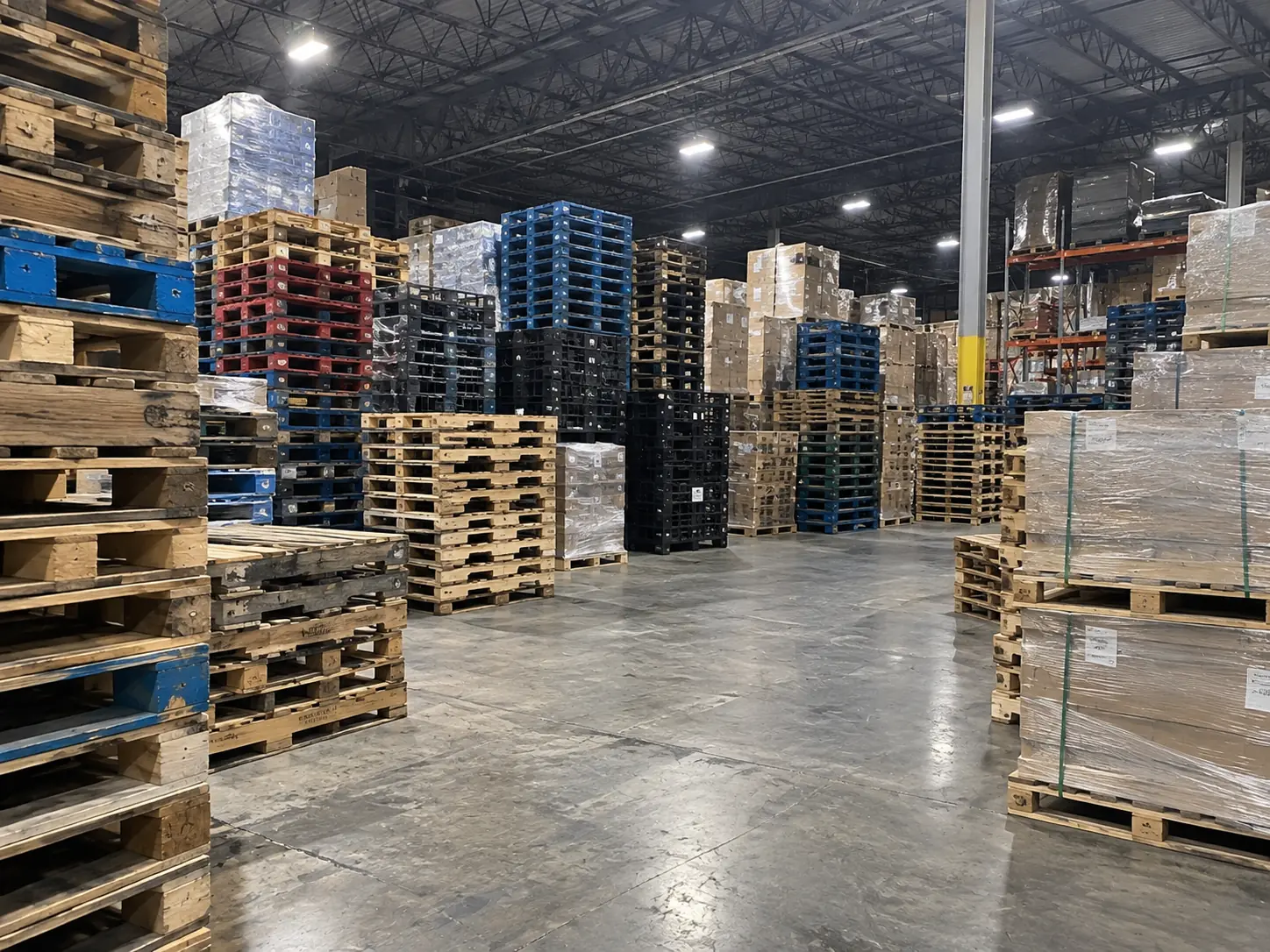
Chicago accumulates more 1200x1000 mm and 1100x1100 mm import footprints than anywhere else we serve. Those sizes have thin domestic demand and are natural remanufacture candidates — we trim them into 42x42 and 36x36 stock. If you are sitting on a pile of odd metric pallets nobody will take, this is the lane where they have value.
Services available in Chicago
Everything we do from Evendale is available on this lane; what changes is cadence and freight, not capability.
Access and dock conditions in Chicagoland
Chicago is the only market where appointment discipline genuinely outranks everything else. Intermodal drayage windows make dock scheduling rigid: a trailer that misses a Chicago appointment does not get squeezed in later, it gets rescheduled — often to the following week. We build the Chicago lane on Thursday for the following week and we do not move it lightly.
| Sub-market | Typical access | Note |
|---|---|---|
| Elk Grove Village | Good — purpose-built industrial, deep aprons | The easiest large concentration in the metro. |
| Bedford Park / Bridgeview | Mixed — older stock, tighter turns | Flatbed frequently better than a van here. |
| Bolingbrook / Romeoville | Excellent — modern DC corridor | Appointment systems strictly enforced. |
| Joliet intermodal corridor | Good, but congested | Build an hour of slack into any window near the ramps. |
| City of Chicago proper | Poor for 53-ft | Box truck with liftgate is usually the only workable answer. |
| Northwest suburbs | Good | Light industrial; often forklift-equipped. |
What Chicago cores actually look like
Chicago accumulates more non-North-American footprints than anywhere else we serve, because six of the seven Class I railroads meet here and roughly a quarter of all US rail freight touches the terminal district. That produces a steady flow of 1200×1000 ISO 2 and 1100×1100 Asian-standard pallets that have thin domestic demand and nowhere obvious to go.
- Highest share of metric footprints of any lane we run — roughly three times our network average.
- Strong Euro/EPAL recovery from importers, which is where most of our 1200×800 stock originates.
- Higher plastic content than average, from food processing and pharmaceutical distribution.
- Generally dry: most Chicago accumulation is indoors, which shows up directly in what we can pay.
- Pooled units appear more often than average — separate them at receiving and tell us before we dispatch.
Lane economics: 296 miles
| Factor | Chicago |
|---|---|
| Distance from Evendale | 296 miles |
| Distance band | 251 – 400 mi, consolidated / partner |
| Freight as share of delivered cost | ~41% |
| Cadence | Weekly consolidated loads |
| Practical minimum | Full trailer. Split drops rarely make sense at this distance. |
| Best lever available | Round-trip pairing — it is the difference between viable and not. |
| Corridors | I-65, I-80/94, I-55, I-294, I-57 |
We are honest that at 296 miles freight is the largest line on the invoice, and that a Chicago-area recycler serves a small ad-hoc requirement better than we do. Where we are worth the distance is full-load volume, odd metric footprints nobody local wants, and accounts that both generate cores and buy stock — because then the truck is earning in both directions.