Grade and repair depth
An A grade needs a near-perfect core. Cores are scarce in Q4 and plentiful in Q1, so the spread between A and B widens in the fall and narrows after the holidays.
We sell recycled wood pallets by the bundle and by the trailer load — most commonly 48x40 GMA in A, B and #2 grade — inspected board by board, banded in stacks of 12 to 25 and delivered on our own equipment within a 250-mile radius of Cincinnati. Typical lead time is 24 to 72 hours, and every load ships with a written grade sheet so what leaves the yard is what arrives at your dock.
Send the details and a named person at the Evendale yard replies within one business day with pricing, freight and a piece count — in writing.
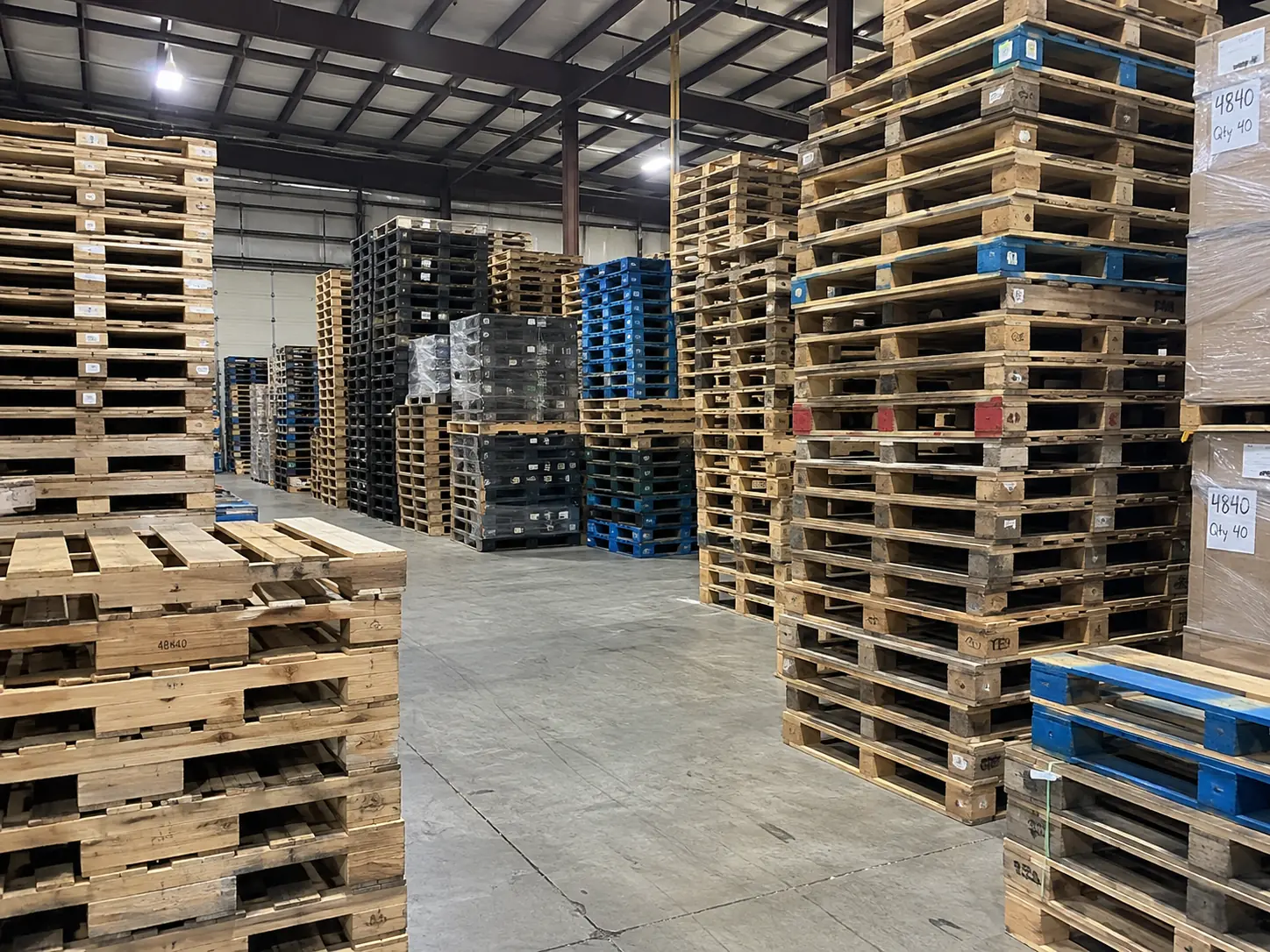
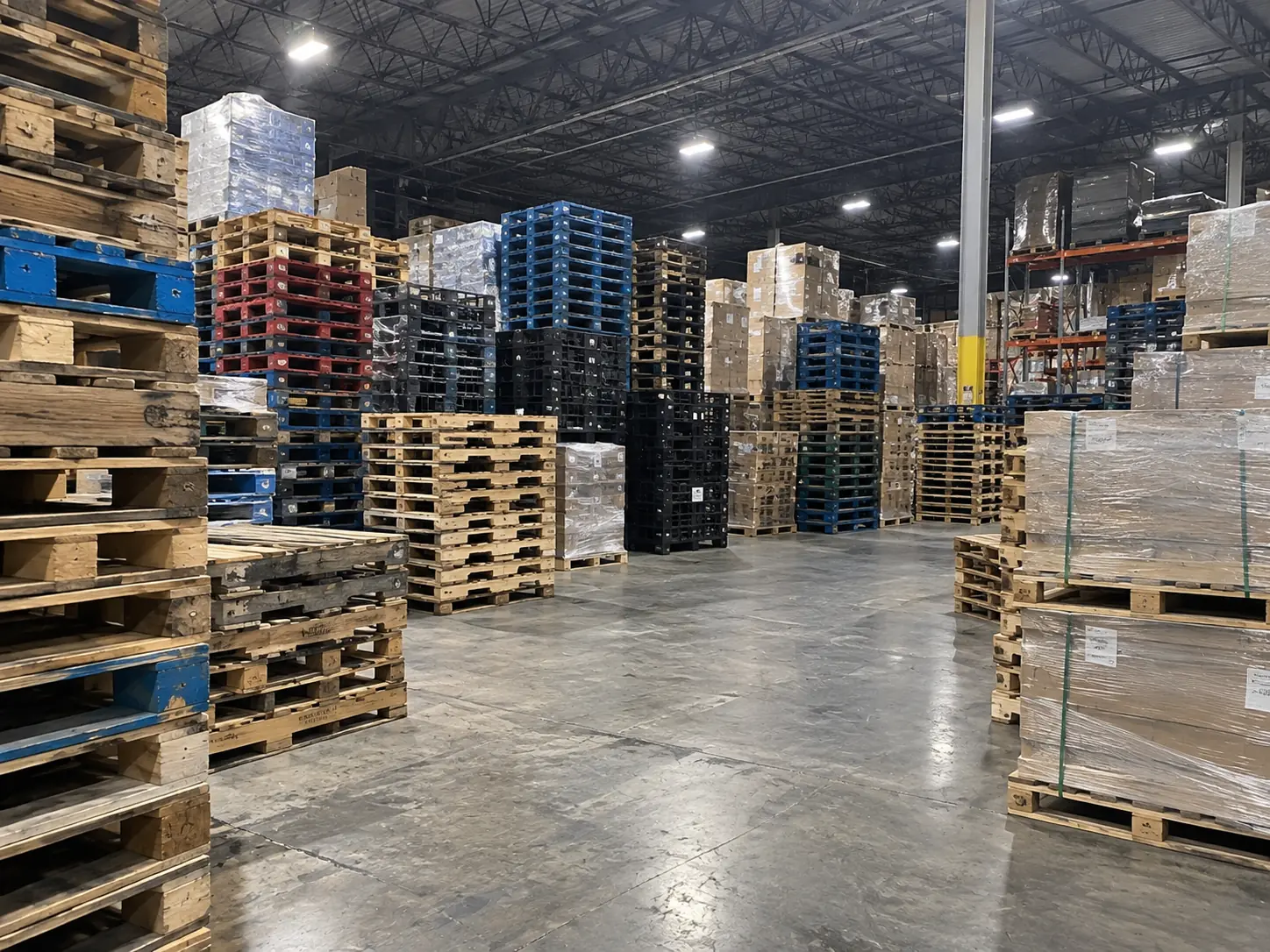
Recycled pallets are not a commodity in the way a pallet broker will tell you they are. A 48x40 that carries 2,200 lb of canned goods through a racked warehouse is a different object from one that moves a pallet of paper towels across a flat floor once. We keep four distinct running inventories so you buy the cheapest pallet that will actually survive your application rather than the cheapest pallet on the lot.
| Grade | Description | Typical use | Deck boards |
|---|---|---|---|
| A Grade / #1 | No plugs, no companion stringers, uniform colour, all seven top boards intact | Grocery DCs, retail compliance, automated conveyors | 7 top / 5 bottom |
| B Grade / #2 | Repaired stringers permitted, mixed board width and colour, structurally sound | Inbound raw material, floor-stacked storage, one-way freight | 6–7 top / 4–5 bottom |
| #2 Economy | Multiple plugs and companion blocks, visible wear, still rated for 2,000 lb static | Scrap movement, yard staging, low-value one-way shipments | 5–7 top |
| Odd size | 36x36, 42x42, 48x48, 45x48 and roughly forty other footprints | Drums, kegs, reels, automotive racks | Varies |
Grade names are not standardised across the industry. Ours follow the common North American convention; when you request a quote we send a photo set of the exact lot so there is no argument about vocabulary.
Four variables move the number on a recycled pallet quote, and only one of them is the pallet itself. Understanding the other three is usually worth more to a buyer than haggling over the first.
An A grade needs a near-perfect core. Cores are scarce in Q4 and plentiful in Q1, so the spread between A and B widens in the fall and narrows after the holidays.
A 53-ft trailer holds roughly 550 to 600 recycled 48x40s stacked and banded. Half loads carry the same freight cost as full loads, so cost per pallet nearly doubles on split drops.
Inside 60 miles, freight is a rounding error. Past 180 miles it becomes the largest single line item, which is why our Columbus and Louisville customers usually take full loads on a standing schedule.
If we can pick cores back up from the same dock we deliver to, the round trip is already paid for and your unit price drops. This is the single biggest lever most buyers never pull.
Weight, footprint, whether it goes in racking, whether it gets automated, and whether it crosses a border. Four answers get you the right grade.
Within one business day you get unit price, freight, piece count per trailer and images of the actual stacks being reserved.
A purchase order or a written confirmation to info@palletsrecycle.com releases the lot. We hold reserved stock for five business days.
Our drivers deliver on drop-deck and dry van equipment Monday through Friday. Will-call pickup at 10400 Evendale Dr runs 7:00 AM to 4:30 PM weekdays and Saturday mornings.
We unload with our own forklift on flatbed deliveries where site rules allow it, or drop-and-hook a preloaded trailer if you would rather unload on your schedule. Trailer pools are available for customers taking more than two loads per week.
Every pallet that leaves the building has been handled by a grader at least twice: once on the intake belt and once at the banding station. The rejection criteria are written down, posted at both stations and applied the same way on a slow Tuesday as on a month-end Friday.
Every load we ship carries a grade sheet stapled to the bill of lading. Most suppliers in this industry do not issue one, which is why grade disputes are so common and so unresolvable. Below is the exact field list from ours, reproduced so you can ask another supplier for the same thing — or use it to write your own receiving criteria.
| Field | Example | Why it is on there |
|---|---|---|
| Lot reference | EV-26-0841 | Ties the physical stack to the photographs sent with the quote. |
| Grade declared | B / #1 | The letter and the number, because they mean different things. |
| Piece count | 552 | Counted at the banding station, not estimated from stack height. |
| Footprint | 48 × 40 GMA, stringer | Stated with construction type so nobody assumes block. |
| Top / bottom deck | 7 / 5 | The fastest single check a receiving clerk can make. |
| Repairs present | Plugs: yes. Companions: no. Plates: none. | The three facts that decide whether it can be racked. |
| Species mix | Mixed hardwood, poplar present | Matters for weight, nail holding and repair planning. |
| Moisture, sampled | 14.2% (stringer, mid-bundle) | Where it was measured, not just the number. |
| Treatment | None / HT, facility 45241-OH, 12 Aug 2026 | Export stock only. Blank means blank, not "probably fine". |
| Height range | 5.6 – 6.2 in | Sorted to ±1/4 in only where the order asked for it. |
| Graded by | Station 2, second shift | So a question has somebody to go to. |
| Rejections pulled from this lot | 31 (5.3%) | Published on the sheet. A lot with zero rejections was not graded. |
Buyers negotiate unit price because it is the only number they can see. This is roughly how a delivered recycled 48×40 decomposes on a 90-mile lane at full-trailer volume. The proportions move with distance and grade, but the shape holds, and it explains why grade right-sizing and freight pairing beat haggling.
| Component | Approximate share | What moves it |
|---|---|---|
| Core acquisition | 31% | Season, grade, how far the collection travelled, whether the pile was dry. |
| Freight, outbound | 19% | Distance, load density, whether a return load exists. |
| Repair labour and materials | 16% | Grade demanded. A grade needs a near-perfect core and rejects more. |
| Grading, sorting, banding | 11% | Height sorting and shiner passes add cost, and are worth it for automation. |
| Collection freight, inbound | 10% | Falls sharply when a delivery and a collection share a truck. |
| Yard overhead, plant, power | 8% | Kiln hours are the largest single item inside this when export is involved. |
| Loss, rework and rejection | 5% | The cost of grading properly. A yard with no rejection cost is not grading. |
Two lines in that table are within your control and neither is unit price. If empties accumulate at the dock we deliver to, the inbound and outbound freight lines collapse into one movement — nearly 30% of the structure. And if a proportion of your volume is doing work that a #2 economy unit would do, the repair line falls with it.
Including us. These are the questions we would ask if we were buying, and the answers separate a graded yard from a sorted pile faster than any site visit.
Question four catches more money than the other eleven combined. A unit price with freight buried inside it makes it impossible to see that a full load, a shared route day or a paired collection would change the number.