Standing route
A fixed day and window each week. Your team knows when the trailer arrives; ours knows what to expect. The lowest-friction option once volume is predictable.
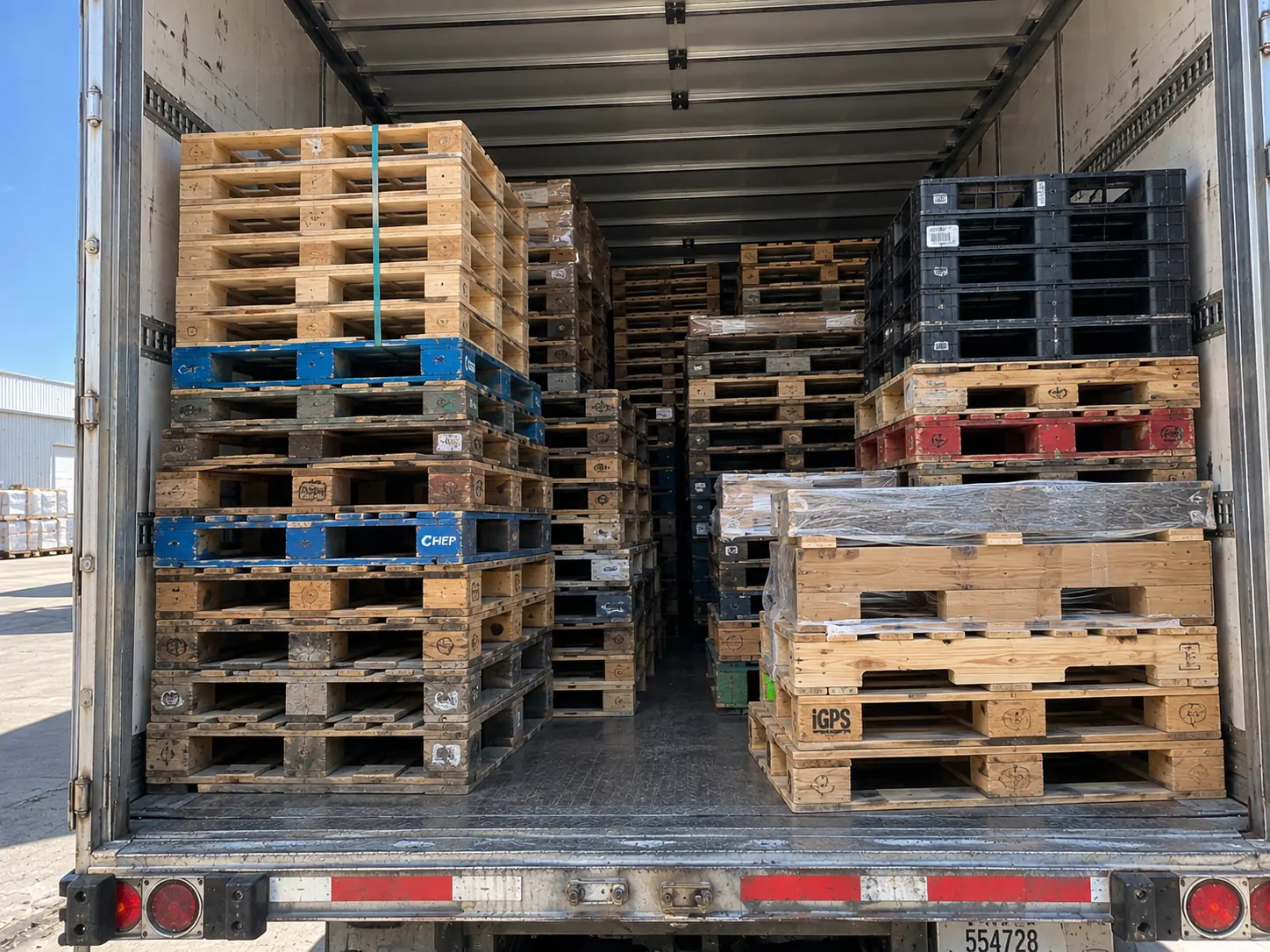
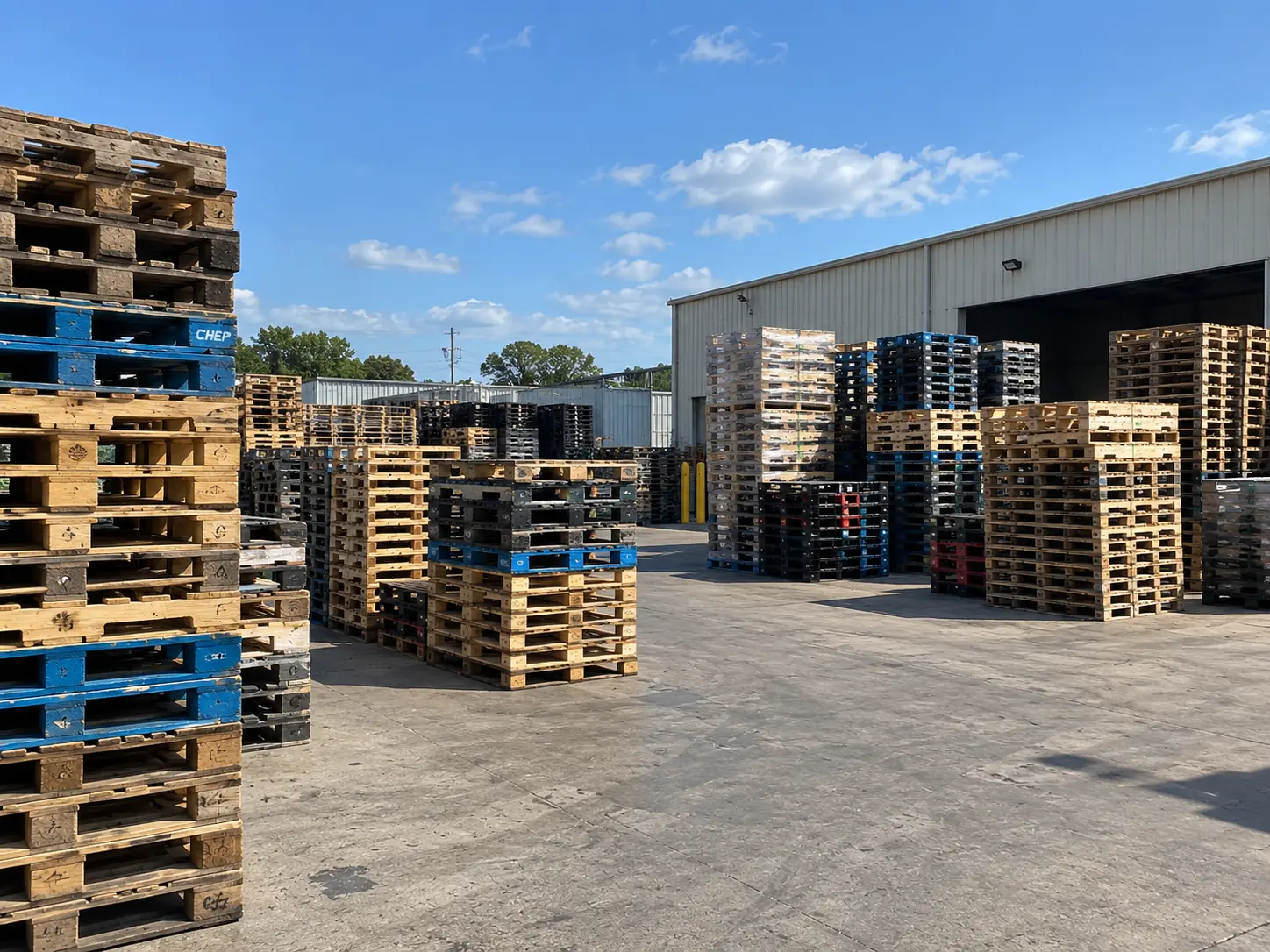
Retrieval is the unglamorous half of the pallet business and the half that determines whether your dock works. We run scheduled routes, drop-and-swap trailers and on-call pickups across the Ohio Valley, so empty pallets leave your building on a rhythm you choose rather than accumulating until somebody escalates it.
Send the details and a named person at the Evendale yard replies within one business day with pricing, freight and a piece count — in writing.
A fixed day and window each week. Your team knows when the trailer arrives; ours knows what to expect. The lowest-friction option once volume is predictable.
We park a 53-ft trailer at your dock. Your team loads it as pallets accumulate. When it is full — or on a set cadence — we swap it for an empty. Zero interruption to your operation.
Email us when the pile reaches your threshold. We slot you into the next route running your direction, usually within 48 to 72 hours.
Plant closures, seasonal clearouts, post-move recovery. We bring as many trailers as the count requires and leave the yard empty in a single visit.
Retrieval fails on access more often than on volume. A 53-ft dry van is the cheapest way to move 600 pallets and completely useless behind a downtown bakery with a 20-foot apron. We keep three classes of equipment so the answer is never "we cannot get in there".
| Equipment | Capacity | Access requirement | Best for |
|---|---|---|---|
| 53-ft dry van | ~550–600 stacked pallets | Standard dock door, 60-ft apron | DCs, manufacturers, high volume |
| 53-ft flatbed with straps | ~480 banded pallets | Yard space, forklift on site | Outdoor piles, wet stock, mixed loads |
| 26-ft box truck with liftgate | ~140 pallets | Street or alley access, no dock needed | Retail, restaurants, small shops, urban sites |
| Drop trailer (customer-loaded) | ~550 pallets | Parking space for a parked trailer | Sites with irregular accumulation |
Industrial parks, retail plazas and multi-plant manufacturers have the same problem repeated across addresses: nobody owns the pile, everybody is annoyed by it. We coordinate a single program across all your locations with consolidated invoicing, per-site reporting and one point of contact. Property managers frequently find that the recovered core value covers the entire cost of the service.
Retrieval fails on access far more often than on volume. These are the questions asked before any equipment is assigned, and answering them in your first email removes a round trip and usually a day.
Two phone photographs answer roughly half of these at once. Stand at the dock door and photograph the approach; stand where a truck would enter and photograph the door.
The commonest retrieval mistake is a schedule set by habit rather than by generation rate. If you know roughly how many empties appear per week, the right arrangement falls out of it.
| Empties per week | Recommended arrangement | Why |
|---|---|---|
| Under 50 | On-call, or add to a neighbouring account's route day | A dedicated trip does not pay for either side. Shared route days often do. |
| 50 – 150 | Fortnightly scheduled collection | Pile stays under control without a truck running half empty. |
| 150 – 400 | Weekly standing route day | The sweet spot for a live collection. Predictable for both sides. |
| 400 – 700 | Drop trailer, swapped fortnightly | Removes the live-load window entirely and keeps stock dry. |
| 700 – 1,500 | Drop trailer, swapped weekly | Your team loads as they go; no double handling, no pile. |
| Over 1,500 | Two drop trailers on rotation, or on-site sort | At this rate the sorting question is worth asking as well. |
The figure that decides between a live collection and a drop trailer is not volume, it is how evenly the volume arrives. A site generating 300 a week in a single Thursday burst is a drop-trailer site at half the volume of one generating 60 a day.
Every mature pile contains a population of objects nobody can account for. Here is what happens to each, so you are not left wondering whether to raise it.
Left behind, stacked separately, with a note. Taking them creates a liability on your account that you did not agree to — we will not do it, and a recycler who does is not doing you a favour.
Plastic totes, dunnage racks, collapsible bulk containers. Set aside and flagged. These are usually worth more than anything else in the pile and they belong to somebody.
Taken if the frame is intact and the tote is absent or empty and clean. Quoted separately — the steel has value.
Taken. Frequently better raw material than pallets, and knock-down reusable crates sometimes go back into service intact.
Taken, and genuinely wanted — it goes straight to the grinder line without a teardown step.
Taken under our buyback programme regardless of where they were bought, and moved to regional reprocessors for regrind.
Not taken without a conversation first. Photograph the label and send it.
It has happened twice. We will tell you it is there.