Choose hardwood when
The pallet returns to you, goes into racking, carries over 2,000 lb, or will be repaired rather than replaced. Also when a forklift operator will be unkind to it, which is always.
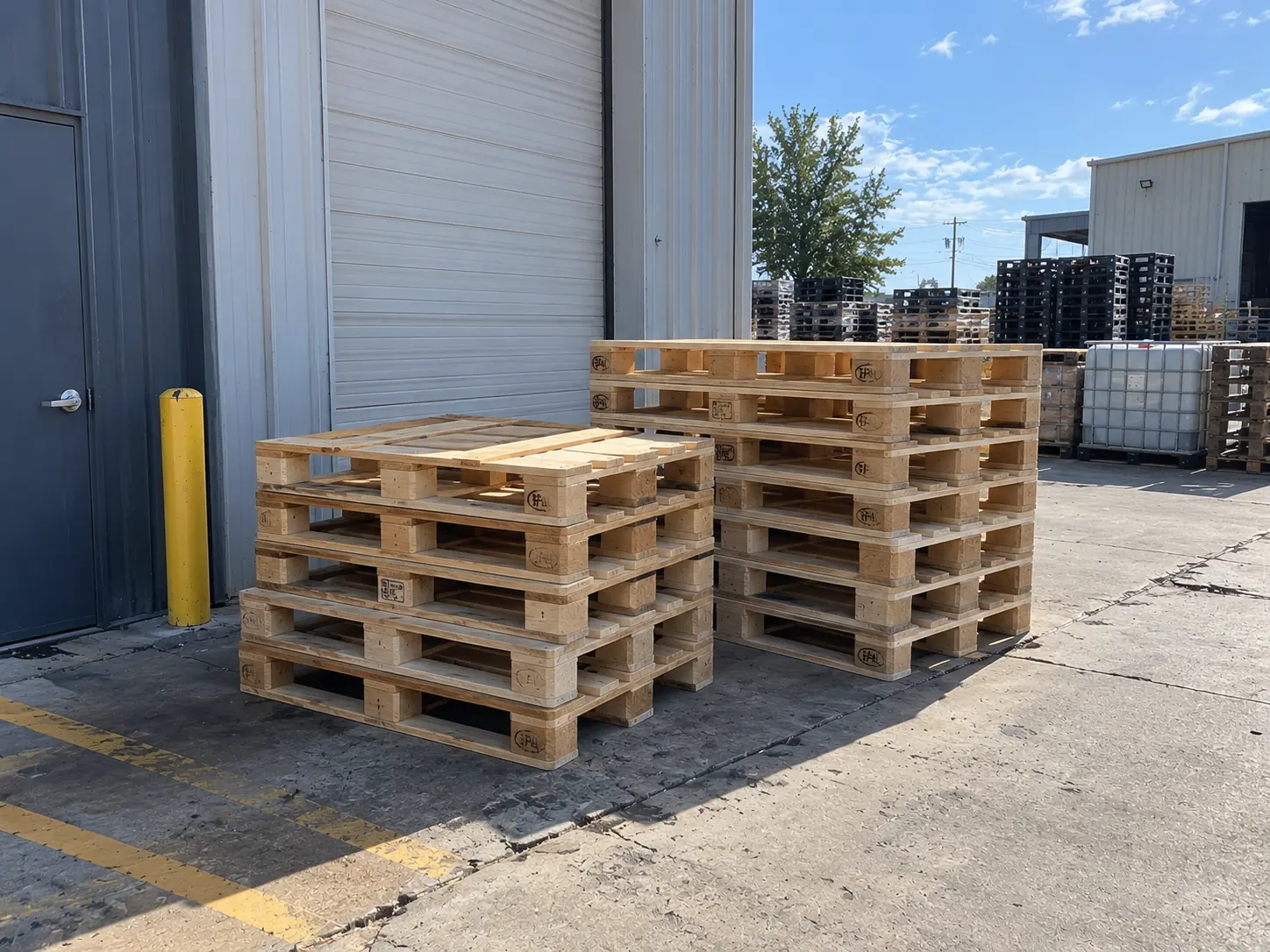
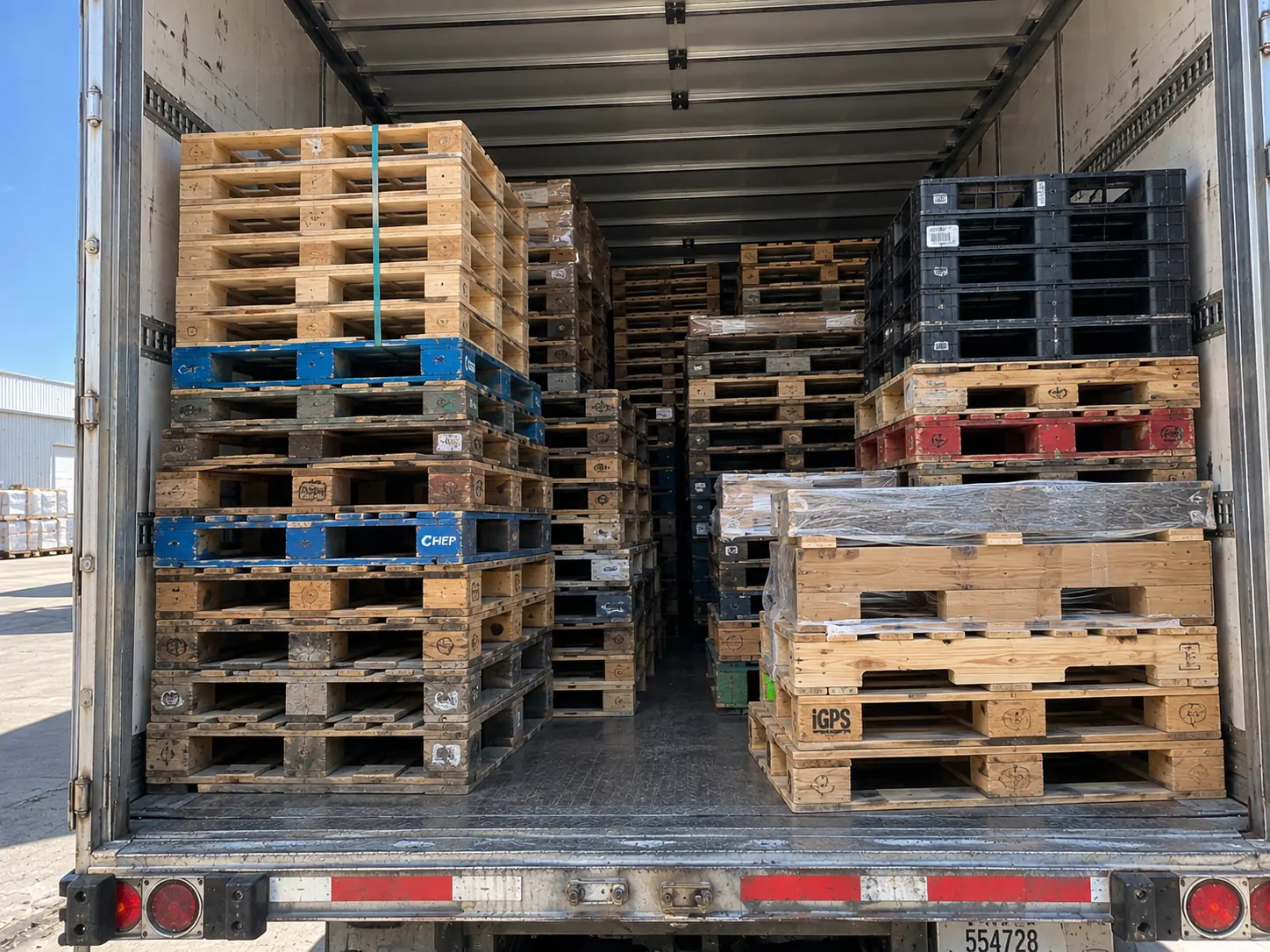
Hardwood pallets — oak, maple, poplar — are heavier, stronger, hold nails better and survive more trips. Softwood pallets — southern yellow pine, spruce, fir — are lighter, cheaper and better where freight is billed by weight or the pallet makes one trip. In the recycled market hardwood dominates, because hardwood is what survives long enough to be recovered.
Send the details and a named person at the Evendale yard replies within one business day with pricing, freight and a piece count — in writing.
| Species | Type | Density (lb/ft³) | Nail holding | Typical role |
|---|---|---|---|---|
| Red / white oak | Hardwood | 44 – 47 | Excellent | Stringers, high-wear decks, multi-trip service |
| Hard maple | Hardwood | 44 | Excellent | Stringers, heavy-duty builds |
| Yellow poplar | Hardwood | 29 | Good | Deck boards — light for a hardwood, works well |
| Ash | Hardwood | 41 | Very good | Stringers, increasingly available post-borer |
| Southern yellow pine | Softwood | 35 – 38 | Good | Full builds, export, strong for a softwood |
| Spruce / fir | Softwood | 25 – 28 | Fair | Light one-way, deck boards, air freight |
| Douglas fir | Softwood | 32 | Good | Heavy-duty softwood builds, West Coast supply |
| Mixed hardwood | Hardwood | 35 – 45 | Good to excellent | The reality of most recycled stock |
Almost all recycled pallets are mixed species. A single unit may have oak stringers, poplar lead boards and pine interior boards. This is normal, it is not a defect, and it is a reason recycled pallets often outperform expectations — the strong wood tends to be where the load is.
| Factor | Hardwood | Softwood |
|---|---|---|
| Empty weight (48×40) | 45 – 55 lb | 30 – 42 lb |
| Bending strength | Higher | Lower, but good per pound |
| Nail holding | Excellent — resists back-out under vibration | Fair to good — smooth shanks loosen |
| Splitting on nailing | More prone — needs correct nail selection | Less prone |
| Trips before repair | 4 – 7 | 2 – 4 |
| Repairability | Excellent | Moderate — stringers split rather than crack |
| Cost (new build) | Higher | Lower |
| Recycled availability | Abundant | Limited — does not survive to be recovered |
| Moisture stability | Better once dry | Moves more with humidity |
| Best use | Multi-trip, racking, heavy loads | One-way, export, weight-sensitive freight |
The pallet returns to you, goes into racking, carries over 2,000 lb, or will be repaired rather than replaced. Also when a forklift operator will be unkind to it, which is always.
Freight is billed by weight, the shipment is one-way, the load is light, or you are exporting and every pound of pallet displaces a pound of product.
You want hardwood stringers for durability and softwood decks for weight. This is genuinely the sweet spot for a lot of general distribution and is under-specified in our experience.
You tell us the load, the trip pattern and the handling environment. Species is a means, not an end, and the right answer is frequently "whatever we have that meets the rating".
| Species | Type | Density lb/ft³ | Nail holding | Split tendency | Typical role |
|---|---|---|---|---|---|
| Red oak | Hardwood | 44 | Excellent | High | Stringers, high-wear decks, multi-trip |
| White oak | Hardwood | 47 | Excellent | High | Stringers, heaviest duty |
| Hard maple | Hardwood | 44 | Excellent | Moderate | Stringers, heavy-duty builds |
| Soft maple | Hardwood | 38 | Very good | Moderate | Stringers and decks |
| Yellow poplar | Hardwood | 29 | Good | Low | Deck boards — light for a hardwood |
| Ash | Hardwood | 41 | Very good | Moderate | Stringers; rising availability post-borer |
| Sweetgum | Hardwood | 37 | Good | Moderate | Decks; regional mill stock |
| Beech | Hardwood | 45 | Excellent | High | Stringers where available |
| Southern yellow pine | Softwood | 36 | Good | Low | Full builds, export, strong per pound |
| Douglas fir | Softwood | 32 | Good | Low | Heavy-duty softwood builds |
| Spruce | Softwood | 26 | Fair | Very low | Light one-way, weight-critical |
| Balsam fir | Softwood | 25 | Fair | Very low | Light one-way |
Published because buyers plan against an imagined pool. This is the species composition of everything we took in over twelve months, and the shape of it is entirely explained by which species survive long enough to be collected.
| Species group | Share of intake | Note |
|---|---|---|
| Red and white oak | 38.4% | The pool leans oak because oak survives to be collected. |
| Yellow poplar | 19.1% | Light for a hardwood. Our preferred deck-board harvest stock. |
| Southern yellow pine | 14.7% | Mostly from export and one-way inbound freight. |
| Hard and soft maple | 11.2% | Excellent stringer material; highest repair yield of anything we take in. |
| Ash | 6.8% | Rising share as post-borer salvage lumber works through the system. |
| Mixed softwood (spruce, fir) | 5.3% | Short service life; rarely reaches us repairable. |
| Gum, beech, other hardwood | 4.5% | Regional mill offcuts; behaves like oak for our purposes. |
Species choice changes the fastener schedule, and getting this wrong is a common cause of premature failure that gets blamed on the wood.
| Species group | Gauge | Placement | Failure mode if wrong |
|---|---|---|---|
| Dense hardwood (oak, beech, hard maple) | Step down a gauge | Keep 3/4 in from board ends; stagger across the stringer | Splitting out to the board end; bent nails leaving shiners |
| Medium hardwood (ash, soft maple, gum) | Standard | Standard staggered pattern | Occasional splitting near ends |
| Light hardwood (yellow poplar) | Standard | Standard | Rarely splits; good general deck stock |
| Southern yellow pine | Standard, hardened | Standard | Resin can foul a magazine on a hot day |
| Spruce and fir | Standard | Standard | Head pull-through under load — check head style for board thickness |