Deck board replacement
The most common repair by a wide margin. The damaged board is pried, the nails pulled, and a harvested board of matching thickness nailed in with helically threaded shanks. Two minutes at the bench.
A broken pallet is almost never broken everywhere. Most failures are a single cracked stringer or two split deck boards on an otherwise sound unit. Our repair benches return those pallets to #1 or #2 grade for a fraction of the cost of a new build, using harvested lumber from our own dismantling line so nothing new is felled to fix something old.
Send the details and a named person at the Evendale yard replies within one business day with pricing, freight and a piece count — in writing.
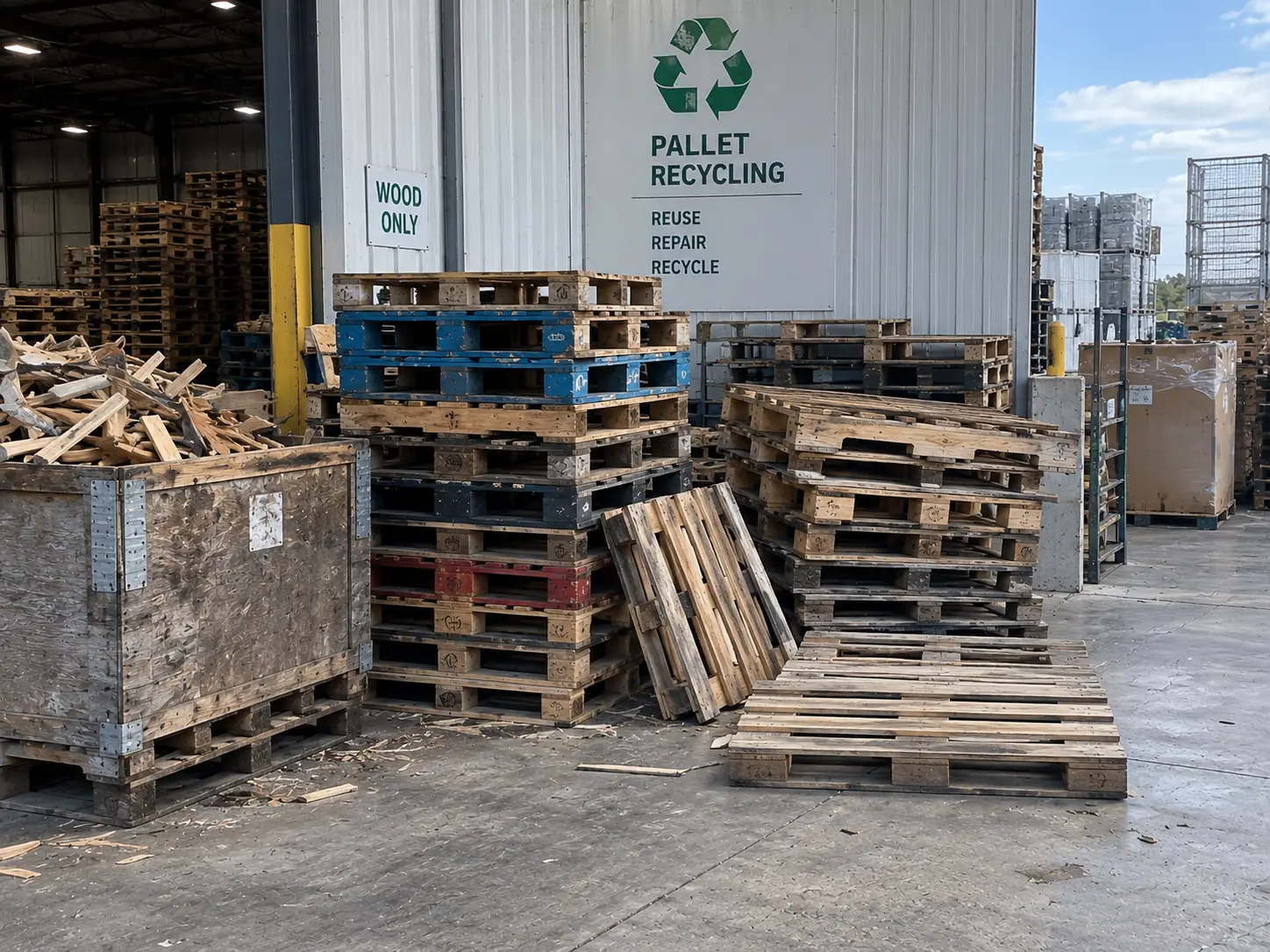
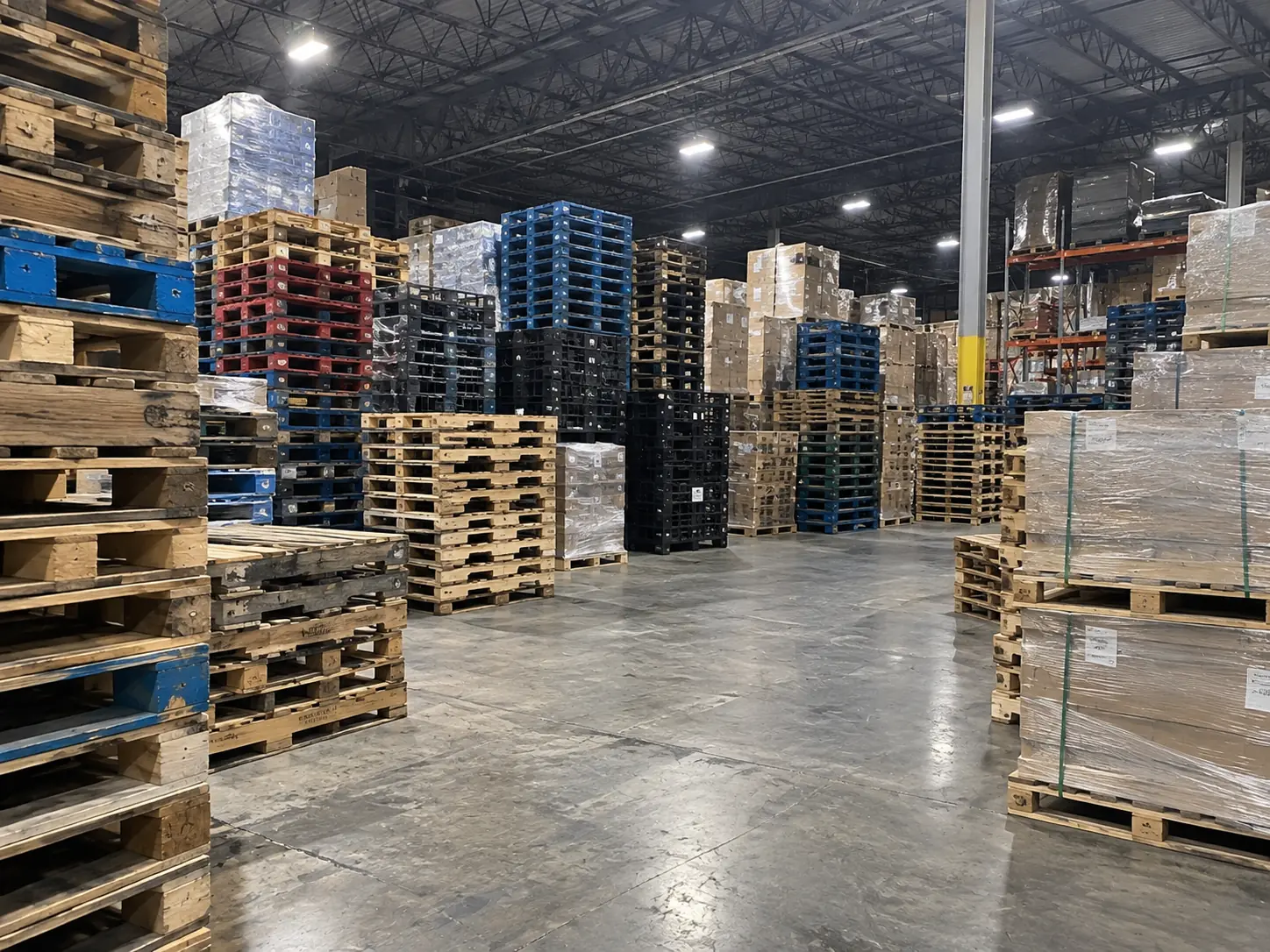
The most common repair by a wide margin. The damaged board is pried, the nails pulled, and a harvested board of matching thickness nailed in with helically threaded shanks. Two minutes at the bench.
A fork truck has punched through a stringer between the notches. A shaped hardwood plug is glued and nailed into the void, restoring bending strength across the break. Suitable for #2 grade and most #1 applications.
A full-length stringer is nailed alongside the failed one, sandwiching the crack. Structurally excellent and visually obvious, which is why companion-repaired pallets are graded B rather than A.
The unit is stripped to components and rebuilt on a jig, often into a different footprint. This is how a wrecked 48x40 becomes a sound 42x42.
Nail choice matters more than most buyers realise. We use helically threaded hardened shanks with a minimum 2.25-inch length on stringer work; smooth-shank nails back out under vibration and are the usual reason a "repaired" pallet fails again within a month.
| Repair performed | Resulting grade | Racking approved | Typical use |
|---|---|---|---|
| One or two deck boards replaced, same species and thickness | A / #1 | Yes | Grocery, retail compliance, automation |
| Three or more deck boards replaced | B / #1 | Yes | General distribution |
| Single stringer plug | B / #2 | Case by case | Floor-stacked storage, one-way freight |
| Companion stringer added | B / #2 | Not recommended | Internal movement, inbound raw material |
| Full teardown rebuild on jig | A or B by build spec | Yes | Any, including custom footprints |
We publish this table because the single most common dispute in the recycled pallet business is a buyer expecting an A grade and receiving a competently repaired B. Knowing in advance what a repair does to a grade removes the argument entirely.
Once a site is generating more than about 1,500 damaged pallets a month, shipping broken wood to us and sound wood back is pure transport waste. We will instead place a two- to four-person repair crew inside your building, in a bay you designate, with our own benches, nailers, compressors and harvested board stock delivered weekly.
Everything that happens at a bench is one of six operations. Here is each one at the level of detail a technician works to, including the failures we watch for in our own rework sampling.
The damaged board is pried with a bar rather than struck, so the stringer face is not chewed. Old fasteners are pulled, not driven through — a fastener driven through leaves a shank in the stringer that will foul the next repair. A harvested board of matching thickness is set with helically threaded hardened shanks, two per crossing, three on lead boards, staggered across the stringer width and never within three-quarters of an inch of a board end. Around two minutes; the highest-volume operation on the floor.
A fork has punched through between the notches. The void is squared with a chisel, a shaped hardwood plug is cut oversize by a fraction and driven with PVA adhesive, then pinned with four fasteners through the plug into sound wood on both sides. Glue first, nails second — a dry plug is our most common repeat failure. Restores roughly 80–90% of original bending strength, which is comfortably inside the margin for floor and one-way use and is why we are cautious about racking plugged units.
A full-length member is nailed alongside a cracked one, sandwiching the failure. Structurally excellent, visually obvious, and it drops the unit to #2 — which we state on the grade sheet rather than hoping the receiver does not look. Six fasteners along the length, staggered. Not recommended for racking, because the crack is bridged rather than healed.
The least glamorous and the most underrated. A pallet jack needs a chamfered leading edge to roll up rather than catch. Splintered bottom boards are the commonest cause of jack damage and of conveyor hang-ups, and they are invisible from above — which is why a grader turns every unit once rather than looking at the top deck and moving on.
A shiner is refastened rather than hammered flat. Hammering a proud nail head compresses the wood beneath it and the fastener works proud again within a week. The nail is pulled and a fresh one driven in a new location. On automotive stock this is a separate final inspection pass on both faces.
The unit is stripped to components, boards and stringers are trimmed back past the damage, sorted by length and thickness, and rebuilt on a fixed jig — frequently into a different footprint. A wrecked 48-inch stringer trims to a clean 42-inch member, which is why our odd sizes price near standard rather than near new. Structurally a new pallet made from old wood, with a calculated rating for the actual build.
A repair bench measured on units per hour will produce units per hour. It will also produce plated stringers, dry plugs, short fasteners and boards driven into old holes, because all four are faster than doing it properly and none of them fail on the bench. They fail at a customer dock, six weeks later, where the connection back to the bench has been lost.
We sample finished units from each bench and each shift, pull them apart, and record what we find. The measure is the rework rate — the proportion that would not have survived. Sampling is announced rather than secret, because the point is to prevent the behaviour, not to catch somebody at it.
| Defect found in sampling | What it indicates | Correction |
|---|---|---|
| Fastener driven into an existing hole | Bench under time pressure | Retrain; check the queue depth behind that bench |
| Plug set without adhesive | Adhesive pot empty or gone off | Consumables check moved to shift start |
| Fastener within 3/4 in of a board end | Habit, usually from a softwood background | Jig marking on the bench surface |
| Smooth shanks in a repair | Wrong magazine loaded | Colour-coded magazines by shank type |
| Board thickness mismatch | Harvest stock badly sorted | Sorting corrected upstream, not at the bench |
| Shiner hammered flat rather than replaced | Speed shortcut | The one we treat most seriously — it reappears at the customer |
Once a site generates roughly 1,200 to 1,800 damaged units a month, shipping broken wood out and repaired wood back is pure transport waste. Here is what we need from a building before a crew can work in it.