Everything we grade, build and ship
In short
Nine product lines out of one Evendale yard, all held to the same written acceptance criteria: recycled pallets in A, B and #2 grade; new builds to print; the 48×40 GMA standard in depth; forty-plus custom footprints; ISPM-15 heat-treated export stock; new and reconditioned plastic; collars, caps and slip sheets; crates and wooden boxes; and a small studio line of furniture and fixtures built from wood too old and too good to grind.
Tell us the load, not the part number
Weight, footprint, whether it racks, whether it gets automated, and whether it crosses a border. Four answers get you the right product and a written price.
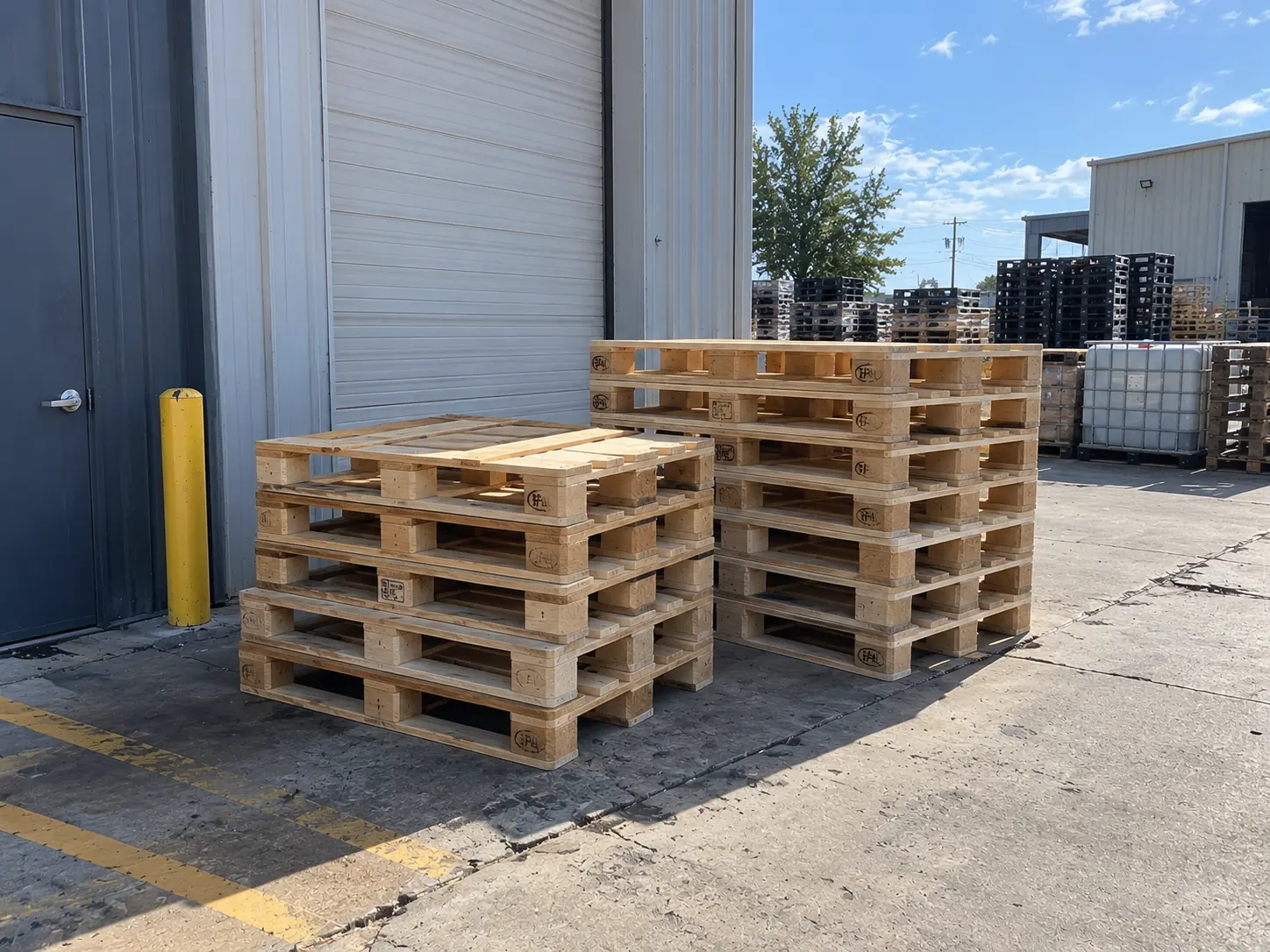
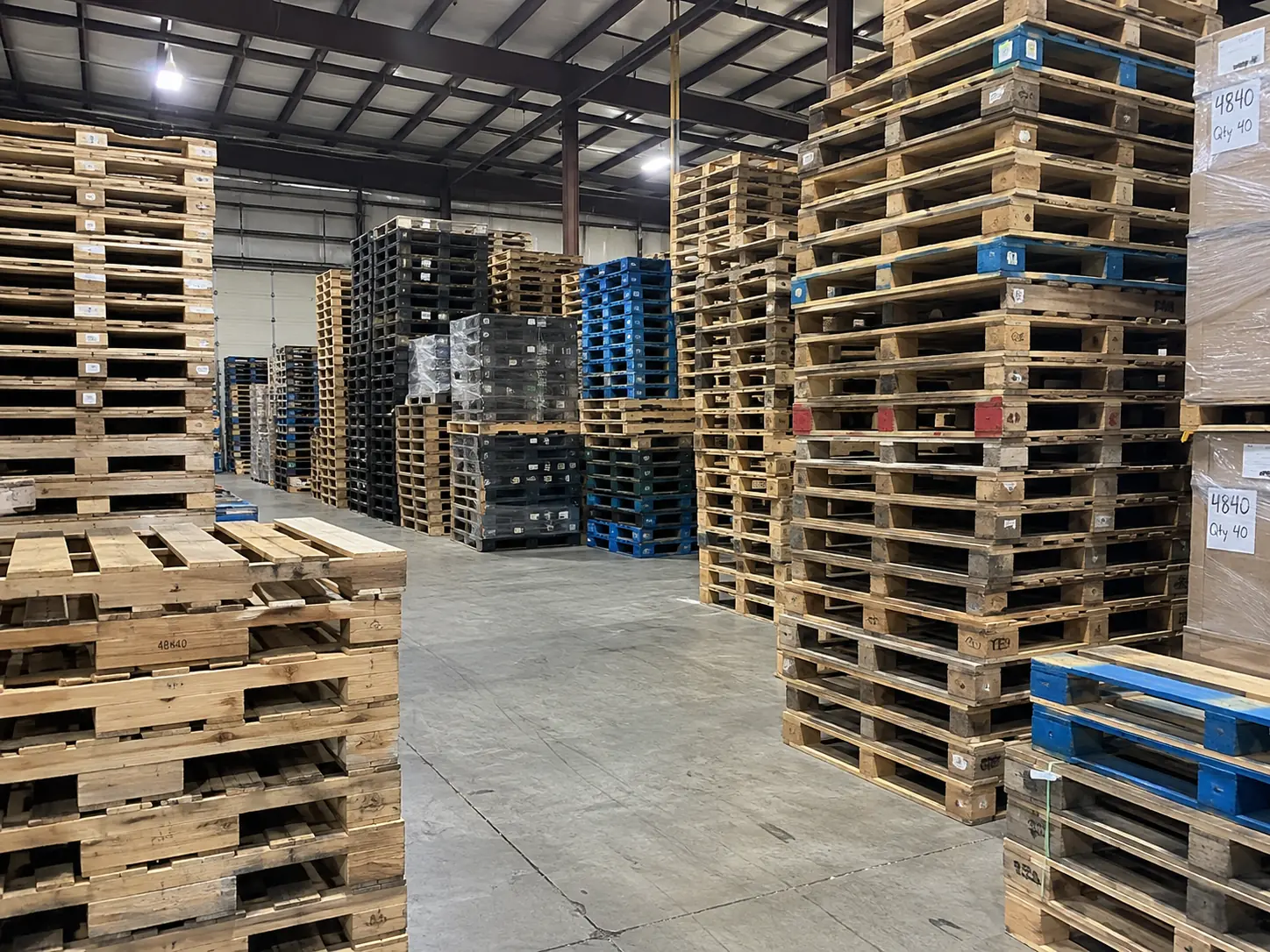
Recycled Pallets
A, B and #2 grade hardwood, inspected board by board.
View Built to orderNew Pallets
Built to print when reuse genuinely will not do.
View In stockGMA 48x40 Pallets
The North American standard, always in stock.
View Made to specCustom Size Pallets
Forty-plus footprints, plus anything you draw.
View ExportHeat-Treated ISPM-15
Kiln-stamped and compliant for export.
View ReusablePlastic Pallets
Reconditioned and new rackable, nestable and hygienic.
View Add-onsPallet Accessories
Collars, caps, slip sheets, top frames and corner board.
View ContainersCrates & Wooden Boxes
Reusable shipping containers and one-way crates.
View Studio lineUpcycled Goods
Furniture, planters and retail fixtures from retired wood.
ViewRecycled, new, or something else entirely
Recycled is the right answer far more often than the industry admits. It is already dried, already field-proven, immediately available and carries roughly a tenth of the embodied carbon of a new build. It is the wrong answer when you need tolerances a used pallet cannot hold, documented provenance, or a footprint with no recovered supply.
Plastic is the right answer on genuinely closed loops with high trip counts and washdown requirements, and the wrong answer everywhere else — it is an expensive way to give away a durable asset to a customer who will never return it.
A specification decision table
Run down the left column until you find your situation. The answer is in the middle. The right column is what people usually specify instead, and why it costs more without helping.
| Your situation | What to specify | What is usually specified |
|---|---|---|
| Pallet never leaves the building | #2 economy | A or B grade — the most expensive habit in pallet purchasing |
| Inbound raw material, discarded on arrival | B / #2 | B / #1 or better |
| General outbound distribution | B / #1 | A / #1 |
| Grocery DC with a compliance audit | A / #1 | Correct — one of the genuine cases |
| Long-term racked storage | A or B / #1, derated 25% for creep | Rated to static capacity — a factor-of-2.5 error |
| Automated receiving or AS/RS | Height-sorted, block or jig-built | A grade — the wrong variable entirely |
| Air freight or weight-billed lane | Softwood, or slip sheets | Hardwood — expensive in freight terms |
| One-way export, never returning | Minimum structure that survives one trip, HT-stamped | Multi-trip build on a single-trip journey |
| Four 55-gallon drums | 48 × 48, tight-laid, four stringers | 48 × 40 with two drums overhanging |
| One-tonne bulk bag | 48 × 48, tight-laid | 48 × 40, then blaming the bag supplier |
| Kegs into a cellar | 36 × 36 | 48 × 40 that will not fit through the door |
| Machinery on point loads | Solid deck, six runners, engineered | A standard pallet with blocking |
| Closed loop with washdown | Plastic, if it genuinely returns | Plastic on an open loop — an expensive gift |
What is genuinely available, and when
| Product | Lead time | Seasonal note |
|---|---|---|
| Recycled 48 × 40, any grade | 24 – 72 hours | A grade tightens Sep–Nov; everything else holds year round |
| Recycled odd sizes | 24 – 72 hours if in stock, else 2 weeks | Rotating stock; ask rather than assume |
| 36 × 36 beverage | 24 – 72 hours | Thinnest in spring; recovered supply peaks Jun–Sep |
| 48 × 45 automotive | 1 – 2 weeks | Mostly remanufactured to order on a fixed jig |
| Euro / EPAL recovered | Ask for current stock | Arrives as import packaging; mainly the Chicago lane |
| Heat-treated for export | +5 – 7 business days | Kiln scheduling; species and moisture set cycle length |
| New builds | 10 – 15 business days | Lumber market can extend this |
| Custom prototype | 5 – 7 business days | Load data is the gating item, not the shop |
| Custom production | 10 – 15 business days | Reorders skip discovery — the jig stays on file |
| Collars and accessories | 3 – 10 days | Stock items ship on regular routes |
| Crates, one-off | 3 – 7 business days | From a drawing or a sample |
| Bulk mulch | Same week | Demand triples Mar–Jun; seasonal agreements allocate first |