Company timeline
In short
Seventeen years from one leased bay to a full reclamation yard, including the two decisions that did not work — a retail mulch line we closed after fourteen months, and a phone line we removed and never restored. We have kept both in here because a timeline with no failures in it is a brochure, not a history.
Start your own entry
Most of the milestones above began with somebody emailing a photograph of a pile behind their building.
- 2009
One bay, one box truck
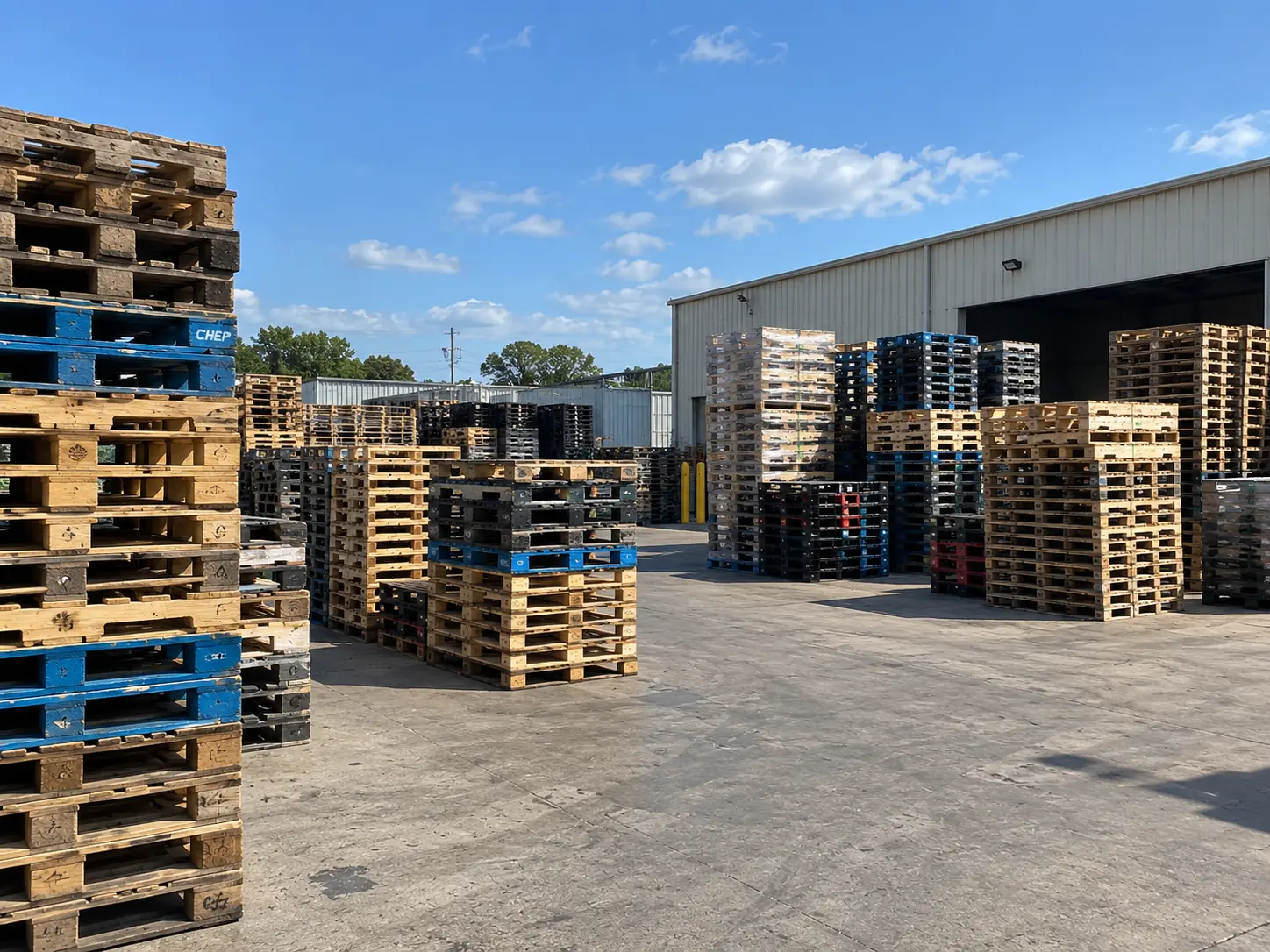
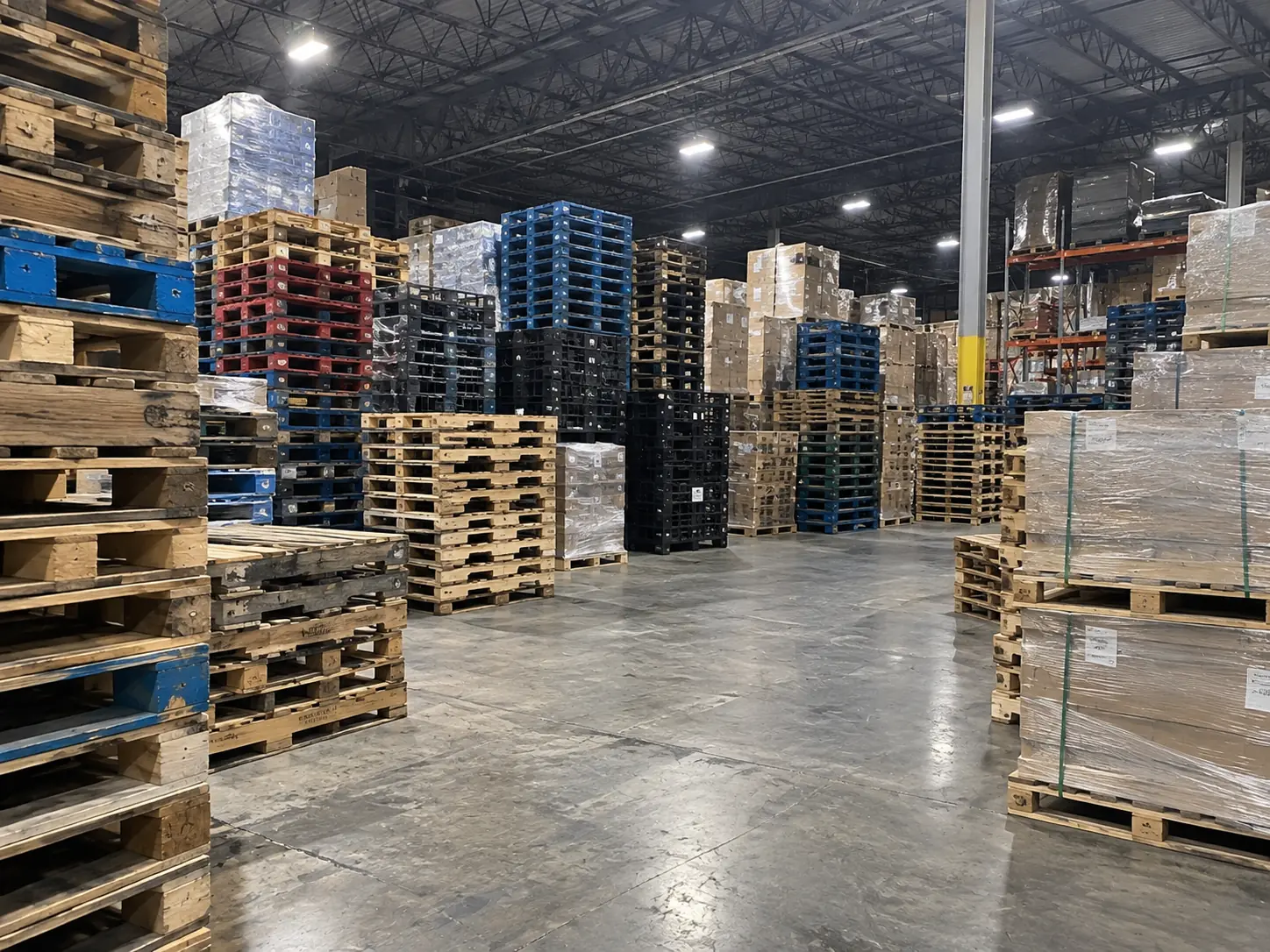
Leased a single bay off Evendale Drive with a 16-ft box truck and a standing offer to take away anything wooden. The first month moved 340 pallets and lost money on all of them.
- 2010
The first repair bench
Built a bench because the pile of "scrap" in the bay turned out to be mostly pallets missing one deck board. Repair, not collection, is what made the business viable.
- 2011
Written rejection criteria
After a third dispute about what A grade meant, we wrote our criteria down and posted them at the grading station. Customer complaints dropped by roughly two thirds inside a quarter.
- 2012
First tractor and trailer
Moved from box trucks to company-owned 53-ft equipment. Dispatch was rebuilt around a single rule: no load leaves without an answer to "what comes back?"
- 2013
The dismantling line
Mechanised teardown with magnetic separation on the discharge conveyor. Board harvest went from a slow manual job to the thing that feeds every repair bench in the building.
- 2014
Remanufacture jigs
Started rebuilding recovered components into odd footprints — 42×42, 36×36, 48×48. This is what let us price non-standard sizes near standard, and it remains one of our most-used capabilities.
- 2015
Grinder, screens and colour
Added fibre recovery so the last three percent had somewhere to go that was not a landfill. A second magnet was fitted on the grinder outfeed within six months, because the first one was not catching nails freed by grinding.
- 2016
We removed the phone line
Every serious dispute in seven years had the same shape: a verbal agreement remembered differently a month later. Moving entirely to writing was the single most unpopular decision we have made and the one we would repeat first.
- 2017
ISPM-15 kiln commissioned
Accredited heat treatment on site, with logged chamber cycles and probes set in the thickest members rather than in the air. Export customers stopped having to source treated stock separately.
- 2018
On-site repair crews
First crew placed inside a customer distribution centre. The break-even turned out to be far lower than the industry assumed — around 1,200 to 1,800 damaged units a month once freight on broken wood is counted.
- 2019
A mulch programme that failed
We launched a bagged retail mulch line and closed it within fourteen months. Bagging, palletising and retail distribution is a different business from ours, and pretending otherwise cost us a year. Bulk supply to landscapers and municipalities continues and does well.
- 2020
Essential operations
Food and medical supply chains needed pallets urgently and the core supply collapsed at the same time. We ran split shifts, prioritised grocery and pharmaceutical accounts, and learned more about forecasting in nine months than in the preceding nine years.
- 2021
Published carbon methodology
Put every constant and conversion we use on a public page rather than quoting a headline figure. Several competitors told us privately that it was a mistake. Auditors disagreed, and so did customers.
- 2022
Managed programmes
Launched full closed-loop pallet management — supply, retrieval, repair, recycling and reporting under one invoice with core value netted out. Now the largest single part of the business by volume.
- 2023
The studio line
Opened a small shop at the back of the building for wood too old and too good to grind: wall panels, retail fixtures, bar fronts, planters. It will never be a large part of our revenue and it is the part visitors always ask about.
- 2024
Plastic buyback
Started taking end-of-life HDPE and PP pallets back regardless of origin, consolidating them for regrind. A cracked plastic pallet has no repair path, and the environmental case for plastic collapses entirely if those units are landfilled.
- 2025
A year of weighing everything
Every inbound and outbound trailer across the weighbridge for twelve months. It changed two published constants and one operating assumption, and it turned a soft recommendation about covered storage into a specific one.
- 2026
Four hundred and eighty sites
Roughly 1.4 million pallets a year, 120 trailer movements a week, 78% of outbound miles carrying a paying return load, and a landfill rate still under one percent — reported by weight, with the exceptions named.
What each decision actually taught us
| Year | Decision | What it taught us |
|---|---|---|
| 2010 | Built the first repair bench | Most pallets written off as scrap need one deck board. Repair, not collection, made the business viable. |
| 2011 | Wrote the rejection criteria down | Almost every dispute in this industry is vocabulary. Complaints fell roughly two thirds inside a quarter. |
| 2012 | Bought our own tractor and trailer | A truck carrying air one way has doubled the cost and the emissions of everything on it. |
| 2013 | Mechanised the dismantling line | Board harvest is not waste processing. It is the feedstock for every repair bench in the building. |
| 2014 | Built remanufacture jigs | A damaged 48-inch stringer trims to a clean 42-inch member. Odd sizes do not have to cost odd-size money. |
| 2015 | Added the grinder — then a second magnet | The first magnet was not catching nails freed by the grinding action itself. That is the stage most yards still skip. |
| 2016 | Removed the phone line | Unpopular for a month, then almost nobody wants it back. Written quotes carry the whole conversation. |
| 2017 | Commissioned the ISPM-15 kiln | Probes go in the wood, not the air. A compliant chamber log over an under-treated load still fails an inspector. |
| 2018 | Placed the first on-site repair crew | The break-even was far lower than the industry assumed — and damage rates fell, because damage became visible. |
| 2019 | Closed the bagged retail mulch line | Bagging, palletising and retail distribution is a different business. Pretending otherwise cost us a year. |
| 2020 | Ran split shifts through the supply shock | We learned more about forecasting in nine months than in the preceding nine years. |
| 2021 | Published the carbon methodology | Several competitors said privately it was a mistake. Auditors and customers disagreed. |
| 2022 | Launched managed programmes | Grade right-sizing beats price negotiation as a saving, by a wide margin, almost every time. |
| 2023 | Opened the studio | It will never be a large part of revenue. It is the part visitors always ask about. |
| 2024 | Started the plastic buyback | A cracked plastic pallet has no repair path. The environmental case collapses if end-of-life units are buried. |
| 2025 | Weighed every trailer for twelve months | Piece counts flatter. Two published constants changed and one soft recommendation became a specific one. |
The three we got wrong
A timeline with no failures in it is a brochure. These are the three that cost real money.
- Bagged retail mulch, 2019
Closed after fourteen months. We understood grinding, screening and colouring, and assumed bagging, palletising and retail distribution were adjacent. They are a different business with different customers, different margins and a different seasonal risk profile. Bulk supply to landscapers and municipalities continues and does well.
- Board feet per tree, 2021–2023
We published 250 board feet of pallet-grade recovery per sawlog tree for two years. A customer's forestry consultant made a persuasive case that it was optimistic and we revised to 200, which made every tree figure on this site smaller. We should have been more conservative from the start.
- Using a published steel average, 2017–2025
We quoted 1.6 lb of steel per pallet from an industry average rather than weighing our own bales. When we finally measured, the real figure was 2.0 lb — probably because the recovered pool skews toward repaired units carrying every fastener from every repair. Eight years of slightly wrong reporting, entirely avoidable.