What a grader actually looks at in four seconds
In short
Grading is a fixed sequence, not an impression. A grader checks structure first, because a cracked stringer ends the decision immediately; then fasteners, because a shiner is a safety and quality issue regardless of everything else; then deck completeness, then contamination, then appearance. Appearance is last because it is the only criterion that does not affect whether the pallet works.
Talk to us about this
If this piece describes a problem you actually have, describe it back to us in the message field. You will get a written answer from a person within one business day.
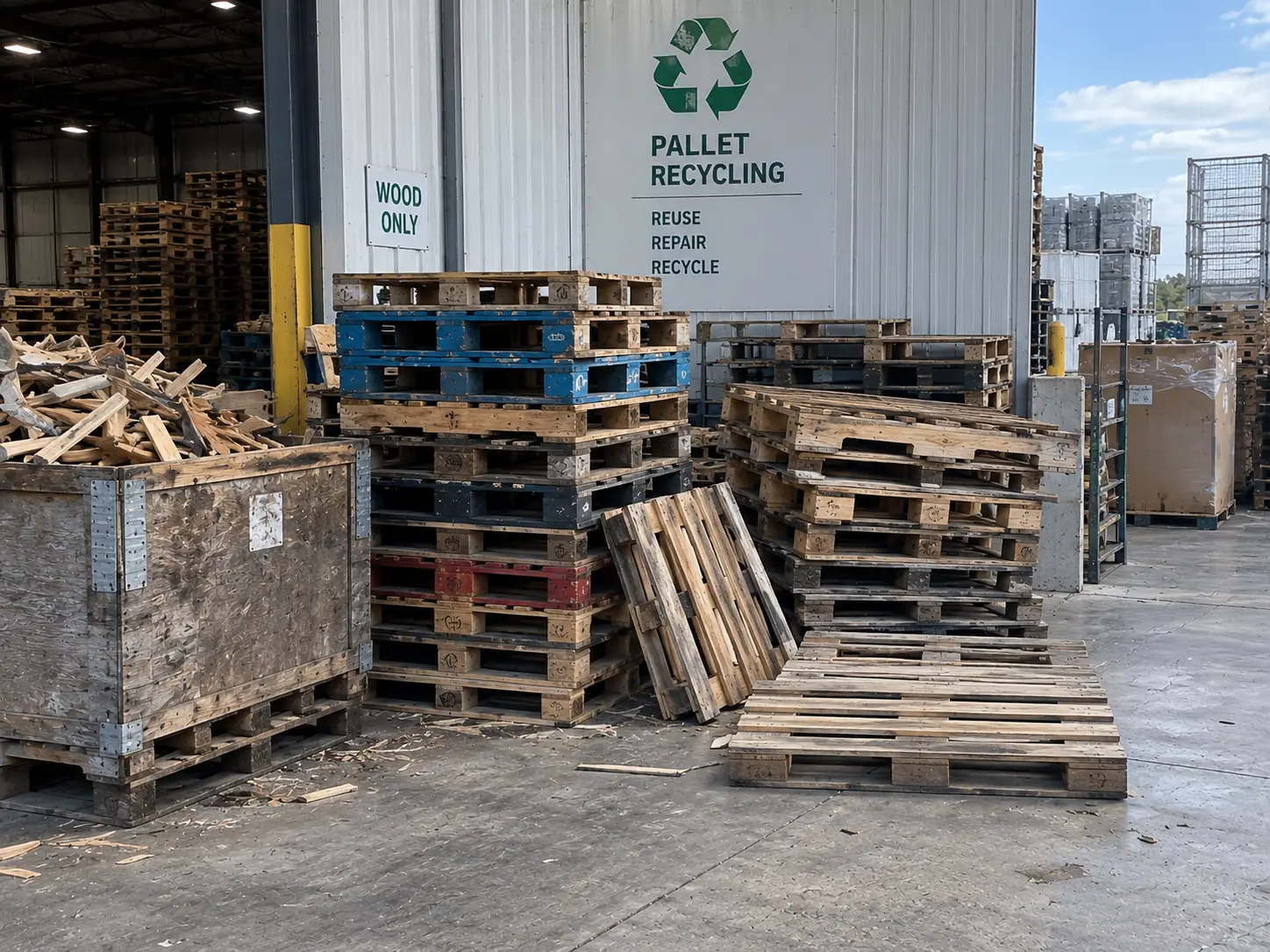
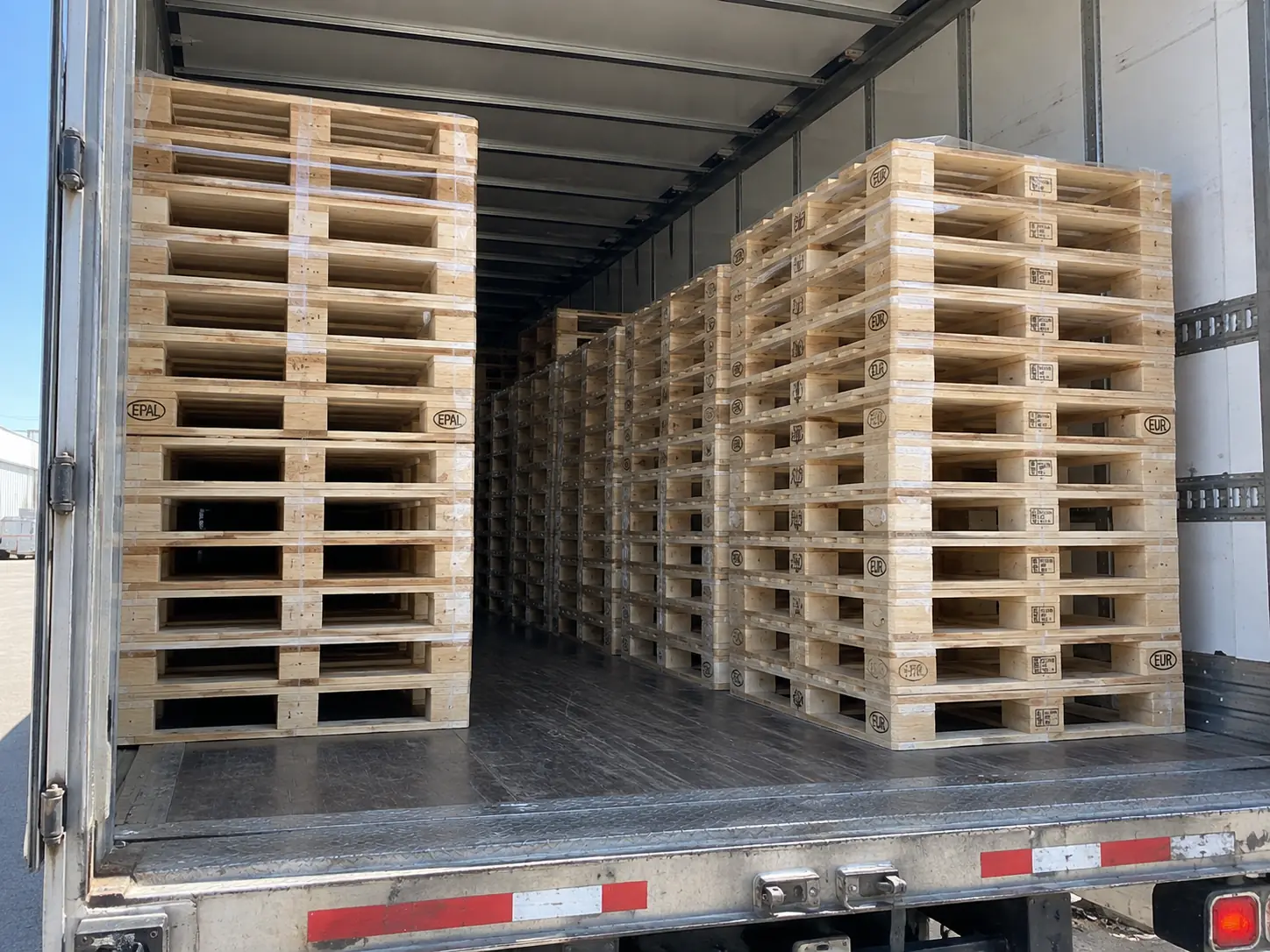
The sequence
- Stringers, both faces
The unit is turned once. Any crack longer than about three inches, any through-split, any previous companion or plate sends it straight to the repair bench or the dismantler. This check ends perhaps one in six decisions immediately, which is why it is first.
- Fasteners
A hand runs across the top deck. Any nail head standing proud is a shiner, and a shiner is a rejection regardless of how good the rest of the pallet is. It scratches product, catches conveyors and cuts hands.
- Deck completeness
Board count, board width, gap width. A missing interior board is a repair; a missing lead board is a bigger repair because lead boards take the fork impact.
- Contamination
Staining, odour, residue, mould bloom, visible pest damage or exit holes. This is the check that protects every downstream customer, and it is the one where the grader is told to be conservative.
- Appearance
Colour uniformity, weathering, mixed species. Only now, and only because certain customers are audited on it.
Why the order matters more than the criteria
Any competent grader knows what a bad pallet looks like. What separates a fast, consistent line from a slow, inconsistent one is that the checks happen in a fixed order, so the decision terminates as early as possible. Checking appearance first — which is what untrained graders naturally do, because it is the most visible property — means every unit gets a full inspection regardless of whether it was already disqualified.
The second reason is drift. A sequence is auditable. If a lot goes out with shiners in it, the question is not "was somebody careless" but "did step two happen". That is a fixable question.
Writing the criteria down
We wrote our rejection criteria down in 2011 after a third argument about what A grade meant, and posted them at both grading stations. Customer complaints fell by roughly two thirds inside a quarter. The criteria themselves did not change; they simply stopped being remembered differently by different people on different days.
- No cracked or split stringer longer than 3 inches on a load-bearing member
- No protruding or shiner nails on any deck surface
- No metal plates — we do not accept them in and we do not apply them
- No mould bloom, chemical staining, odour, pest damage or exit holes
- Deck gaps within 3.5 inches for fork and conveyor compatibility
- Moisture below 19% for stock going to indoor storage or export
- A grade additionally: no plugs, no companion stringers, seven full-width top boards, uniform colour
On speed
Four seconds sounds fast until you watch it. Most of the work is in the hands rather than the eyes — a trained grader is feeling the top deck for shiners while looking at the stringer, so two checks happen at once. Learning that overlap is most of the six-week ramp.
The thing we watch for is not speed but variance. If a grader slows down at the end of a shift, that is fatigue and it is manageable. If the rejection rate drifts down toward month-end, that is a process failure: somebody somewhere is under pressure to ship volume, and the criteria are quietly bending. We sample lots specifically to catch that, and the sampling is announced rather than secret, because the point is to prevent it rather than to catch somebody.
Appendix: the data behind this
Every piece on this site closes with the slice of our operating record that bears on what it argues. The full record is published at /resources/operating-record.
The criteria posted at both grading stations
This is the document behind the four-second decision, reproduced exactly as it appears on the wall at Evendale.
Universal — every grade
- No cracked or split stringer longer than 3 in on any load-bearing member.
- No protruding or shiner nails on any deck surface, top or bottom.
- No metal plates. We do not apply them and we do not accept them inbound.
- No mould bloom, chemical staining, odour, pest damage or exit holes.
- Deck gaps within 3.5 in for fork and conveyor compatibility.
- Moisture content below 19% for stock going to indoor storage or export.
- No bark anywhere on stock destined for export.
Additional for A / #1
- No plugged stringers. No companion stringers.
- All seven top deck boards present and full width.
- Five bottom deck boards present, chamfered.
- Uniform colour across the deck — no heavily weathered board against a fresh one.
- No residue, no labels, no staining of any kind.
Additional for automotive and automation stock
- Zero shiners, inspected on both faces as a separate final pass.
- Height sorted to ±1/4 in with a gauge, not by eye.
- Footprint tolerance ±1/4 in — jig-built or remanufactured stock only.
- Build date, jig number and grade recorded per lot and supplied with the shipment.