Wall and ceiling panels
Random-width or uniform layups in 4×8 ft panelised sections. The application this material is best at.
Reclaimed pallet wood makes excellent commercial panelling and fixtures, but only after processing that most makers skip. It must be hand de-nailed, passed through a metal detector, kiln dried to furniture moisture content, and milled. Skipping the drying step is why so much pallet-wood panelling cups, splits and opens at the joints within a single heating season.
If this piece describes a problem you actually have, describe it back to us in the message field. You will get a written answer from a person within one business day.
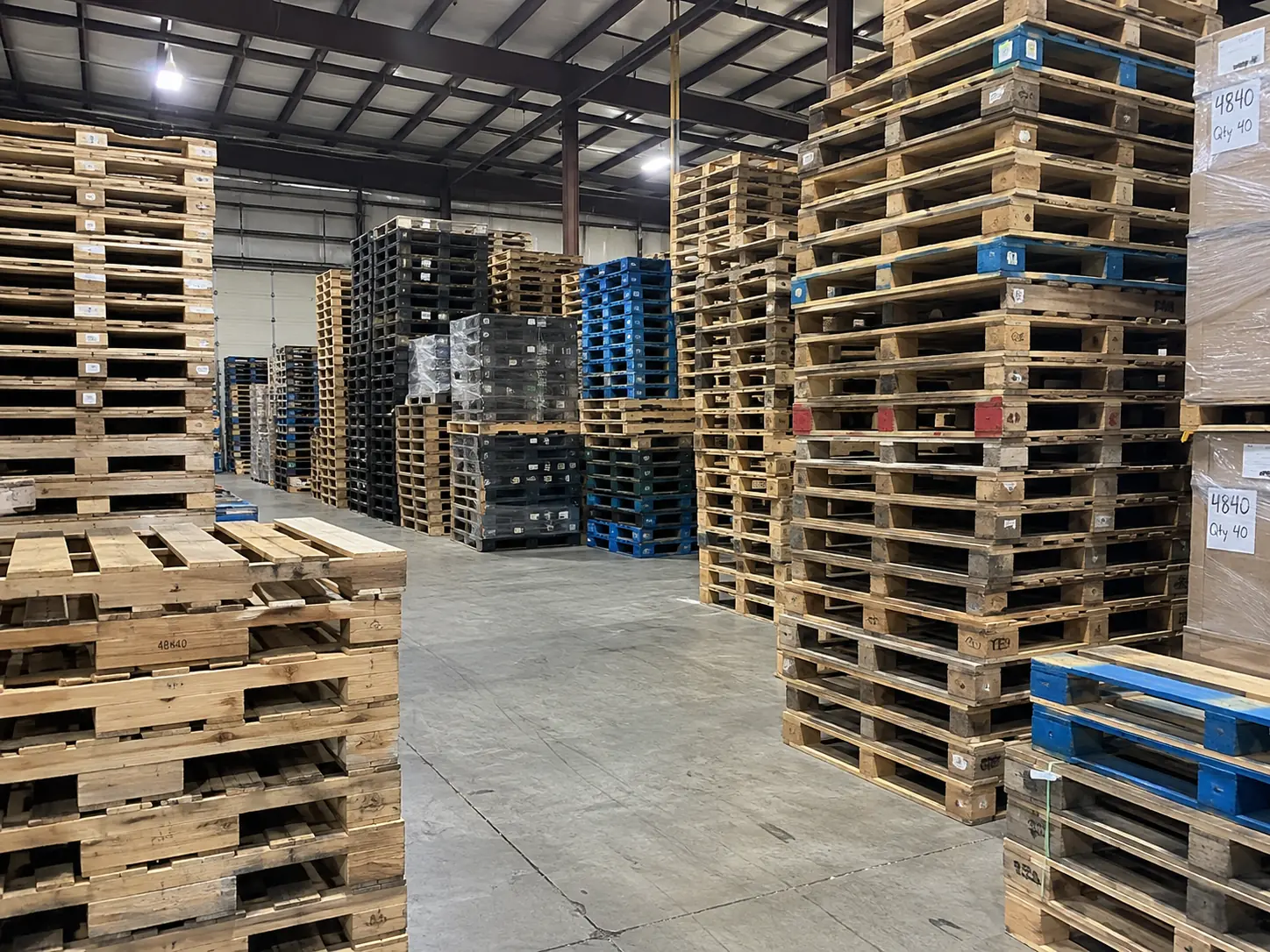
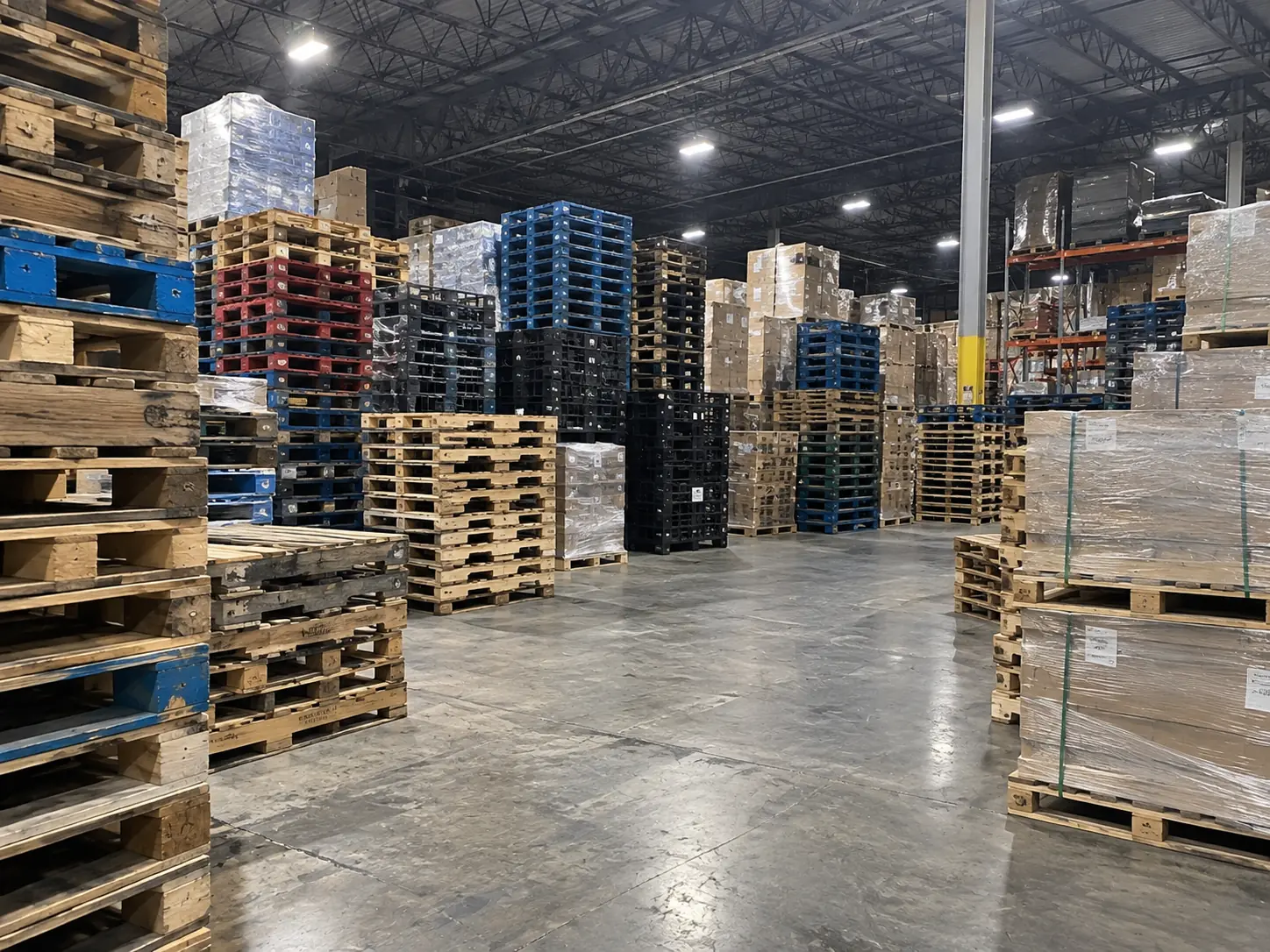
Pallet wood in service sits somewhere between 12 and 20 percent moisture content. A heated commercial interior in an Ohio winter sits at 6 to 8 percent. Install undried boards and they will lose that difference in your building over the first heating season — cupping, splitting, and opening gaps at every joint.
This is entirely avoidable and it is the single most common failure we are asked to look at. The fix is a kiln cycle before milling, and it is not optional.
Boards chosen for grain, colour and age. Older oak and maple stringers carry the patina; newer softwood does not and we do not use it in the studio line.
Every fastener out by hand. Machine dismantling is faster and leaves broken shanks in the wood.
Every board through a detector after de-nailing. One missed shank ruins a planer knife, and it ruins a client's table saw just as effectively.
To 6–8% moisture content. This is the step that decides whether the installation survives.
Planed, jointed and dimensioned. The face is skimmed just enough to true it while leaving saw marks, colour and character intact.
Panelised into sections where possible, finished with a low-VOC hardwax oil or left raw where weathering is wanted.
Random-width or uniform layups in 4×8 ft panelised sections. The application this material is best at.
Slatted or solid-board layups over a plywood carcass, hardwax oil finish. Robust and repairable.
Crates, risers, tiered stands and market tables sized to a planogram, consistent enough to roll out across locations.
Laminated, planed flat, edge-glued. Needs correct drying more than anything else on this list.
Untreated hardwood, no chemical preservatives, lined where soil contact requires it. Weathering is the point here.
Prepared panels for sign painters and set builders, sold by the square foot.
Every piece on this site closes with the slice of our operating record that bears on what it argues. The full record is published at /resources/operating-record.
The studio line uses oak and maple from older cores. Poplar is too soft for most commercial surfaces and softwood carries no patina.
The recycled pool leans oak because oak survives long enough to be collected.
Light for a hardwood. Our preferred deck-board harvest stock.
Mostly from export and one-way inbound freight.
Excellent stringer material; highest repair yield of anything we take in.
Rising share as post-borer salvage lumber works through the system.
Short service life. Rarely reaches us in repairable condition.
Regional mill offcuts; behaves like oak for our purposes.