What a pallet costs when you count the floor space
In short
A pallet's purchase price is typically the smallest component of what it actually costs. Floor space occupied by idle stock, handling passes, transit damage attributable to poor specification, disposal charges and inventory carried to cover a slow replenishment cycle all belong in the number — and none of them are coded to packaging in any accounting system.
Talk to us about this
If this piece describes a problem you actually have, describe it back to us in the message field. You will get a written answer from a person within one business day.
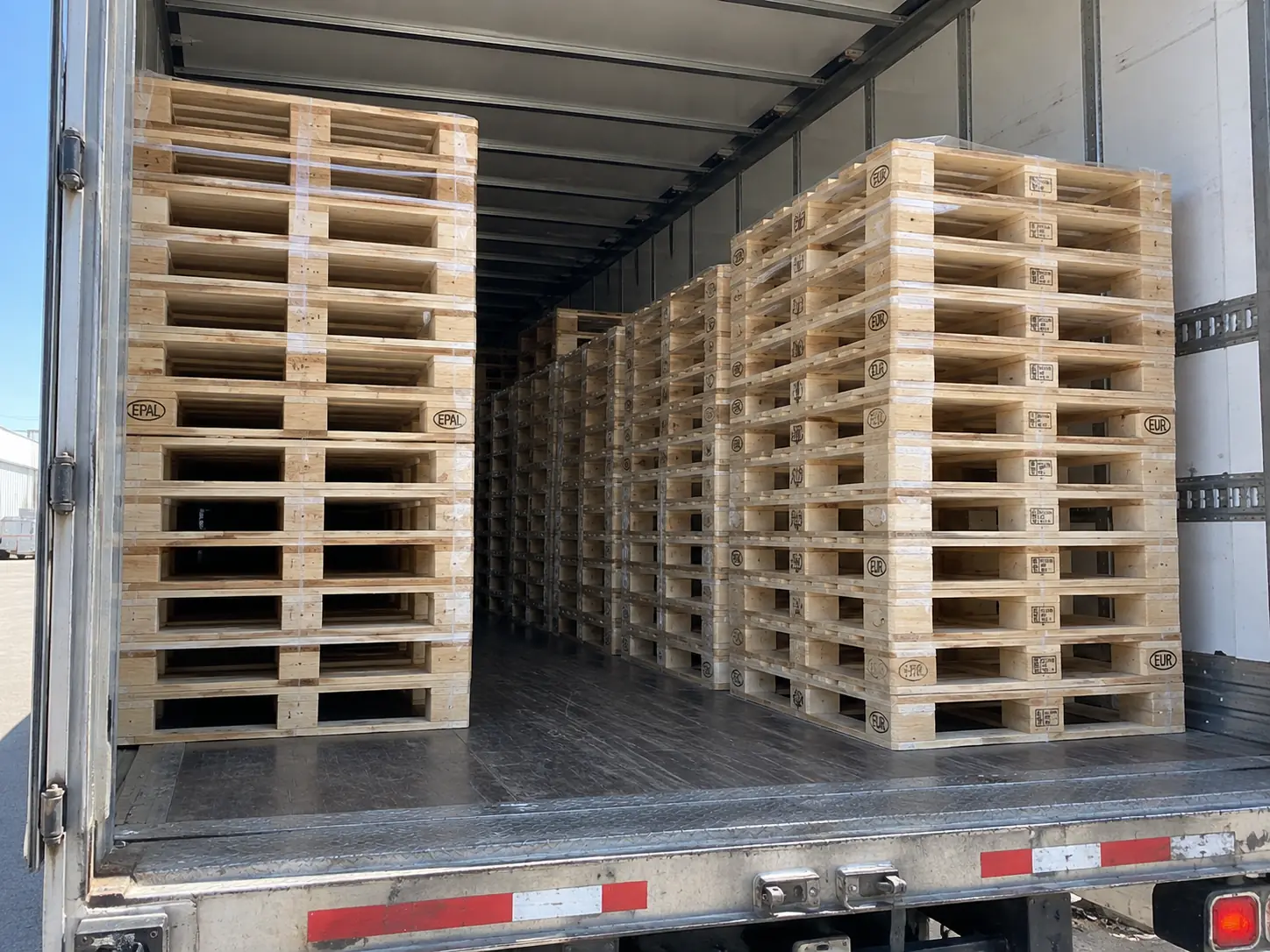
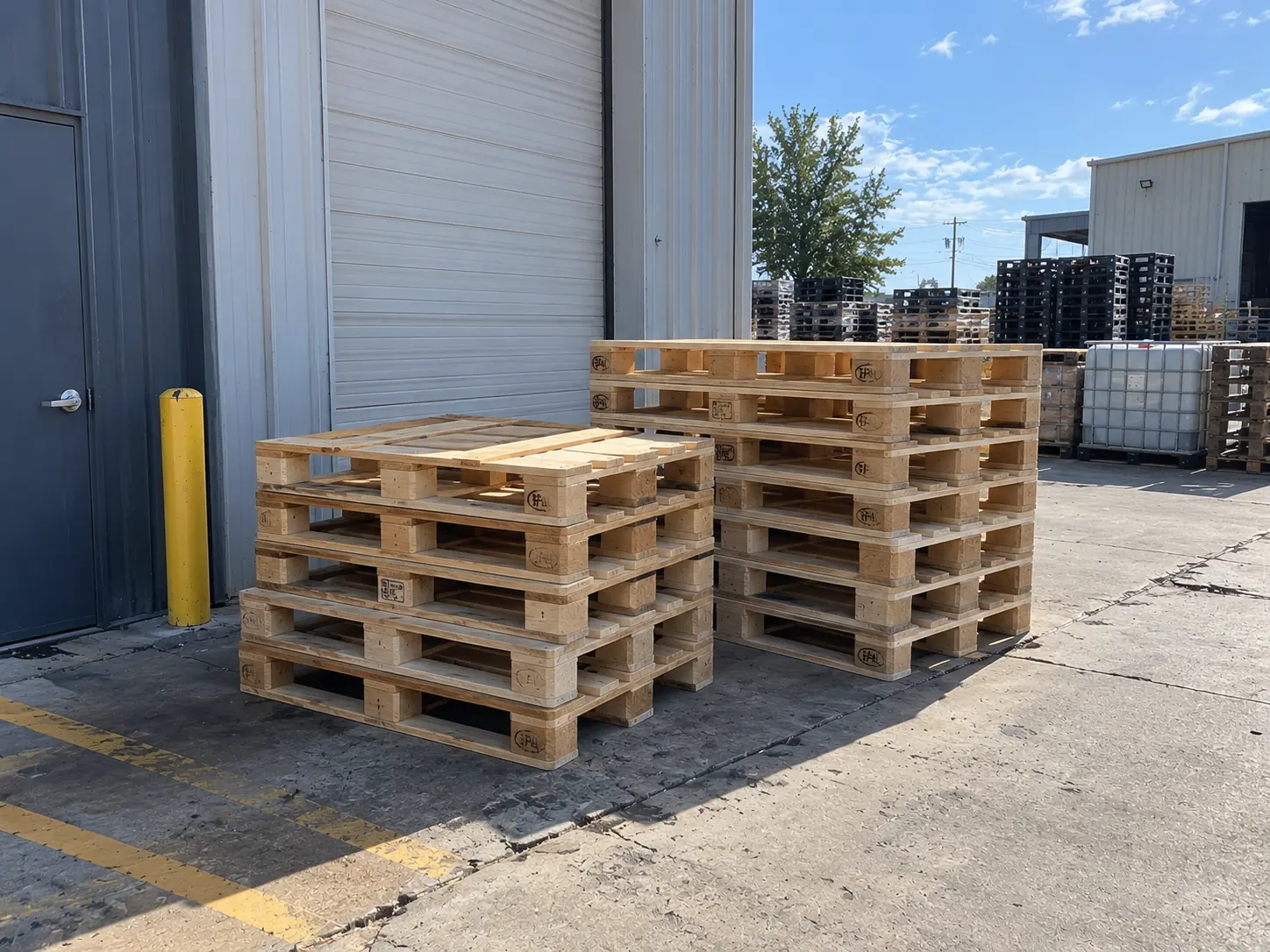
The components
| Cost | Where it sits in your accounts | Usually measured? |
|---|---|---|
| Purchase price | Packaging / MRO | Yes |
| Inbound freight | Packaging or freight | Sometimes — often buried in a unit price |
| Floor space for idle stock | Occupancy | No |
| Handling passes | Warehouse labour | No |
| Transit damage from specification | Claims / customer service | Yes, but not attributed to pallets |
| Disposal and hauling | Waste | Yes, but not attributed to pallets |
| Inventory carried to cover lead time | Working capital | No |
| Fire and safety risk from accumulation | Insurance / EHS | No |
Only the first row is normally visible to the person negotiating pallet price. That is why unit-price negotiation is the least effective lever available and also the one every procurement process starts with.
Floor space, worked out
Measure the footprint your idle pallet stock occupies in square feet. Multiply by your all-in occupancy cost per square foot per year — rent, utilities, insurance, maintenance, everything. That is what the pile costs to exist, annually, before anybody touches it.
For a modest pile occupying a few hundred square feet in a heated building, the figure is usually large enough to change how the conversation goes. And unlike unit price, it is entirely within your control: the pile is that size because of the collection interval, not because of physics.
Handling passes are the hidden labour
Count how many times a single pallet is touched between arriving empty and leaving. In a well-run loop it is two — into the trailer, out at the yard. In a site with a pile it is commonly four or five: off the dock, onto the pile, restacked when the pile becomes unstable, off the pile, into the trailer.
- Each pass is forklift time and operator time
- Restacking exists only because a pile exists
- Piles migrate, and migration is another pass nobody counted
- Sorting at your site duplicates sorting at ours — let the graders grade
- A drop trailer removes two passes by design, not by effort
Appendix: the data behind this
Every piece on this site closes with the slice of our operating record that bears on what it argues. The full record is published at /resources/operating-record.
Freight share by distance, one of the hidden lines
Freight is visible on an invoice only if the supplier separates it. Floor space and handling never are — which is why the true cost is always larger than the purchase price.
| Distance band | Freight share | Cadence | Note |
|---|---|---|---|
| 0 – 30 miles | ~6% | Same day / next day | Freight is a rounding error. Grade choice dominates the invoice. |
| 31 – 75 miles | ~11% | Twice weekly | Still unit-price led. Split drops start to hurt here. |
| 76 – 130 miles | ~19% | Weekly | The crossover band. Full loads materially cheaper per unit. |
| 131 – 200 miles | ~27% | Weekly / biweekly | Round-trip pairing becomes the single largest lever available. |
| 201 – 250 miles | ~34% | Biweekly consolidated | Edge of company equipment. Split drops rarely make sense. |
| 251 – 400 miles | ~41% | Consolidated / partner | Brokered at cost plus a disclosed fee. We label it as such. |
| Over 400 miles | ~48% | Partner lane | Freight exceeds the wood. We will usually say so and suggest somebody closer. |