Why your pallets keep failing in the third rack position
In short
Pallets that break in racking rarely break at random. Almost every failure we are asked to investigate traces to one of three causes: the pallet was loaded across its notches instead of along its open side, the racked rating was used as though it were a dynamic rating, or the load sat long enough for creep to do what a single lift never would. All three are specification problems, not quality problems.
Talk to us about this
If this piece describes a problem you actually have, describe it back to us in the message field. You will get a written answer from a person within one business day.
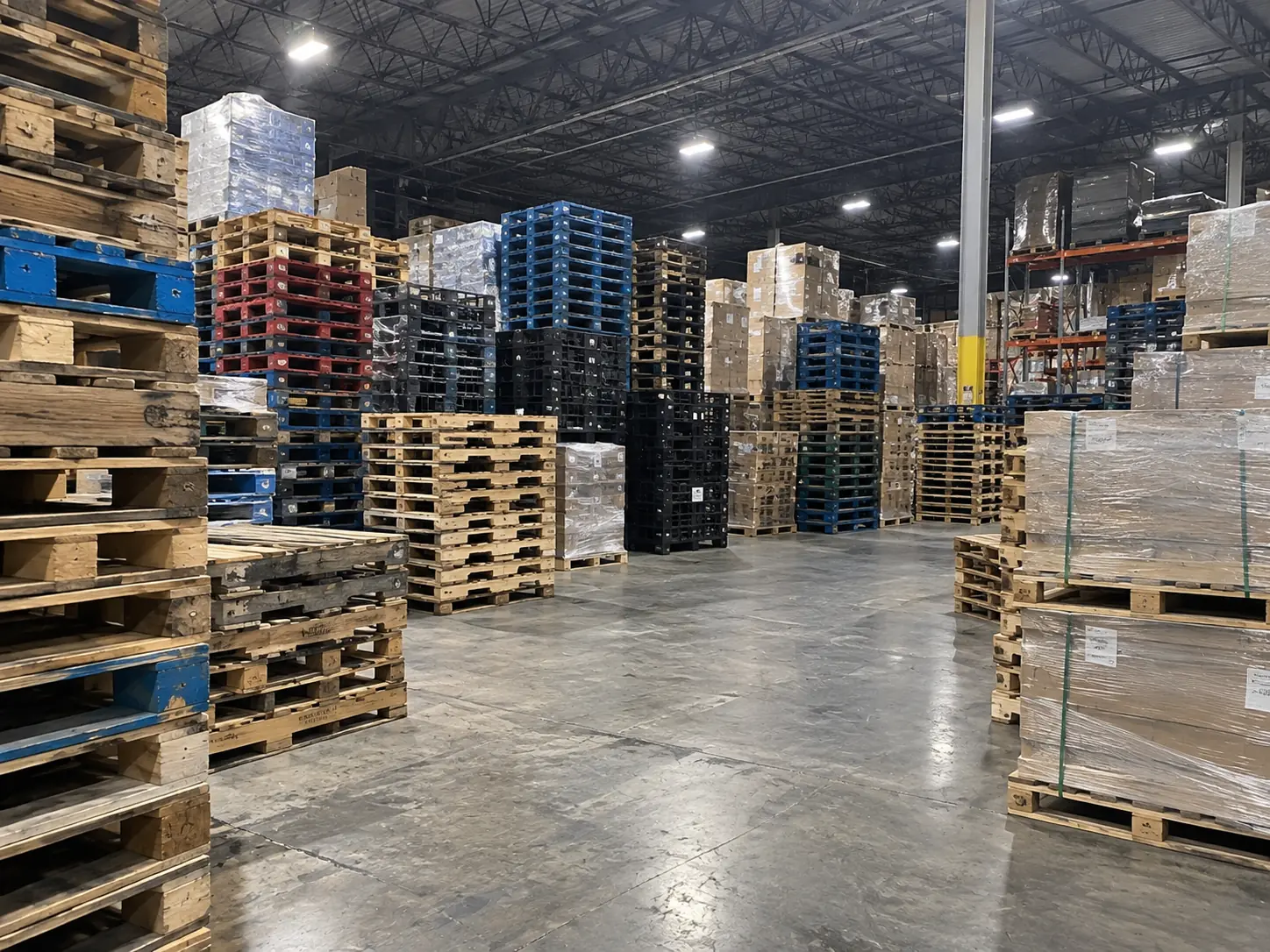
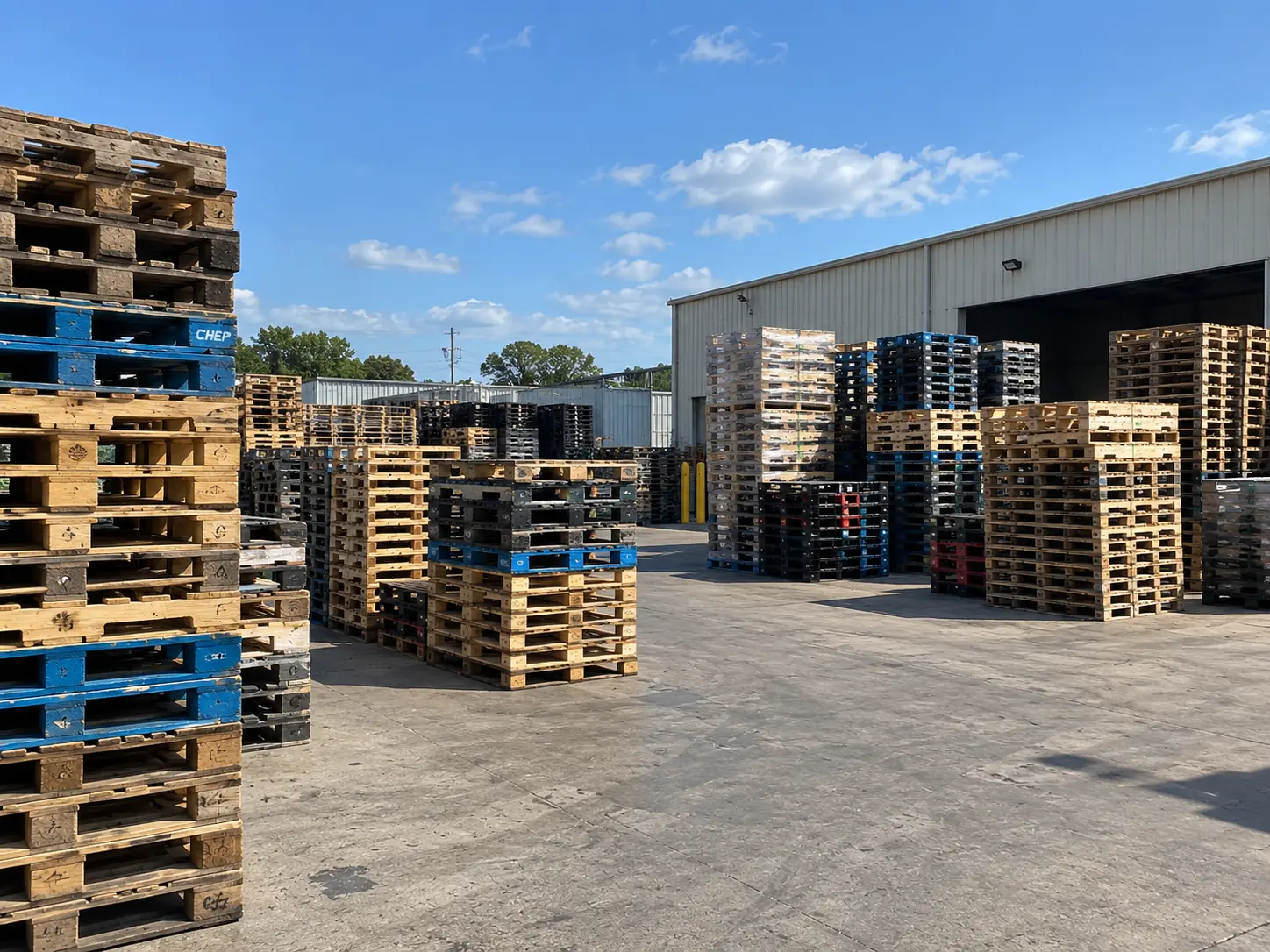
Four broken pallets in one bay
A distribution customer in Sharonville sent photographs of four failed pallets and asked whether we had sold them a bad lot. We had not, and the photographs said so before we ever got to the yard — all four had cracked along a stringer, at the notch, in the same rack bay, at the same height. When four units fail identically, the pallet is reporting a condition, not a defect.
The condition turned out to be simple. That bay had been re-beamed the previous year to take a deeper footprint, and the pallets were now being placed with their 48-inch side spanning the beams. Every fork entry and every load path was running through the notches. The wood was doing exactly what wood does when you remove material from the point of highest bending stress.
The three causes, in order of frequency
1. Loaded across the notches
A stringer pallet is strong in one direction and compromised in the other. Notching the outer stringers for four-way fork entry removes roughly 1.5 inches of depth over a 9-inch span, precisely where a racked load generates the most bending moment. A notched stringer is 30 to 40 percent weaker in bending than the same stringer uncut. Fork entry from the open 40-inch side uses the strong direction; entry through the notches does not.
The practical rule is short. If a pallet is going into a rack and it is a stringer pallet, the stringers should run across the beams — front to back — so the beam supports the full uncut depth. If your racking forces the other orientation, you do not need a better pallet grade. You need block construction, or wire deck.
2. The wrong rating was used
Three numbers describe a pallet and they differ by a factor of two or three. Static is what it holds sitting on a floor with everything supported underneath. Dynamic is what it holds while a forklift moves it. Racked is what it holds bridging two beams with nothing underneath the middle. A typical recycled hardwood 48×40 might be 5,000 lb static, 2,500 lb dynamic and 2,000 lb racked.
The number people remember is the biggest one, because it is the one on the sales sheet. We have been shown purchase specifications written to a static rating for product going straight into selective racking. That is a factor-of-2.5 error on the safety-critical dimension, and it is written down and approved.
3. Creep did it slowly
Wood under sustained load deflects permanently and progressively. This is creep, it is well understood, and it is almost never accounted for in warehouse practice. A pallet holding its rated racked load will deflect visibly over months even though nothing about the load has changed. For storage beyond about ninety days, derate racked capacity by roughly 25 percent — and rotate long-term racked stock rather than leaving specific pallets loaded indefinitely.
Diagnosing a failure from the wreckage
| What you see | What it usually means | What to change |
|---|---|---|
| Crack starting at a notch | Loaded across the notches, or racked rating exceeded | Reorient, or move to block construction |
| Deck boards pulled off the stringer | Fastener schedule too light, or smooth-shank nails | Specify helically threaded hardened shanks |
| Centre stringer cracked, outers intact | Point load in the middle of the deck | Tight-laid deck or a fourth stringer |
| Uniform sag with no fracture | Creep under sustained load | Derate 25%, rotate stock, or fit wire deck |
| Bottom deck boards split at the edge | Pallet jack entry damage, not racking at all | Chamfered bottom boards |
| Multiple failures in one bay | A site condition — beam spacing, orientation, or a specific operator | Investigate the bay, not the pallet |
Keep the broken pallet. Photograph it in the rack before it is moved. Nine times in ten the position tells you more than the fracture does.
The cheapest fixes, in order
- Reorient. Free. If the stringers can run across the beams instead of along them, do that first and re-measure.
- Wire mesh decking. Usually cheaper per position than upgrading every pallet that will ever sit in that rack, and it removes the span problem permanently.
- A fourth stringer. Adds meaningful bending capacity for a modest cost increase, and is almost always better value than moving up a cosmetic grade.
- Block construction. Genuinely four-way, consistent in both directions, and the right answer when orientation cannot be controlled.
- Reduce the load. Obvious, unpopular, and occasionally correct.
Appendix: the data behind this
Every piece on this site closes with the slice of our operating record that bears on what it argues. The full record is published at /resources/operating-record.
Ratings by construction, with the creep derate
The racked column is the one that governs a rack, and the 90-day column is the one that governs long-term storage. Almost nobody publishes the second, which is why creep failures keep surprising people.
| Construction | Static | Dynamic | Racked | Racked 90+ days |
|---|---|---|---|---|
| 3-stringer, 7/5 deck, mixed hardwood | 5,000 lb | 2,500 lb | 2,000 lb | 1,500 lb |
| 3-stringer, 7/5 deck, softwood | 4,000 lb | 2,000 lb | 1,500 lb | 1,125 lb |
| 4-stringer, 7/5 deck, mixed hardwood | 6,500 lb | 3,200 lb | 2,600 lb | 1,950 lb |
| 3-stringer, tight-laid deck, hardwood | 5,500 lb | 2,700 lb | 2,100 lb | 1,575 lb |
| 9-block, EPAL pattern | 8,800 lb | 3,300 lb | 2,200 lb | 1,650 lb |
| Heavy-duty solid deck, 6 runners | 12,000 lb | 6,000 lb | 4,000 lb | 3,000 lb |
| Two-way skid, no bottom deck | 4,000 lb | 2,000 lb | Not rated | Not rated |