Mould bloom: what it is, what it isn't, and when to reject
In short
Three different things show up as discolouration on pallet wood: surface mould, blue stain fungus, and mineral streak. Only the first is a live organism with a moisture problem behind it. Blue stain is a cosmetic fungal discolouration that does not affect strength; mineral streak is not biological at all. Knowing which you are looking at prevents both unnecessary rejections and dangerous acceptances.
Talk to us about this
If this piece describes a problem you actually have, describe it back to us in the message field. You will get a written answer from a person within one business day.
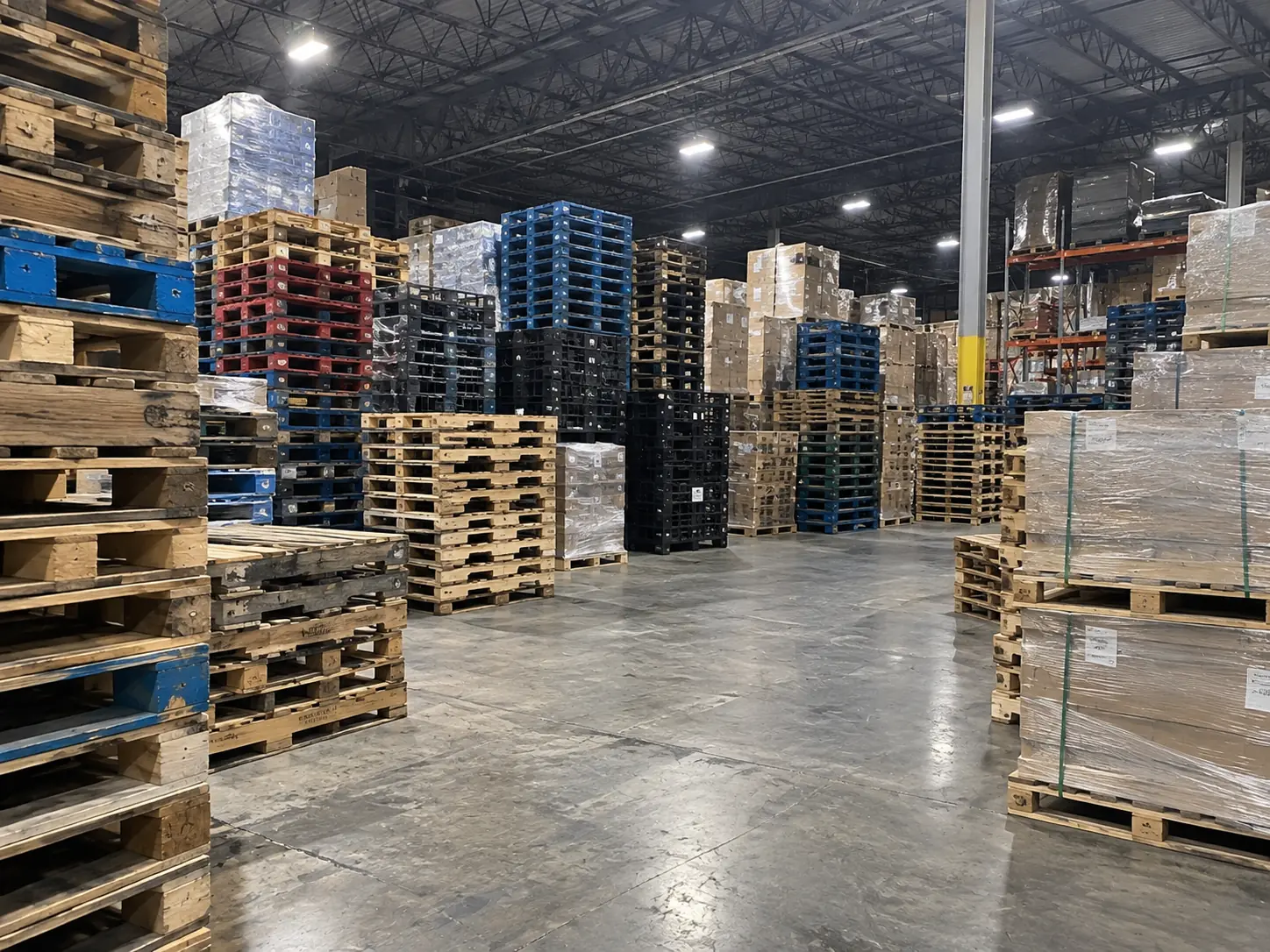
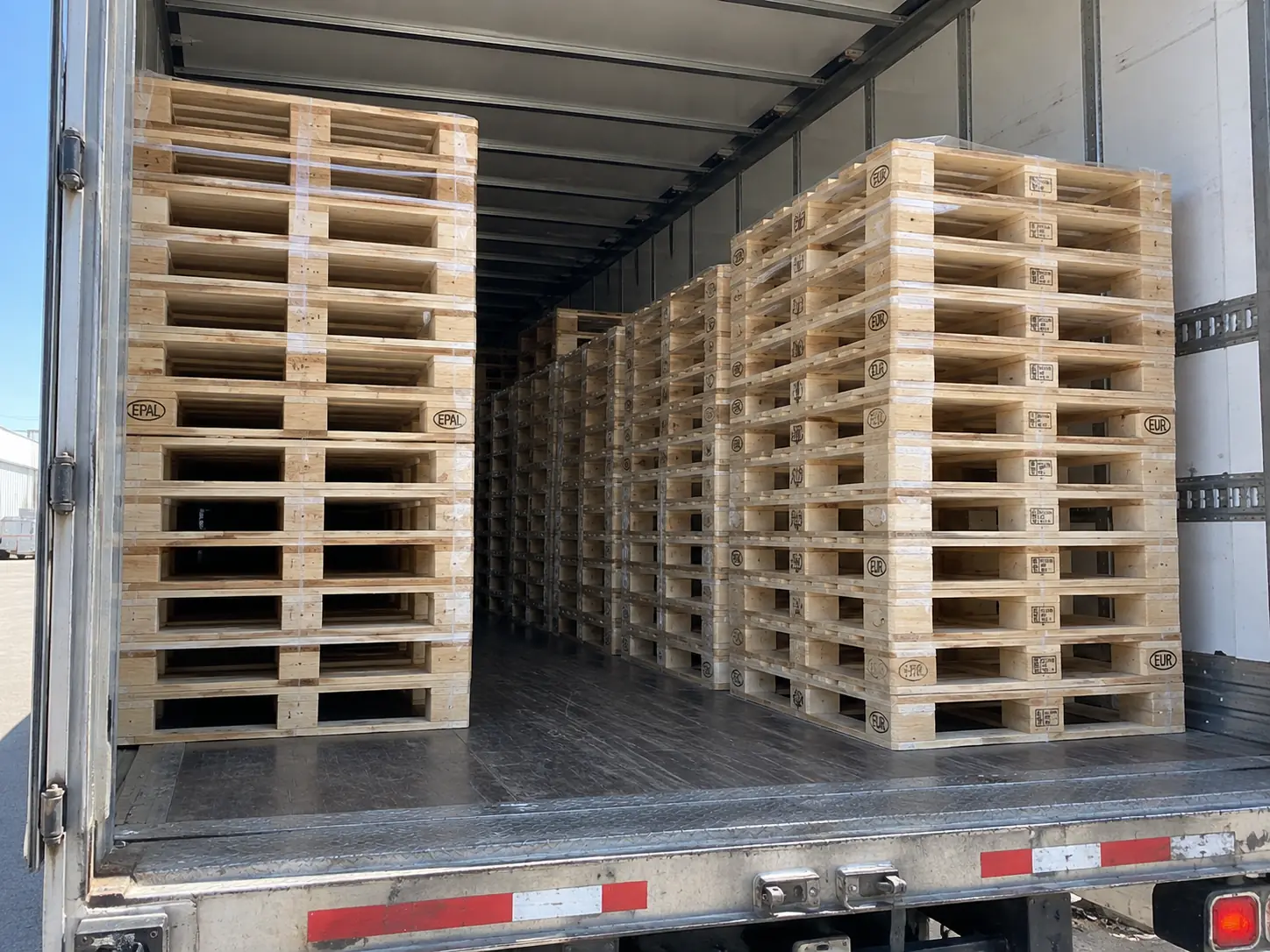
Telling the three apart
| Appearance | What it is | Structural effect | Action |
|---|---|---|---|
| Fuzzy, raised, white/green/black, wipes off | Surface mould — live growth | None directly, but indicates high moisture | Reject for food, pharma and export; dry and re-inspect otherwise |
| Flat grey-blue, penetrates the grain, will not wipe off | Blue stain fungus | None — it feeds on sap, not structure | Cosmetic only; acceptable outside appearance-audited uses |
| Olive-green to brown streaks following the grain | Mineral streak | None — a natural mineral deposit | Accept |
| Black, soft, crumbling wood | Decay fungus | Severe — the wood has lost strength | Reject outright |
| Orange-brown surface film | Oxidation or tannin bleed | None | Accept |
The wipe test settles most arguments. Surface mould comes away on a glove; blue stain and mineral streak do not.
Why mould appears at all
Mould needs moisture above roughly 20 percent, a temperature it likes, and time. Pallets provide the last two for free, so moisture is the only lever. Every mould problem we have investigated traces to one of four conditions: outdoor storage without cover, stock wrapped in plastic while still damp, a wet dock with poor airflow, or product that released moisture into the stack.
- Outdoor staging in an Ohio spring is the single largest cause we see
- Shrink-wrapping a bundle that has not dried is a mould incubator — the film traps everything
- Stacking tight against a cold exterior wall creates a condensation face
- Fresh produce and some chemicals release moisture into the load for days
When to reject
Our rule, and the one we recommend to customers writing their own receiving criteria, is to reject any pallet with visible active surface growth for food, beverage, pharmaceutical, medical and export use, without debate. For general industrial use, mould on the surface of otherwise sound wood can be dried and brushed, and the pallet returns to service — but the moisture condition that caused it still needs finding, or it will come back.
Preventing it at your site
- Store under cover. A roof is the cheapest mould control available and it pays for itself annually.
- Never wrap damp stock. If it came in wet, let it dry before it is banded or filmed.
- Keep airflow around stacks. Tight-packed pallets against a wall trap moisture on the face nobody sees.
- Rotate. Fast rotation is more effective than any treatment, because mould needs time.
- Specify sub-19% moisture on delivery, and check a sample with a meter rather than assuming.
Appendix: the data behind this
Every piece on this site closes with the slice of our operating record that bears on what it argues. The full record is published at /resources/operating-record.
Why units left the reuse stream
Moisture and mould accounted for 10.1% of rejections across the year — and 18.9% of March rejections against 4.2% in July. It is the most seasonal rejection reason we record.
- Cracked or split stringer34.2%
Almost always at a notch. The single most common structural failure we see.
- Missing or broken deck board26.8%
Lead boards over interior boards by roughly two to one — they take the fork impact.
- Shiner / protruding fastener11.4%
Refastened and returned to the line in most cases. A rejection regardless of grade.
- Moisture above 19% or mould bloom10.1%
Heavily seasonal. 18.9% of March rejections; 4.2% of July rejections.
- Contamination, staining or odour7.3%
Pulled by a person at the intake belt, before any downstream process.
- Companion stringer or plate from a prior repair5.2%
We accept companions as #2. Metal plates we reject outright, inbound and outbound.
- Dimensional variance outside tolerance3.1%
Diverted to non-automation stock rather than scrapped.
- Pest damage or exit holes1.9%
Segregated immediately. Never enters the export or studio stream.