Pallet storage and sprinkler design: what warehouse managers get wrong
In short
Idle pallet storage is treated as a special hazard in fire protection standards because empty pallets present enormous surface area with air gaps between every board — close to ideal combustion geometry. Height limits, separation distances and sprinkler design all depend on whether the pallets are wood or plastic, and switching material without a sprinkler review is one of the more consequential unforced errors in warehousing.
Talk to us about this
If this piece describes a problem you actually have, describe it back to us in the message field. You will get a written answer from a person within one business day.
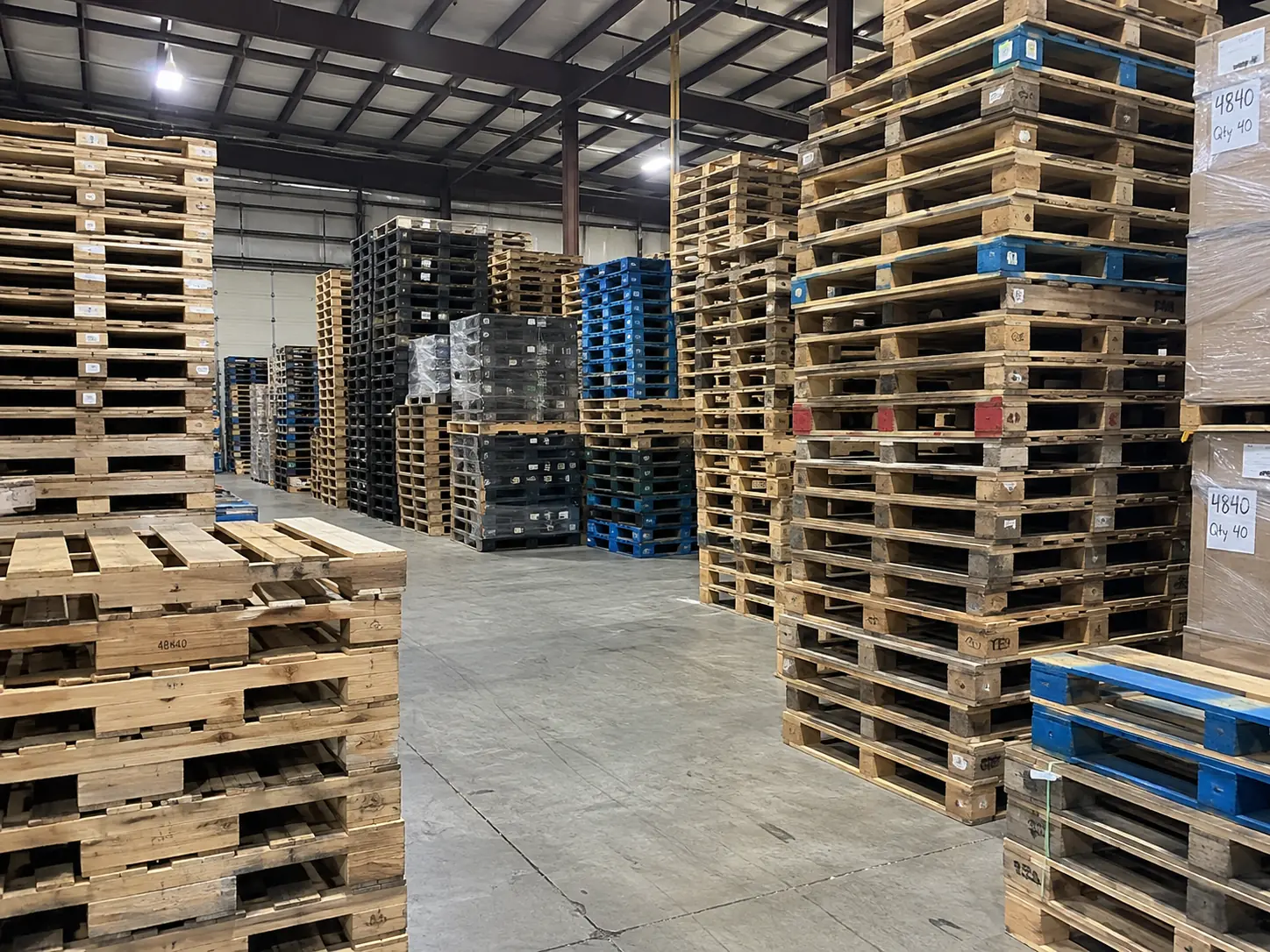
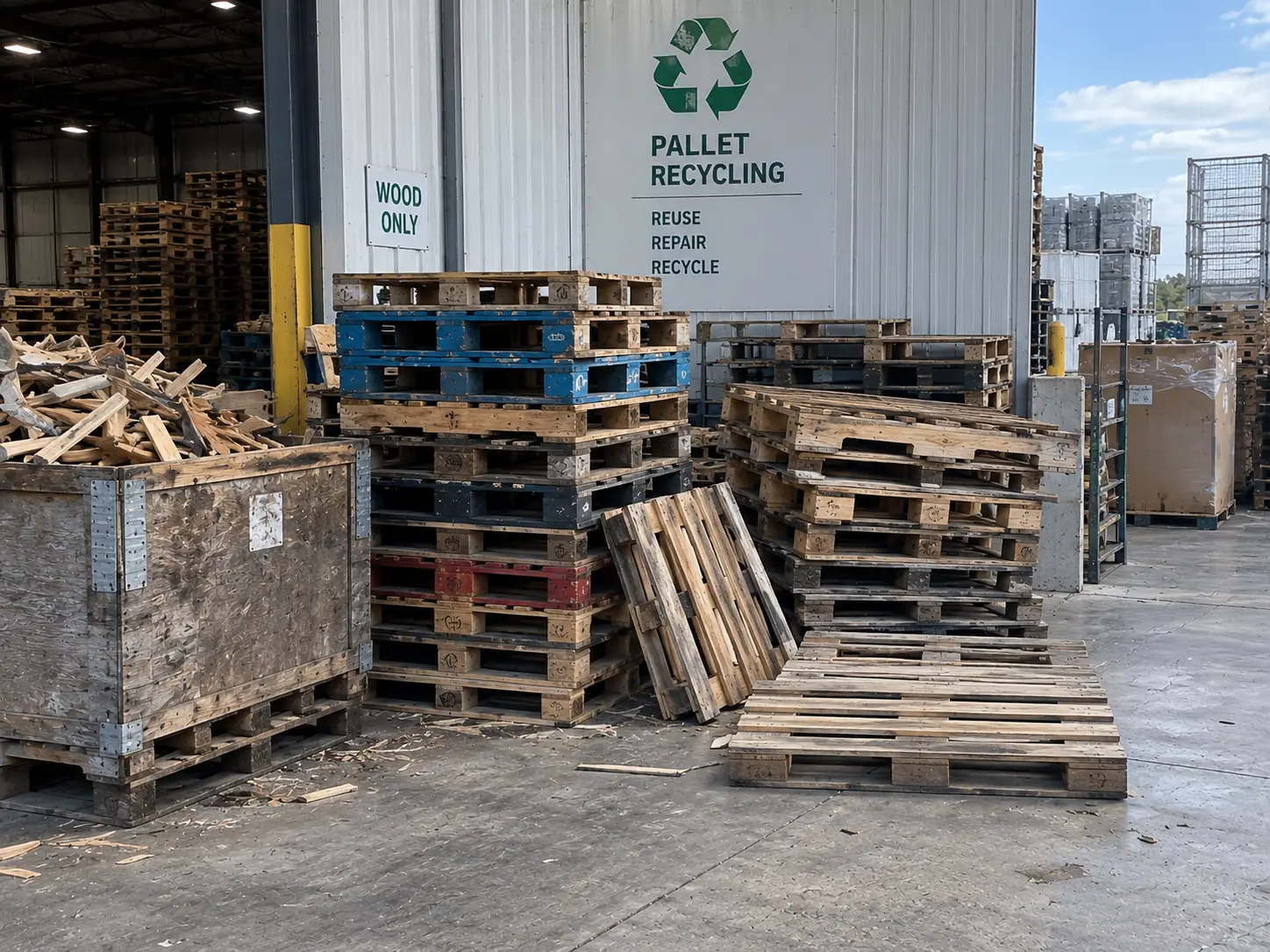
Why empty pallets are treated as a special hazard
A loaded pallet of canned goods is mostly steel and water. An empty pallet is wood with air on all sides of every board. Combustion needs fuel, oxygen and surface area, and an idle pallet stack supplies all three in close to ideal proportions. Fire spreads vertically through the flue spaces between boards at a rate that surprises people who have only seen wood burn in a fireplace.
This is why fire protection standards treat idle pallet storage separately from almost everything else, and why the limits are expressed in stack height and separation rather than in tonnage. A short, well-separated pile of many pallets is far safer than a tall pile of fewer.
The plastic conversion problem
This is the part that catches operations out. A facility converts from wood to plastic pallets for hygiene or durability reasons, the conversion is managed as a packaging decision, and nobody involves fire protection. But plastic — typically HDPE or polypropylene — has a substantially higher heat release rate than wood, burns with dripping molten material that spreads fire downward, and produces dense smoke that impairs detection.
A sprinkler system designed and approved for idle wood pallet storage is not automatically adequate for the same quantity of plastic. Depending on the configuration it may require a higher density design, in-rack sprinklers, or a reduction in permitted storage height. None of that is expensive to find out in advance and all of it is expensive to find out afterwards.
Controls that cost almost nothing
- Store idle pallets outside, away from the building and away from the property line, wherever the climate and security allow. This is the single most effective control and it is free.
- Limit stack height rather than total quantity. Several short piles with real separation between them behave very differently from one tall one.
- Maintain separation from stored commodity, racking and building walls in line with your approved design.
- Do not let idle pallets accumulate in aisles, under mezzanines or against exterior walls, which is where they migrate to when nobody owns the problem.
- Set a removal cadence. A pile that never exceeds a week of accumulation never becomes a fire protection question at all.
That last point is where a pallet recycler is genuinely useful. Most idle pallet hazards exist because nobody scheduled a collection, not because anybody decided to accept the risk. A standing weekly route or a drop trailer converts a growing hazard into a managed flow, and it usually pays for itself in recovered core value before you even count the risk reduction.
Talking to your insurer
Insurers ask about idle pallet storage during surveys, and the answer they want is specific: where, how high, how separated, what material, and how often it is cleared. An operation that can answer those five questions crisply tends to have a much easier survey than one that says pallets are "out the back". Having a documented collection schedule with a named supplier is a genuinely useful thing to be able to point at.
Appendix: the data behind this
Every piece on this site closes with the slice of our operating record that bears on what it argues. The full record is published at /resources/operating-record.
Monthly intake — the volume a pile represents
Roughly 116,000 pallets a month move through one yard. A site holding four weeks of accumulation is holding a genuine fire load, and this is the scale it operates at.
Read this chart as a table
| Period | Value (thousands of pallets) |
|---|---|
| Sep | 121 |
| Oct | 119 |
| Nov | 110 |
| Dec | 104 |
| Jan | 139 |
| Feb | 131 |
| Mar | 127 |
| Apr | 123 |
| May | 117 |
| Jun | 113 |
| Jul | 105 |
| Aug | 108 |