Strength
Wood above roughly 25% moisture content loses a meaningful share of its bending strength. A soaked pallet going straight into racking is a genuinely worse pallet than the same unit dry.
Rain costs a pallet three ways at once: the wood loses strength while wet, it gains weight that has to be hauled, and it becomes a mould risk that can disqualify it from food, pharmaceutical and export use entirely. A pile stored under cover is worth meaningfully more per unit than the identical pile stored in the open, and a roof is the cheapest intervention available.
If this piece describes a problem you actually have, describe it back to us in the message field. You will get a written answer from a person within one business day.
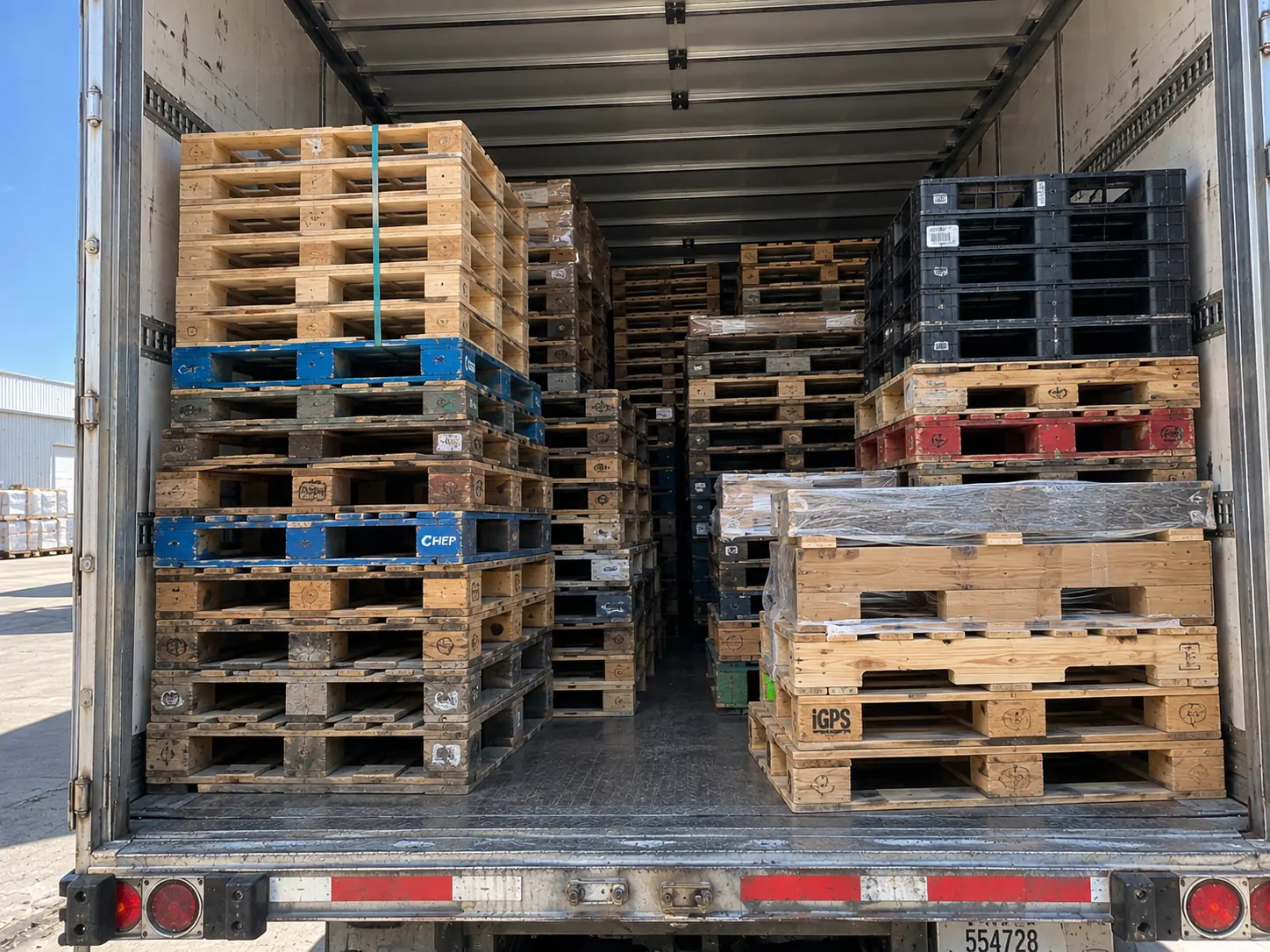
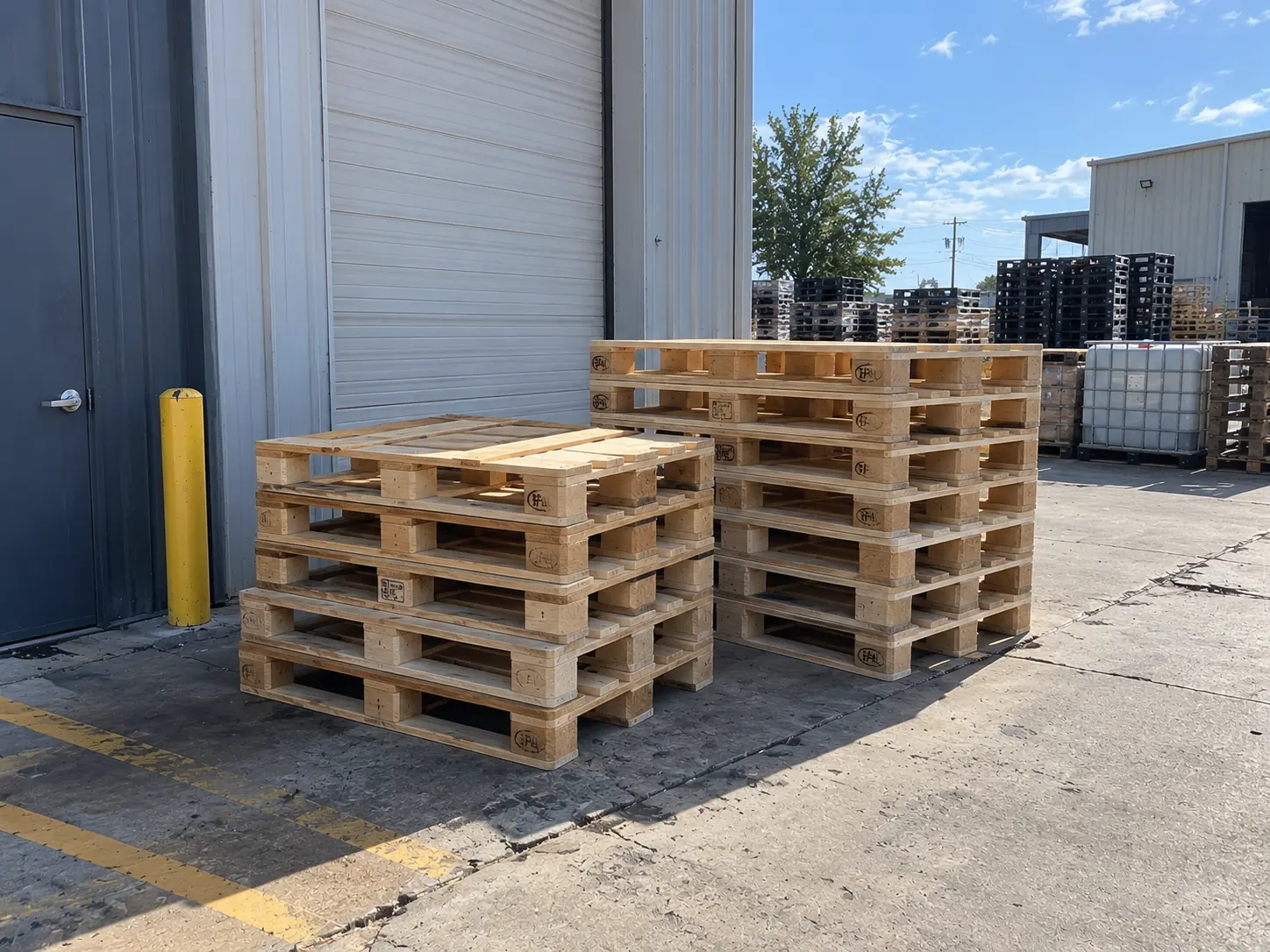
Wood above roughly 25% moisture content loses a meaningful share of its bending strength. A soaked pallet going straight into racking is a genuinely worse pallet than the same unit dry.
A saturated 48×40 can carry several pounds of water. Across a trailer of 550 units that is real tonnage, hauled at full freight rates, for no value whatsoever.
Above about 20% moisture with warmth and time, surface mould appears. That disqualifies the unit from food, beverage, pharmaceutical and export use — the highest-value destinations.
Wet banded bundles are heavier, slipperier and more likely to shift on a flatbed. Drivers strap them differently and it takes longer.
Water darkens and stains wood unevenly. Stock that would have graded A on appearance comes back as B, and the difference is purely cosmetic and purely avoidable.
Late autumn soaking followed by a hard freeze splits wood along the grain. This is where genuinely destroyed stock comes from.
This region is not kind to outdoor pallet storage. Spring brings sustained rain, summer brings high humidity that prevents drying, and the autumn-to-winter transition brings exactly the wet-then-freeze cycle that splits wood. A pile that goes outside in March and is collected in May has been wet more or less continuously for two months.
We collect wet stock and we quote it as wet stock. Leaving it would not be a service, and it still has value — it just has less. What we would rather do is help you not generate it in the first place, because a dry core is worth more to both of us.
Every piece on this site closes with the slice of our operating record that bears on what it argues. The full record is published at /resources/operating-record.
From 59.1% in July to 51.4% in April. Same customers, same pallets, different weather. That eight-point gap is what rain costs, expressed as grade.
| Period | Value (percent of intake) |
|---|---|
| Sep | 57.4 |
| Oct | 56.2 |
| Nov | 54.8 |
| Dec | 53.9 |
| Jan | 55.1 |
| Feb | 54.3 |
| Mar | 52.6 |
| Apr | 51.4 |
| May | 54.7 |
| Jun | 57.9 |
| Jul | 59.1 |
| Aug | 58.3 |