Air freight
Billed by weight. Every pound of pallet displaces a pound of revenue product. This is not a close call — softwood or slip sheets, every time.
Hardwood dominates the recycled pallet pool because hardwood survives long enough to be recovered — that is natural selection, not a quality verdict. Southern yellow pine has excellent strength for its weight, and on lanes where freight is billed by weight, where the pallet makes one trip, or where air freight is involved, a softwood build is both cheaper and technically better.
If this piece describes a problem you actually have, describe it back to us in the message field. You will get a written answer from a person within one business day.
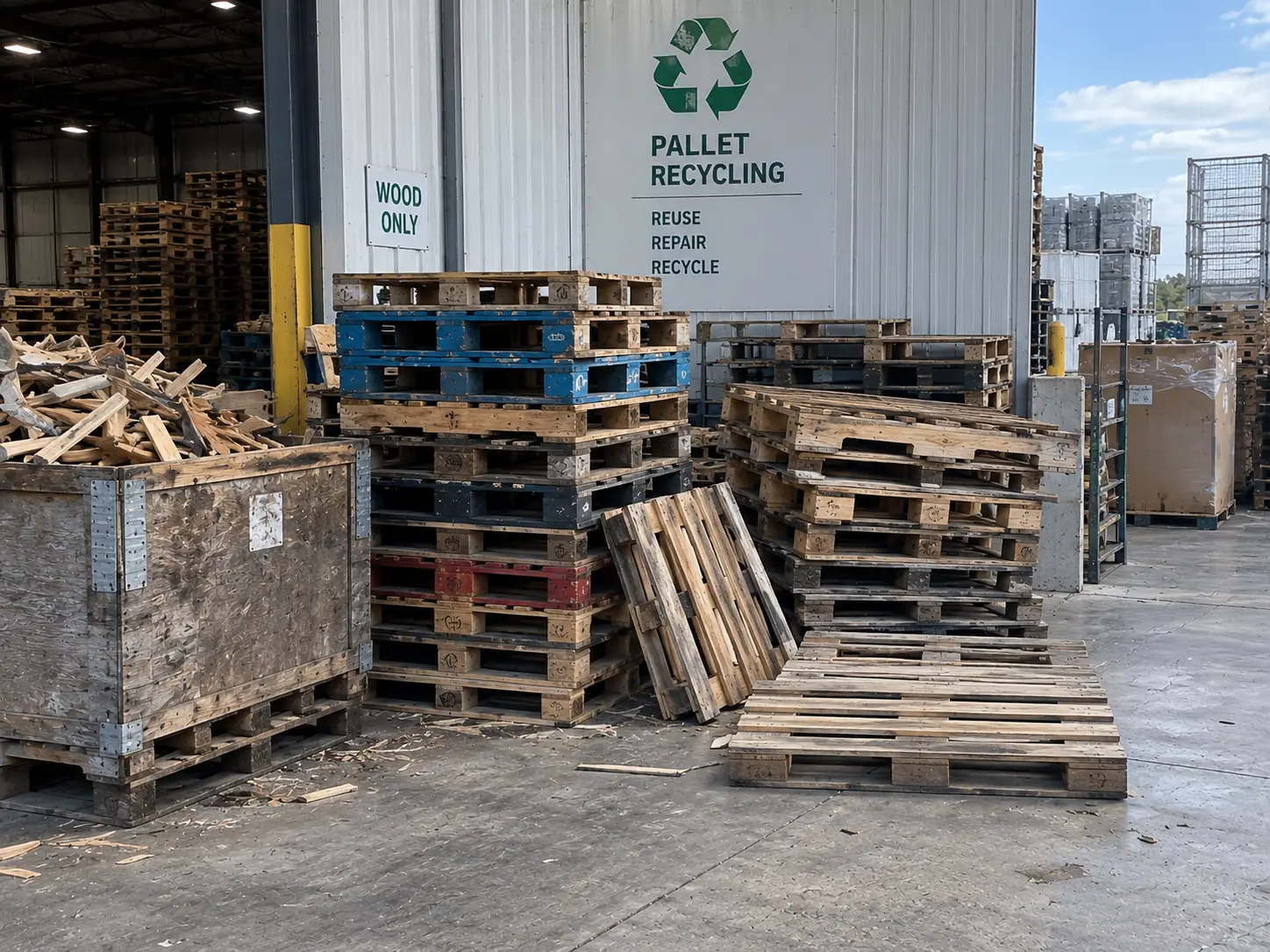
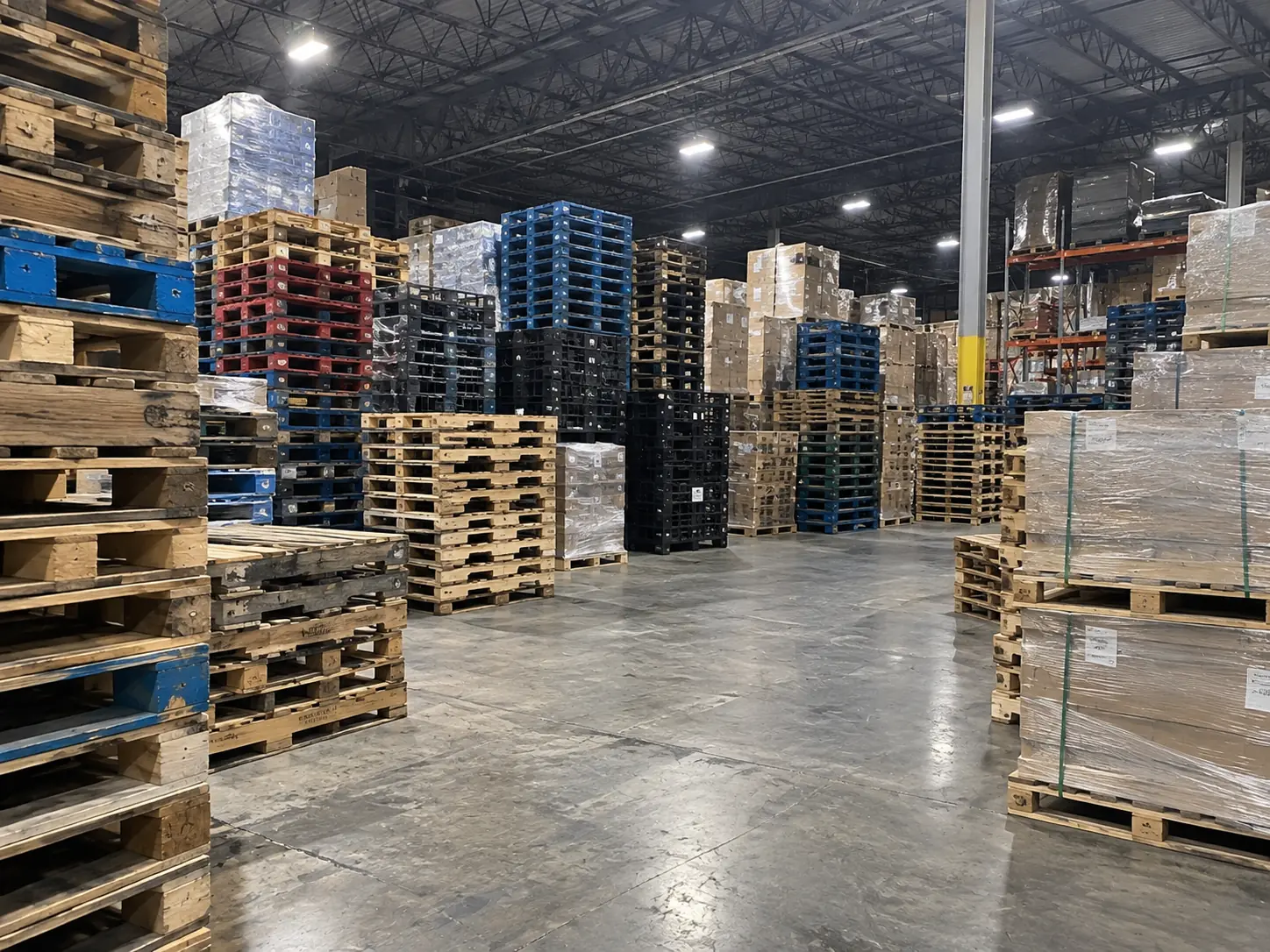
Walk our yard and you will see mostly hardwood: oak, maple, poplar, ash. It is tempting to read that as a quality judgement, and it is not. Softwood pallets are more likely to fail within their first few trips and never reach a recycler in recoverable condition. Hardwood survives, gets collected, gets repaired and re-enters service. What you are looking at is the survivors.
That distinction matters when specifying a new build, because you are no longer choosing from the survivors. You are choosing what to make, and the right answer depends on how many trips it needs to make.
Billed by weight. Every pound of pallet displaces a pound of revenue product. This is not a close call — softwood or slip sheets, every time.
The pallet is never coming back. Buy the minimum structure that survives one trip, and put the saving into the product.
A container that grosses out before it cubes out is a container where pallet weight is pure cost.
Sites where people move pallets by hand. A 35 lb pallet against a 52 lb one is a genuine ergonomic difference across a shift.
Packaging, foam, empty containers. The load will never approach a hardwood pallet's rating, so you are paying for capacity you cannot use.
Where unit cost dominates and the service life requirement is genuinely one trip.
| Property | Mixed hardwood | Southern yellow pine | Spruce / fir |
|---|---|---|---|
| Density (lb/ft³) | 35–47 | 35–38 | 25–28 |
| Empty weight, 48×40 | 45–55 lb | 35–42 lb | 30–38 lb |
| Bending strength | Highest | High for a softwood | Moderate |
| Nail withdrawal resistance | Excellent | Good | Fair |
| Splitting on nailing | More prone | Moderate | Least prone |
| Trips before first repair | 4–7 | 2–4 | 1–3 |
| Recycled availability | Abundant | Limited | Scarce |
| Best use | Multi-trip, racking, heavy loads | Export, general one-way, good all-round | Light one-way, weight-critical |
Southern yellow pine deserves particular mention. It has mechanical properties that embarrass a lot of people's assumptions about softwood, and it is the reason "softwood" is a useless category on its own — pine and spruce are not the same product.
Hardwood stringers with a softwood deck is, for a lot of general distribution, close to optimal. The stringers carry the bending load and take the fork abuse, which is where hardwood earns its weight. The deck boards carry compression and take the nails, which softwood does perfectly well. The result is meaningfully lighter than an all-hardwood build with most of the durability.
We quote it when we are asked and we are rarely asked, because most specifications say "hardwood" or "softwood" as though a pallet were made of one thing. It is made of at least two, and they are doing different jobs.
Every piece on this site closes with the slice of our operating record that bears on what it argues. The full record is published at /resources/operating-record.
Softwood is 20% of what arrives and a much smaller share of what is repairable. That is survivorship, not a quality verdict.
The recycled pool leans oak because oak survives long enough to be collected.
Light for a hardwood. Our preferred deck-board harvest stock.
Mostly from export and one-way inbound freight.
Excellent stringer material; highest repair yield of anything we take in.
Rising share as post-borer salvage lumber works through the system.
Short service life. Rarely reaches us in repairable condition.
Regional mill offcuts; behaves like oak for our purposes.