The freezer problem: pallets below zero
In short
Below freezing, wood gets slightly stronger and considerably more brittle. Impact resistance drops sharply, so breakage in freezer environments comes from fork strikes and drops rather than from load failure. The other half of the problem is moisture: pallets cycling between a freezer and a humid dock pick up condensation, freeze it, and split along the grain. Specify dry, hardwood, and accept that cold chain consumes pallets faster than ambient storage.
Talk to us about this
If this piece describes a problem you actually have, describe it back to us in the message field. You will get a written answer from a person within one business day.
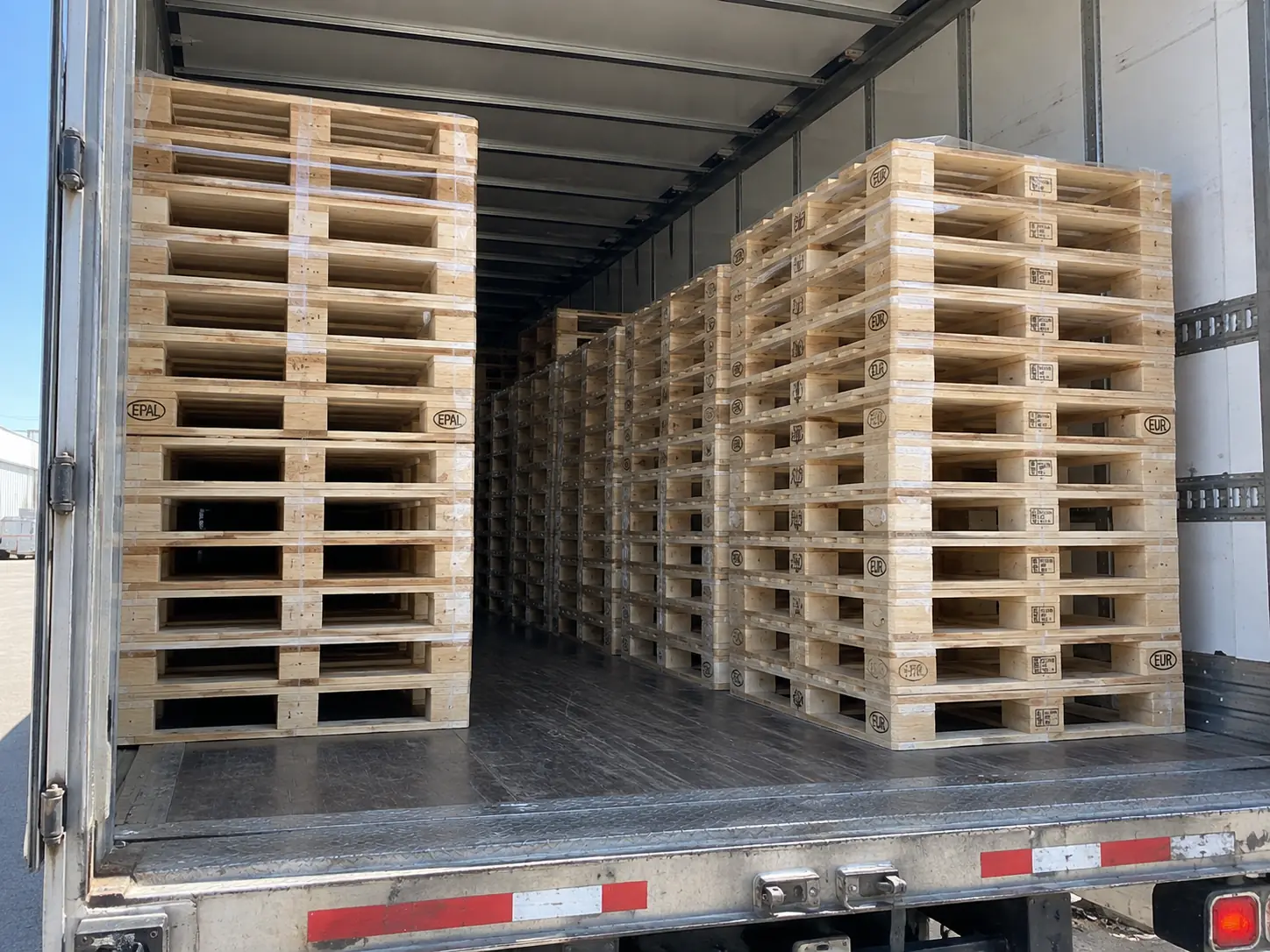
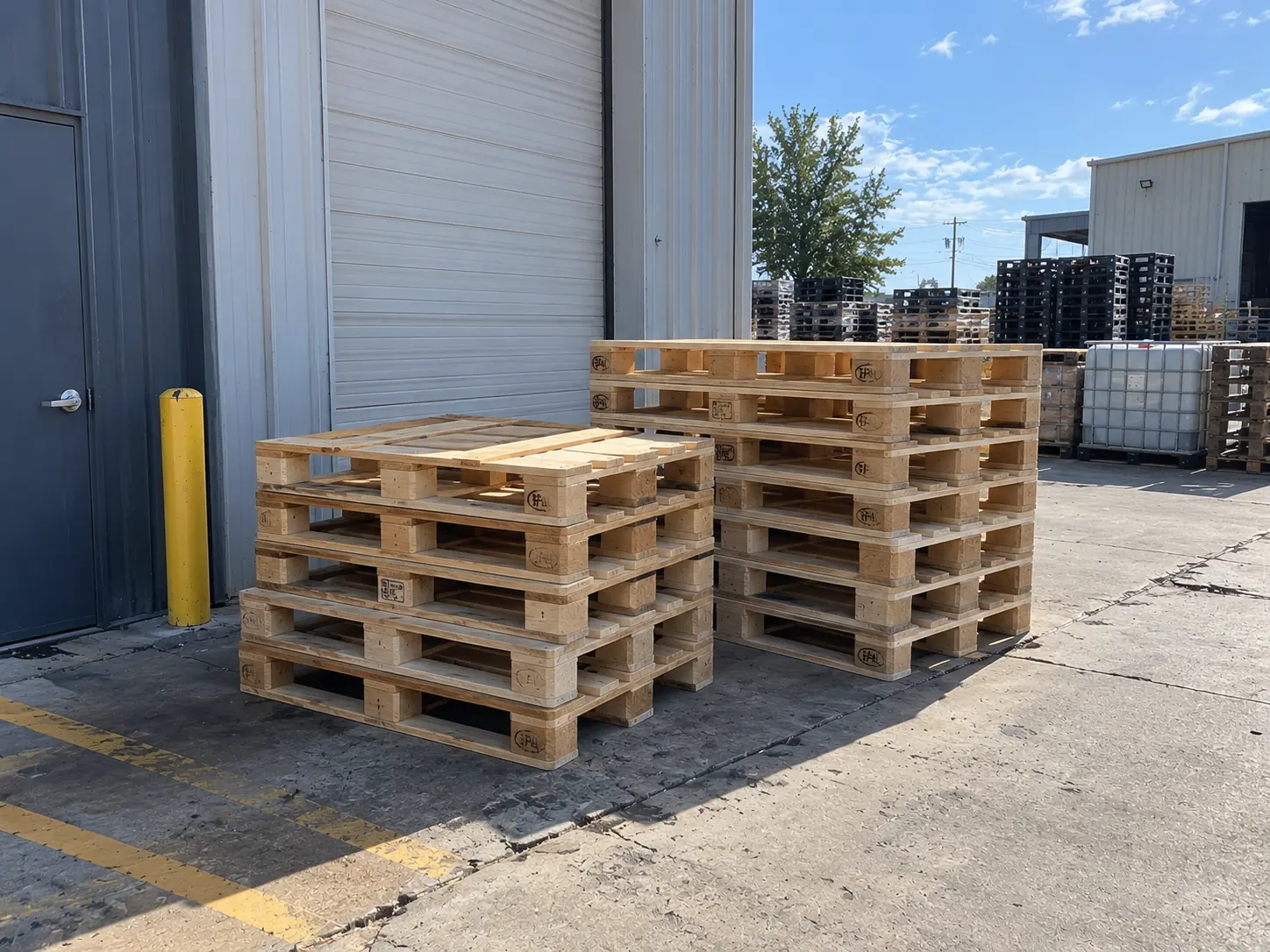
Cold makes wood brittle, not weak
Wood actually gains a little static strength as temperature falls — the cell walls stiffen. What it loses is toughness: the ability to absorb a sudden impact by deforming instead of fracturing. In a freezer, a fork tine that would have bruised a deck board at 70°F will split it at -10°F.
This is why cold-chain breakage patterns look different. You see split lead boards, cracked stringer ends and shattered bottom boards — impact damage — rather than the progressive sagging you see in ambient racking. Operators often conclude the supplier changed something. Nothing changed except the thermometer.
The moisture cycle is the real killer
A pallet moving from a humid loading dock into a freezer condenses moisture on its surface, and that moisture then freezes. Repeat this daily and water is driven into the grain, where each freeze expands it. The result is splitting along the grain that has nothing to do with load and everything to do with thermodynamics.
- Start dry: specify below 19% moisture content on delivery, and ideally below 15% for cold chain
- Minimise dwell time on a humid dock — staging pallets outside a freezer door is the worst possible place for them
- Avoid outdoor staging entirely; a rained-on pallet entering a freezer is a split pallet
- Rotate stock so no individual pallet cycles more than necessary
- Consider plastic on genuinely closed freezer loops, where washdown and non-absorbency both help
Specifying for cold
| Environment | Recommended build | Why |
|---|---|---|
| Chilled, 32–40°F, ambient docks | Recycled hardwood B/#1, dry | Brittleness is marginal; moisture is the issue |
| Frozen, 0 to -10°F | Hardwood, 4 stringers, tight-laid lead boards | Impact resistance; lead boards take the fork strikes |
| Blast freeze, below -20°F | New hardwood or plastic | Severe brittleness; repair economics deteriorate |
| Freezer with washdown | Plastic, if the loop is genuinely closed | Wood cannot be washed and will not dry |
Plastic is genuinely competitive in cold chain — one of the few applications where we say so plainly. The condition is that the pallet must reliably return. On a one-way frozen export lane, plastic is an expensive gift.
Setting the expectation
Cold chain consumes pallets faster than ambient storage, typically by a meaningful margin, and this is worth putting in the budget rather than discovering in the variance report. The operations that handle it well do three things: they buy dry, they minimise dock dwell, and they treat a higher replacement rate as a known cost of the environment rather than as evidence that somebody sold them a bad lot.
Appendix: the data behind this
Every piece on this site closes with the slice of our operating record that bears on what it argues. The full record is published at /resources/operating-record.
Inbound moisture content by month
Cold chain damage is a moisture cycling problem before it is a temperature problem. This is the seasonal moisture curve that stock arrives on before it ever reaches your freezer door.
Read this chart as a table
| Period | Value (percent) |
|---|---|
| Sep | 13.8 |
| Oct | 14.9 |
| Nov | 16.2 |
| Dec | 17.1 |
| Jan | 17.8 |
| Feb | 18.4 |
| Mar | 20.6 |
| Apr | 22.1 |
| May | 18.0 |
| Jun | 14.2 |
| Jul | 12.4 |
| Aug | 12.9 |