Stretch wrap is doing more work than your pallet
In short
A unit load is a system: pallet, product, and the film or strapping that ties them together. Most transit damage traces to insufficient containment force or a wrap pattern that never engaged the pallet, not to the pallet itself. An unwrapped or poorly wrapped load loses 10 to 25 percent of its stack stability, and no amount of pallet grade compensates for that.
Talk to us about this
If this piece describes a problem you actually have, describe it back to us in the message field. You will get a written answer from a person within one business day.
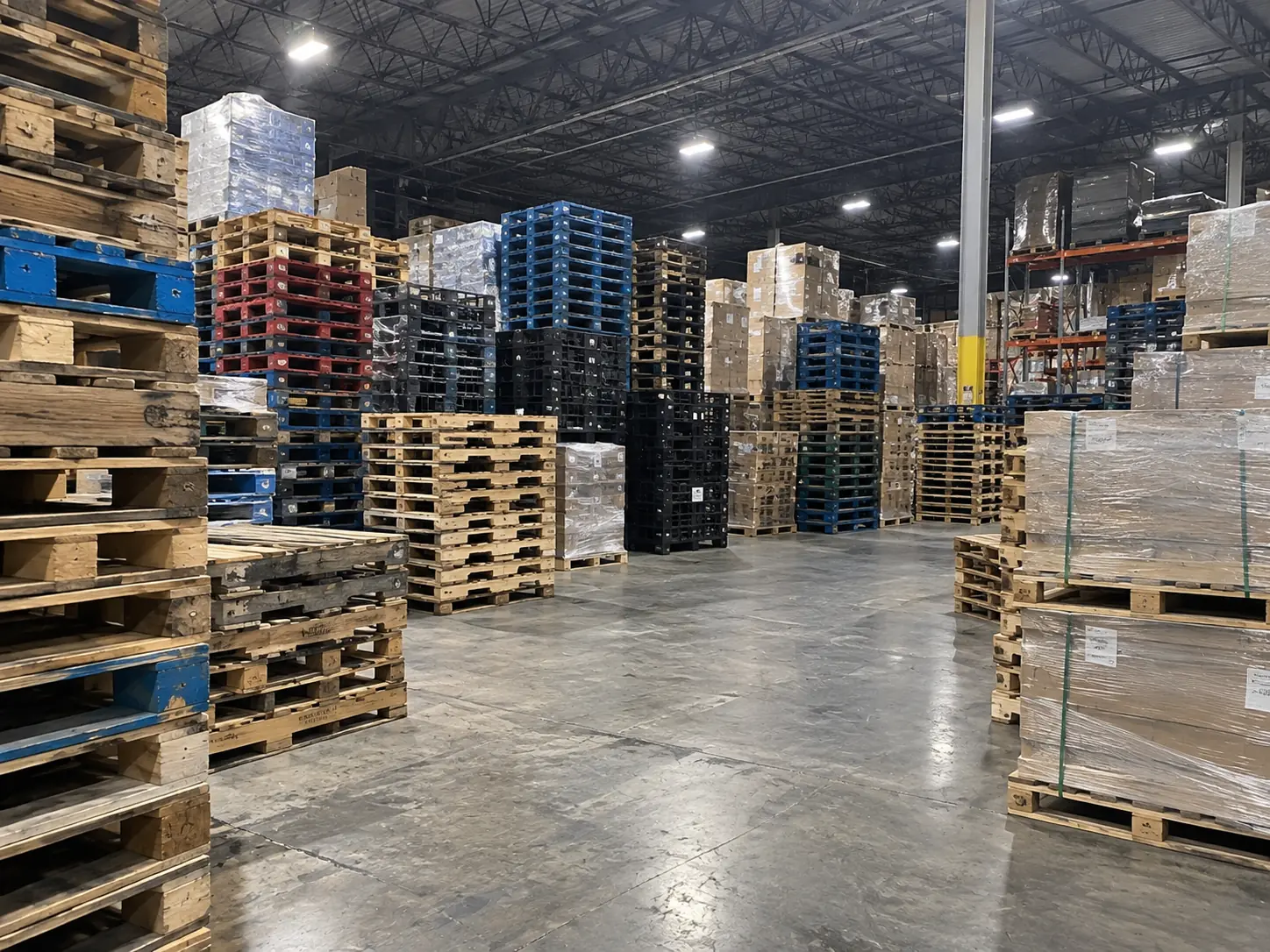
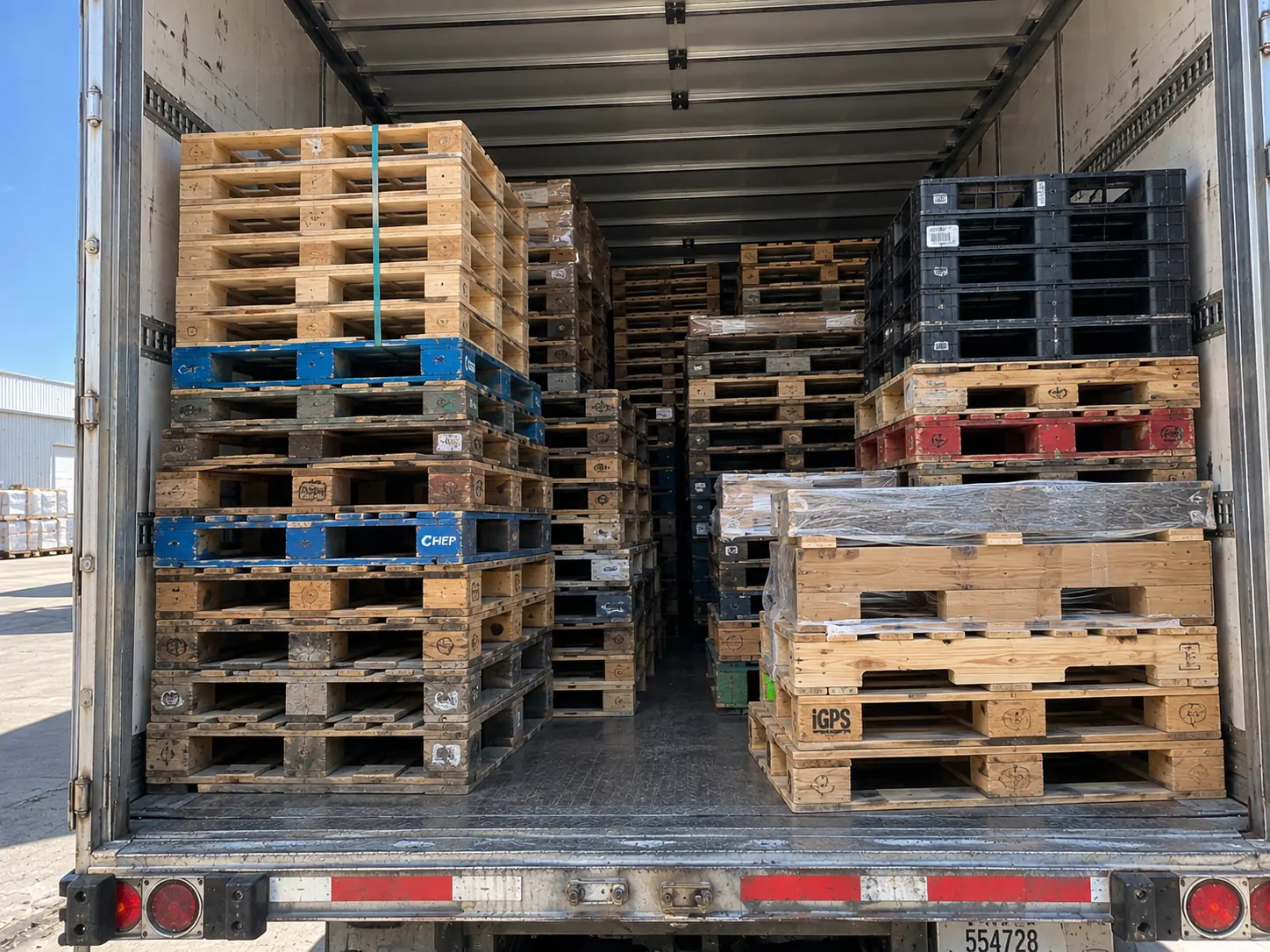
The load is a system
It is tempting to think of a pallet as the thing that carries the product. It is more accurate to think of the pallet, the product and the containment as one structure, where each element contributes stiffness. Remove the containment and the structure is a stack of loose boxes resting on a deck, held together by friction and optimism.
This matters because the failure modes look identical from the outside. A load that arrives leaning, a load with crushed bottom-layer corners, a load that has shifted on the deck — all three get reported as pallet problems and only one of them usually is.
Containment force is the number that matters
Containment force is the pressure the film applies to the load, measured in pounds. It is a function of film pre-stretch, wrap force setting, number of revolutions and film gauge — and the first two matter far more than the last. Buying thicker film to fix a stability problem is the packaging equivalent of buying a better pallet grade to fix a span problem: expensive, visible, and aimed at the wrong variable.
| Load type | Typical containment force target | Common failure |
|---|---|---|
| Light, stable cases (paper goods) | 2–4 lb | Over-wrapping, crushing the top layer |
| Standard mixed cases | 5–8 lb | Too few revolutions at the top |
| Heavy, dense product (canned, liquid) | 8–12 lb | Insufficient force; load shifts on the deck |
| Unstable or irregular | 10–15 lb plus corner board | No corner board — film cuts into the product |
The wrap has to reach the pallet
The single most common wrapping defect we see is film that stops at the bottom case layer. The load is now a tightly bound block sitting loose on a deck. Every acceleration, brake and corner slides it a little further, and by the time it arrives the block is overhanging one edge — which then crushes on the next stack.
The film needs at least two full revolutions that capture the top deck boards of the pallet itself, ideally with a roped or cabled band at the base for grip. On automatic wrappers this is a setting. On hand wrapping it is a habit, and it is worth checking on a Friday afternoon rather than a Monday morning.
And it still will not fix overhang
Containment holds a load together. It does not create support where there is none. Product hanging past the deck edge has no deck beneath it, and in a stack it transfers its weight onto the case corners of the layer below — costing roughly 30 percent of stacking strength no matter how well it is wrapped. If your load overhangs, the answer is a different footprint, not more film.
Appendix: the data behind this
Every piece on this site closes with the slice of our operating record that bears on what it argues. The full record is published at /resources/operating-record.
Derating factors, including the unwrapped penalty
Note the stretch wrap line. The film is a structural member of the unit load, and losing it costs more than most people would guess.
| Condition | Effect | Why it happens |
|---|---|---|
| Load overhangs the deck edge | −30% unit-load stacking strength | Case corners lose their support and transfer load into the layer below. |
| Moisture content above 25% | −15 to −20% strength | Wet cell walls deflect further under the same load. |
| Racked storage beyond 90 days | −25% (creep allowance) | Permanent, progressive deflection under sustained load. |
| Concentrated point load | −20 to −40% | Depends entirely on whether the point sits over a stringer or over a gap. |
| Companion-repaired stringer | −10 to −20% bending | The crack is bridged, not healed. Fine on a floor; not in a rack. |
| Fork entry through the notches | −30 to −40% in that direction | Material removed at the point of highest bending stress. |
| Unit load not stretch-wrapped | −10 to −25% stack stability | The film is a structural member. Most people do not think of it that way. |
| Storage below freezing | Stiffness up, impact resistance down | Cold wood fractures where warm wood would bruise. |