Why odd-size pallets do not have to cost odd-size money
In short
Non-standard footprints are expensive when they are milled from new lumber, because you are paying for a short production run of a low-volume product. Remanufacturing changes the input: recovered stringers and boards, trimmed back to sound wood and rebuilt on a fixed jig. The result is structurally a new pallet made from old wood, typically 10 to 25 percent above a recycled 48×40 rather than double it.
Talk to us about this
If this piece describes a problem you actually have, describe it back to us in the message field. You will get a written answer from a person within one business day.
Why odd sizes are normally expensive
A new-build supplier making a 42×42 has to buy lumber, set up for a short run, and amortise that setup across a small quantity. Standard footprints run continuously; odd ones interrupt. The premium is real and it is not a markup — it is genuinely what a short run costs.
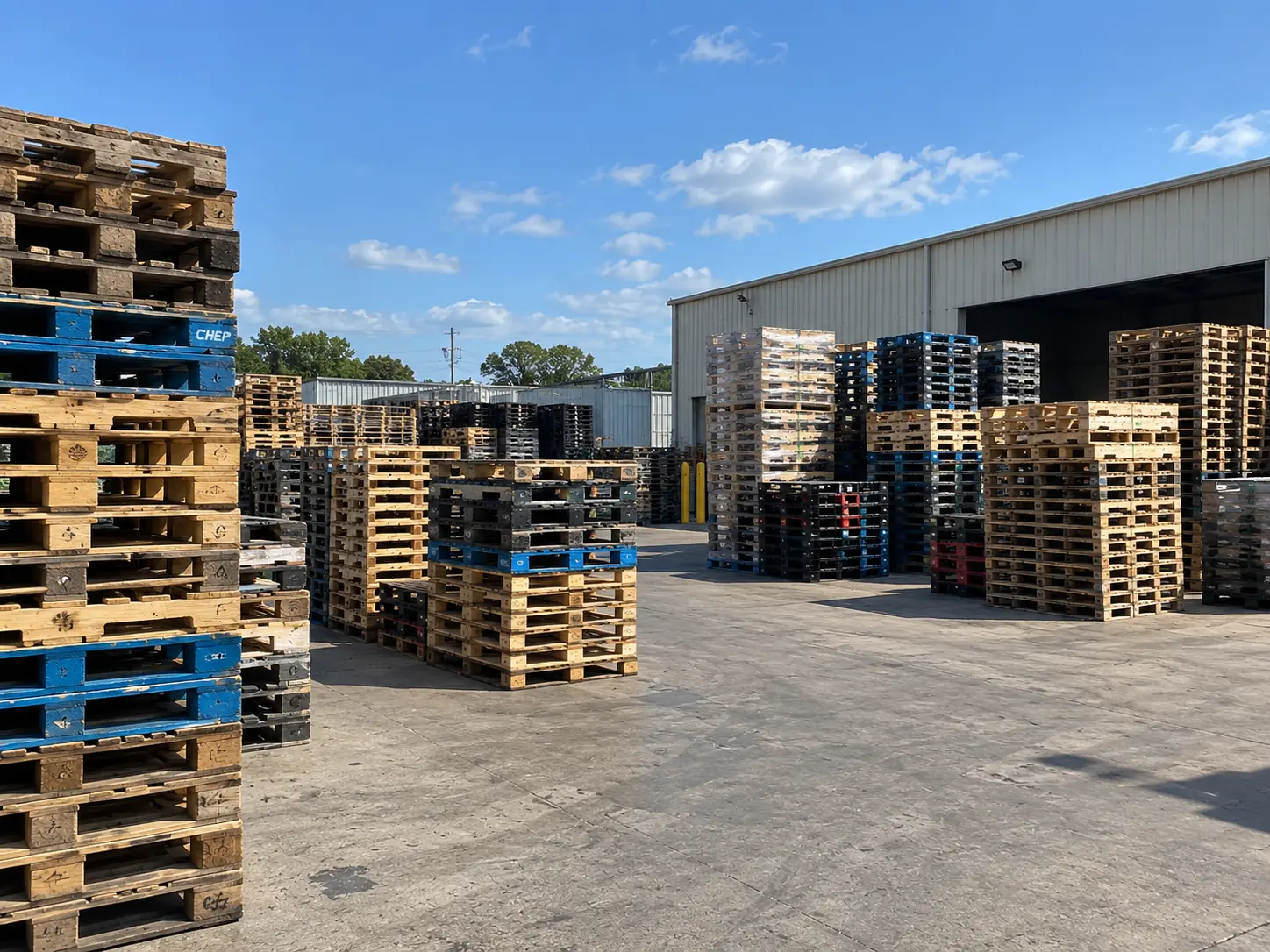
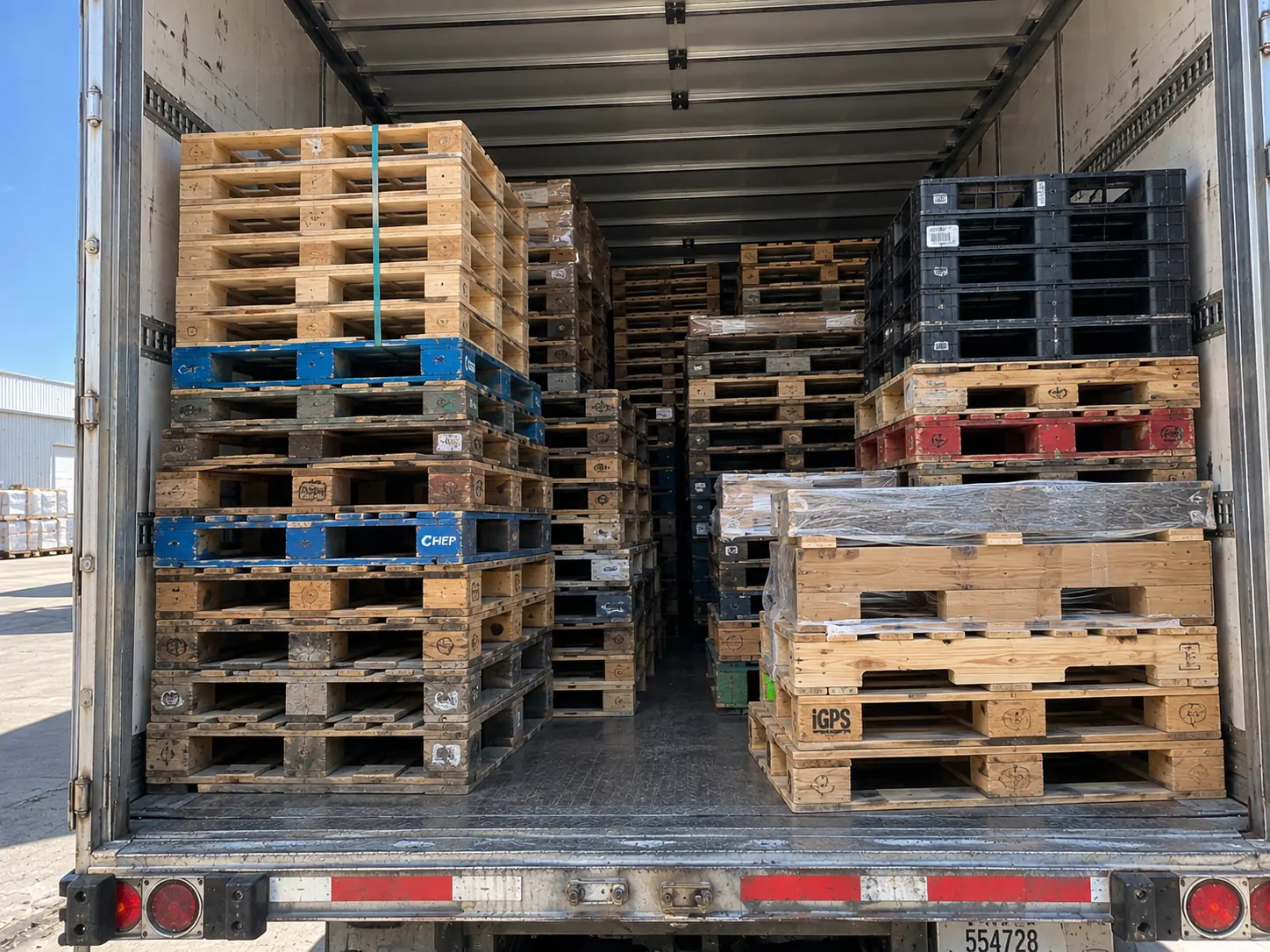
The recovered market does not help much either, because odd-size cores are scarce by definition. There simply are not many 42×42s in circulation to collect, and the ones that exist are usually still in service.
What remanufacturing actually is
- Teardown
A destroyed pallet goes onto the dismantling line. Stringers and boards are separated and de-nailed, with magnetic separation catching the fasteners.
- Trim to sound wood
Boards and stringers are cut back past the damage. A 48-inch stringer that failed at one end yields a clean 42-inch member — this is the step that makes the economics work.
- Sort by length and thickness
Recovered components are stacked by dimension, which is what lets a jig be loaded quickly rather than hunted through a pile.
- Build on a fixed jig
Assembled to the target footprint with a documented fastener schedule identical to a new build. The jig is what holds dimension.
- Grade and band
Graded against the same criteria as anything else leaving the yard, with a calculated load rating for the actual build.
The result is, structurally, a new pallet made from old wood. It carries a calculated rating, it holds tolerance because the jig does, and it costs a fraction of a milled build because the lumber is already in the building and already paid for.
Which sizes this works for
| Target size | Yielded from | Notes |
|---|---|---|
| 42 × 42 | 48-in stringers trimmed | The classic case — very efficient |
| 36 × 36 | 48-in stringers trimmed | Excellent yield; beverage demand keeps the jig busy |
| 48 × 45 | Full 48-in stringers, narrower deck | Automotive standard; runs constantly |
| 40 × 40 | 48-in stringers trimmed | Dairy and beverage |
| 32 × 30 | Short offcuts | Retail display; uses wood that would otherwise be fibre |
| 48 × 48 | Needs full-length stringers | Less yield advantage; often better as new or straight recycled |
Appendix: the data behind this
Every piece on this site closes with the slice of our operating record that bears on what it argues. The full record is published at /resources/operating-record.
Footprint composition, and what it means for price
Everything below 48 × 40 in this table is remanufacture territory: a damaged 48-inch stringer trims to a clean shorter member, which is what keeps odd sizes near standard pricing.
- 48 × 40 GMA71.3%
The backbone. Everything else is a deviation from it for a reason.
- 48 × 48 square6.1%
Drums and bulk bags. Rising year on year with battery and energy freight.
- 42 × 42 drum3.8%
Chemical and paint. Recovered supply thin; mostly remanufactured.
- 48 × 45 automotive3.4%
Concentrated almost entirely in our Detroit and Bowling Green lanes.
- 36 × 36 beverage2.9%
Seasonal — peaks June to September with our St. Louis and brewery accounts.
- 1200 × 800 Euro / EPAL2.6%
Arrives as import packaging and accumulates at importers, mainly Chicago.
- 1200 × 1000 ISO 21.9%
Asia-sourced freight. Prime remanufacture feedstock for 42 × 42.
- 40 × 48 reversed GMA1.4%
Stringers on the 40-inch axis. Frequently mis-ordered as a 48 × 40.
- Other / non-standard6.6%
Roughly forty further footprints across the year, none above 0.9%.