The economics of on-site repair, worked through properly
In short
On-site repair places a crew, benches and board stock inside your building so damaged pallets never ship anywhere. The usual objection is scale, but the break-even is typically 1,200 to 1,800 damaged units a month rather than the five-figure volumes people assume — because the comparison has to include freight on broken wood in both directions, dock labour to load it, and the floor space the damaged pile occupies.
Talk to us about this
If this piece describes a problem you actually have, describe it back to us in the message field. You will get a written answer from a person within one business day.
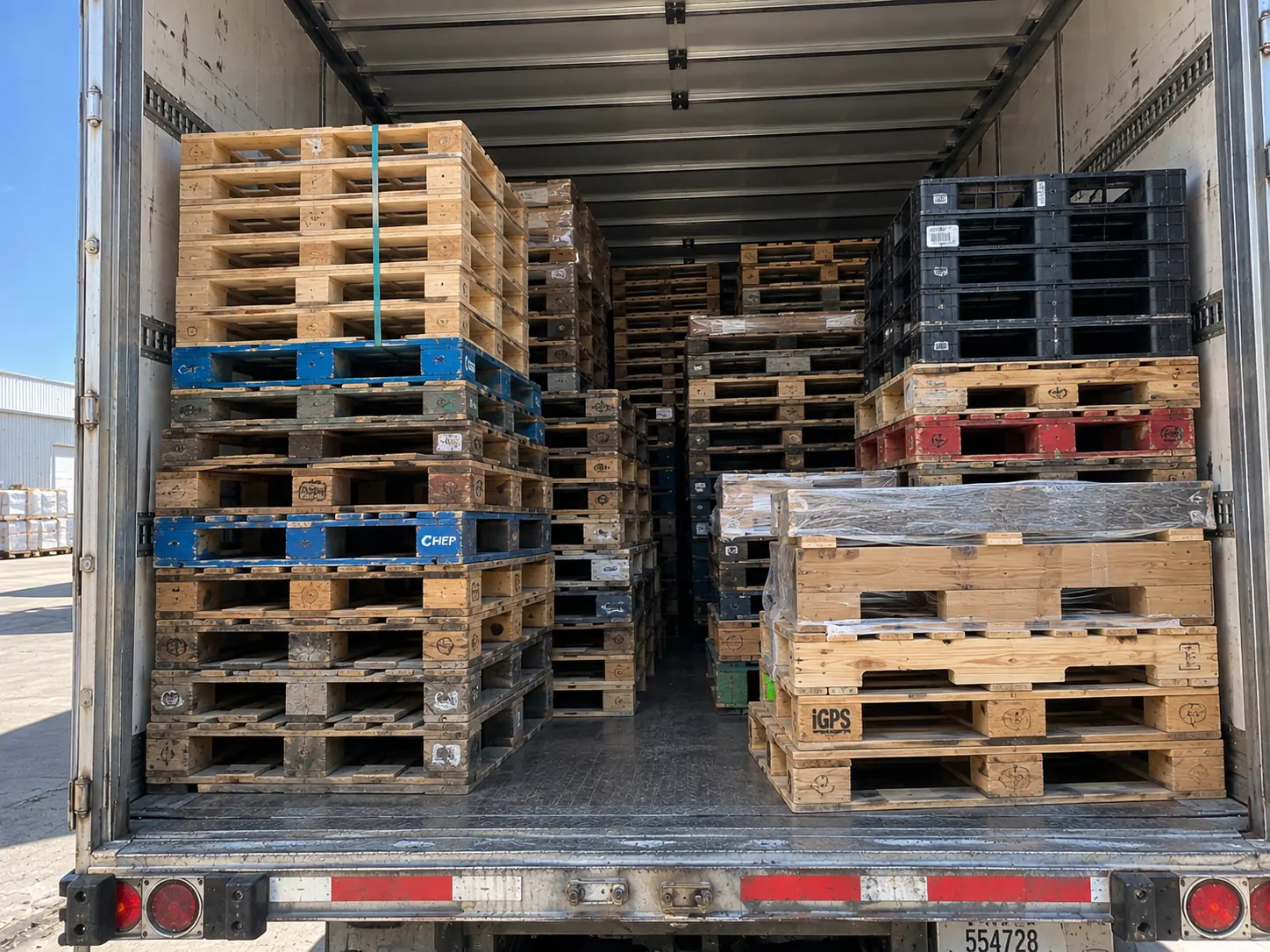
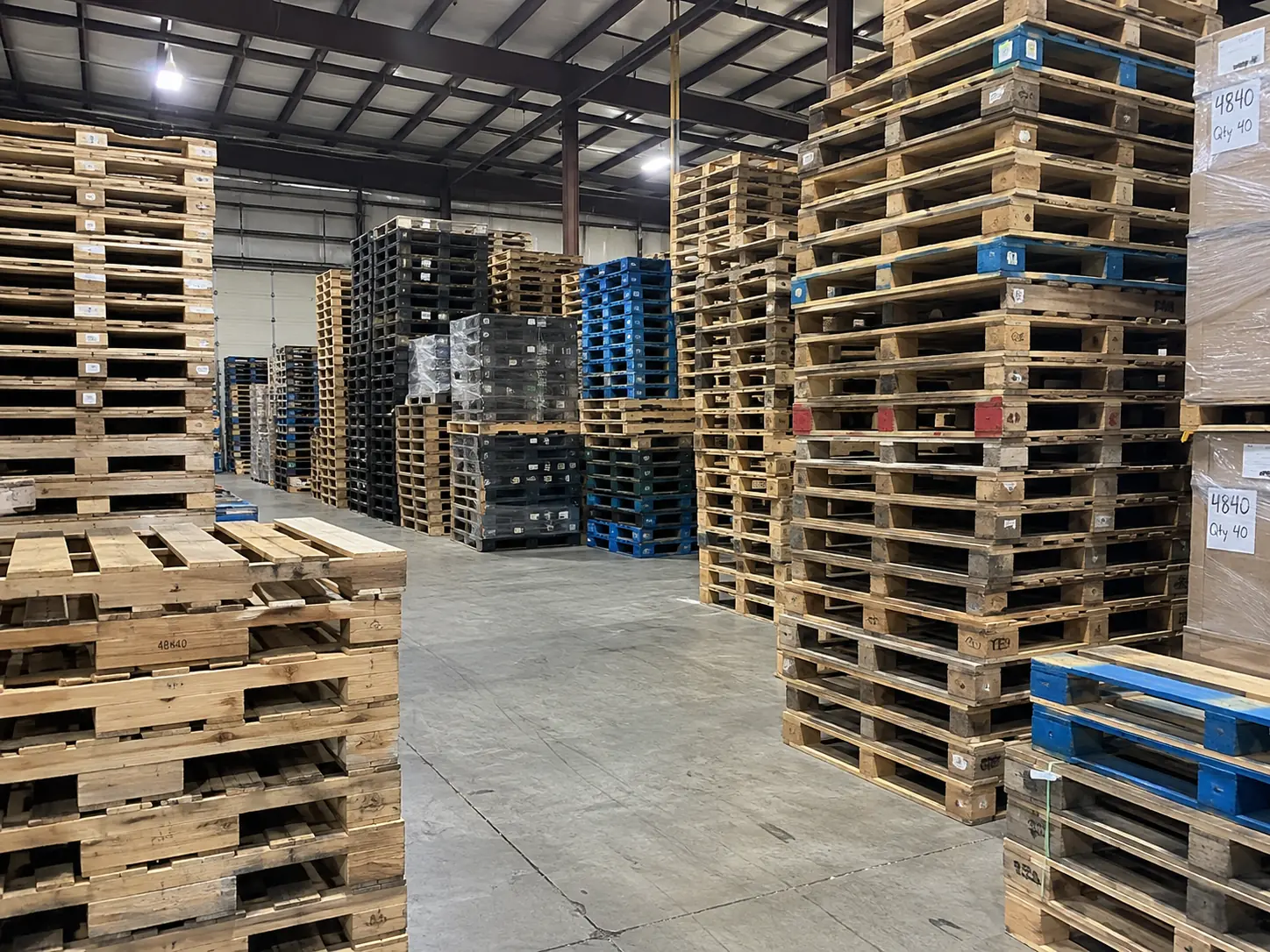
The comparison everybody makes, and why it is wrong
The usual analysis compares the cost of an on-site crew against the per-unit repair price from a yard. On that basis the crew looks expensive until volumes are enormous, and the conversation ends.
But that comparison omits everything that happens around the repair. Broken pallets have to be accumulated, which takes floor space. They have to be loaded, which takes a forklift and an operator. They have to be trucked to the yard, which is freight on low-value wood. Repaired units have to be trucked back, which is freight again. And the whole cycle takes days, which means carrying more inventory to cover it.
Worked through, at 1,500 units a month
| Cost element | Ship out and back | On-site crew |
|---|---|---|
| Repair labour | In the unit price | Direct crew cost |
| Freight, damaged units outbound | ~3 trailer loads/month | None |
| Freight, repaired units inbound | ~3 trailer loads/month | None |
| Board stock delivery | None | ~1 load/month |
| Dock labour to load and receive | ~6 movements/month | None |
| Floor space for damaged accumulation | Held for days at a time | Cleared continuously |
| Cycle time | 3–7 days | Same shift |
| Inventory carried to cover the cycle | Meaningful | Near zero |
Six trailer movements a month replaced by one is the line that moves the break-even. Wood is heavy, bulky and low in value per cubic foot, which makes freight the dominant cost in almost every pallet transaction — and broken pallets are the worst possible thing to put on a truck, because you are paying full freight on the lowest-value wood in the system.
How it actually runs
- Two to four technicians in a bay you designate, working your shift pattern including second and third shift
- Our benches, pneumatic nailers, compressors and dismantling tools
- Harvested hardwood board stock delivered weekly from Evendale
- Your damaged pallets never leave the building — repaired units go straight back to the floor
- Background-checked staff, full insurance, your site safety induction observed
- Monthly throughput and grade reporting identical to our yard reporting
Appendix: the data behind this
Every piece on this site closes with the slice of our operating record that bears on what it argues. The full record is published at /resources/operating-record.
Repair mix and bench minutes
Bench minutes are the number the break-even model turns on. Nearly half of all repairs take about two minutes — which is why shipping broken wood anywhere is the expensive part.
| Repair | Share | Bench minutes | Grade after | Racking |
|---|---|---|---|---|
| Deck board replacement (1–2 boards) | 48.6% | 2.1 | A / #1 | Approved |
| Deck board replacement (3+ boards) | 17.2% | 4.4 | B / #1 | Approved |
| Stringer plug | 14.9% | 3.8 | B / #2 | Case by case |
| Companion stringer | 9.3% | 3.2 | B / #2 | Not recommended |
| Bottom deck / chamfer repair | 5.7% | 2.6 | B / #1 | Approved |
| Full teardown and jig rebuild | 4.3% | 9.7 | Per build spec | Per spec |