Export crating for machinery: a checklist that has saved containers
In short
Crating machinery for export is a structural problem, a phytosanitary problem and a handling problem at once. The base carries a concentrated point load; the lift points determine whether it can be moved at destination; the moisture control determines whether it arrives corroded; and the wood and the marking determine whether customs releases it at all.
Talk to us about this
If this piece describes a problem you actually have, describe it back to us in the message field. You will get a written answer from a person within one business day.
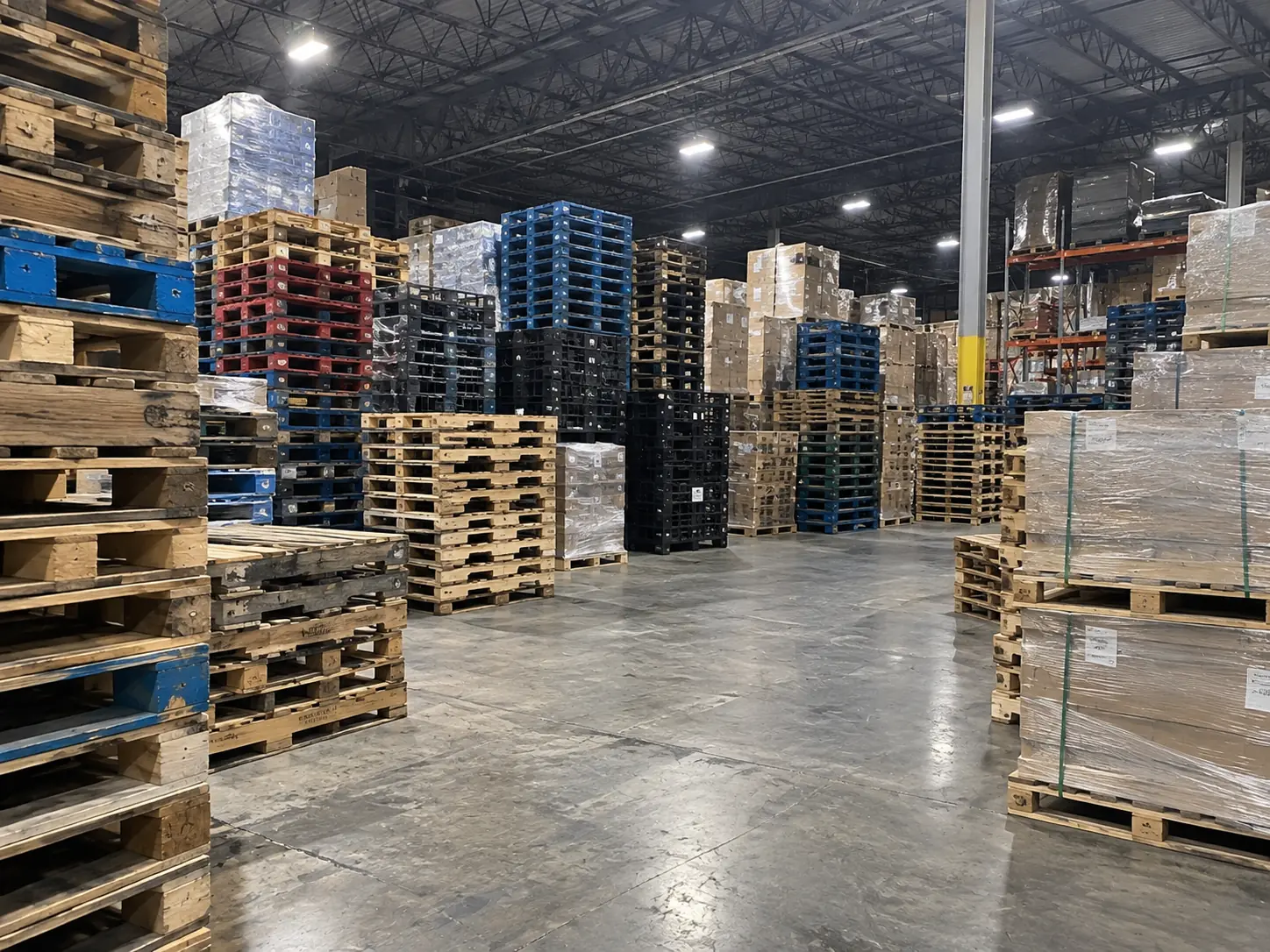
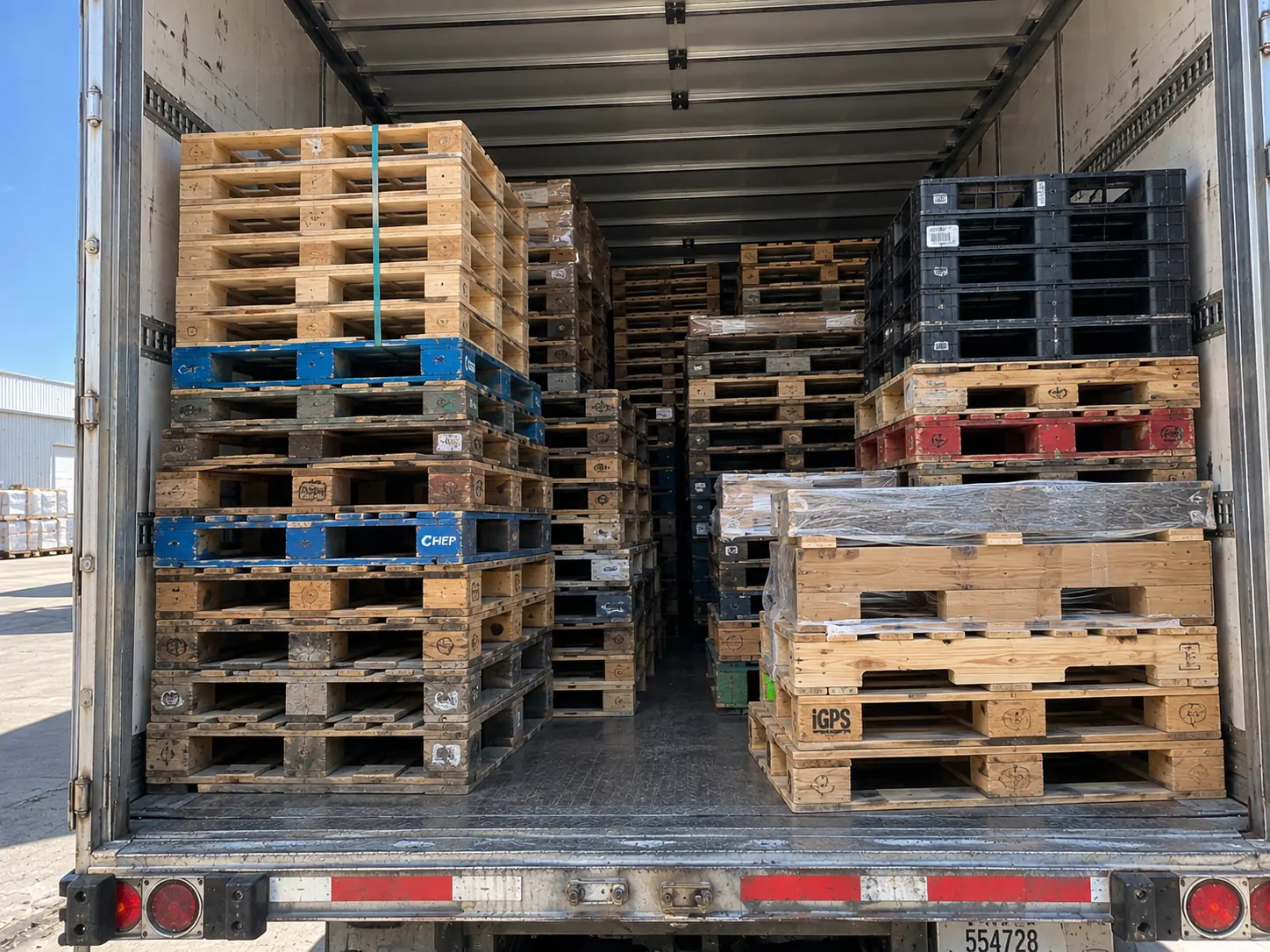
The base carries everything
Machinery does not distribute its weight. It sits on feet, a frame or a casting, and it concentrates load onto small areas. A base designed for the overall footprint rather than the actual contact points will have runners in the wrong places, and the deck will fail at the first rough handling.
- Get the mounting point locations and loads, not just the gross weight
- Place runners under the load paths, not evenly across the base
- Doubled runners and cross-bracing for anything above roughly 4,000 lb
- Bolt the machine to the base where possible — blocking alone shifts in transit
- Design for the destination's handling equipment, which may be a crane rather than a forklift
How it will be moved at the other end
This is the question that most often has not been asked. A crate built for forklift handling arriving at a site with only a crane is an expensive problem, and so is the reverse. Specify explicitly, and mark the crate accordingly.
| Handling method | Design requirement | Marking |
|---|---|---|
| Forklift, from two sides | Fork pockets sized and positioned for the load centre | Fork entry arrows on both faces |
| Forklift, four-way | Block or engineered base with clear openings all round | Fork entry arrows all four faces |
| Crane, sling | Sling points reinforced, sling angle marked | Sling position bands, centre of gravity mark |
| Crane, lifting eyes | Steel lifting points through-bolted to the frame | Rated capacity marked at each point |
| Both | All of the above | Both sets of marks — and a centre of gravity mark |
Mark the centre of gravity. It costs nothing, it takes a stencil, and it prevents the single most dangerous handling error at the destination.
Moisture on an ocean lane
A sealed container crossing an ocean goes through repeated temperature cycles, and every cycle condenses moisture on the coldest surface inside. On a machined steel surface that is corrosion, and it arrives looking like a manufacturing defect.
- Ship dry timber. Wet crate wood is a moisture source inside a sealed box for six weeks.
- Use a vapour barrier bag around the machine where corrosion matters.
- Include desiccant sized to the enclosed volume and the transit duration — the calculation is standard and frequently skipped.
- Apply a volatile corrosion inhibitor to machined surfaces where appropriate.
- Include a humidity indicator card so the receiver can tell whether the protection held.
The compliance details that fail containers
- Every solid wood component over 6 mm must be heat treated and marked — including cleats, bracing, blocking and chocks
- Plywood, OSB and particleboard are exempt, which makes a plywood-sheathed cleated crate genuinely simpler to clear
- No bark anywhere. Check cleat edges, which is where it survives
- Marks visible on at least two opposite sides after the crate is loaded, not just after it is built
- Treatment records filed against the shipment reference and producible within the hour
- Destination requirements verified for this country and this commodity, not assumed from the last shipment
Appendix: the data behind this
Every piece on this site closes with the slice of our operating record that bears on what it argues. The full record is published at /resources/operating-record.
Kiln cycles for crate components
Cleats, bracing and blocking are in scope for ISPM-15 and they are the items most often missed. Their cycle times are on this table too.
| Species | Section | Starting MC | Typical cycle | Note |
|---|---|---|---|---|
| Yellow poplar | 1.5 in stringer | 14% | 4.5 – 5.5 hrs | Fastest common stringer stock we treat. |
| Southern yellow pine | 1.5 in stringer | 15% | 5.0 – 6.5 hrs | Resin can extend hold time in a heavily loaded chamber. |
| Red oak | 1.5 in stringer | 16% | 6.5 – 8.5 hrs | Dense and slow. The species that sets our scheduling. |
| Hard maple | 1.5 in stringer | 15% | 7.0 – 9.0 hrs | Longest routine cycle on our board. |
| Mixed hardwood | 3.5 in block | 17% | 8.5 – 10.5 hrs | Block pallets probe in the block, never the deck. |
| Any | Above 19% MC | 20%+ | +2.0 – 3.5 hrs | Wet stock costs kiln hours. This is why we ship dry. |