Reverse logistics for pallets, without a reverse logistics team
In short
Pallet recovery fails on ownership, not on economics. The answer for operations without dedicated headcount is to remove the decision entirely: a standing route on a fixed day, a drop trailer that gets swapped when full, a credit arrangement that nets core value against purchases, or a shared route day with a neighbouring business. All four work without anybody adding a task to their week.
Talk to us about this
If this piece describes a problem you actually have, describe it back to us in the message field. You will get a written answer from a person within one business day.
The problem is ownership, not economics
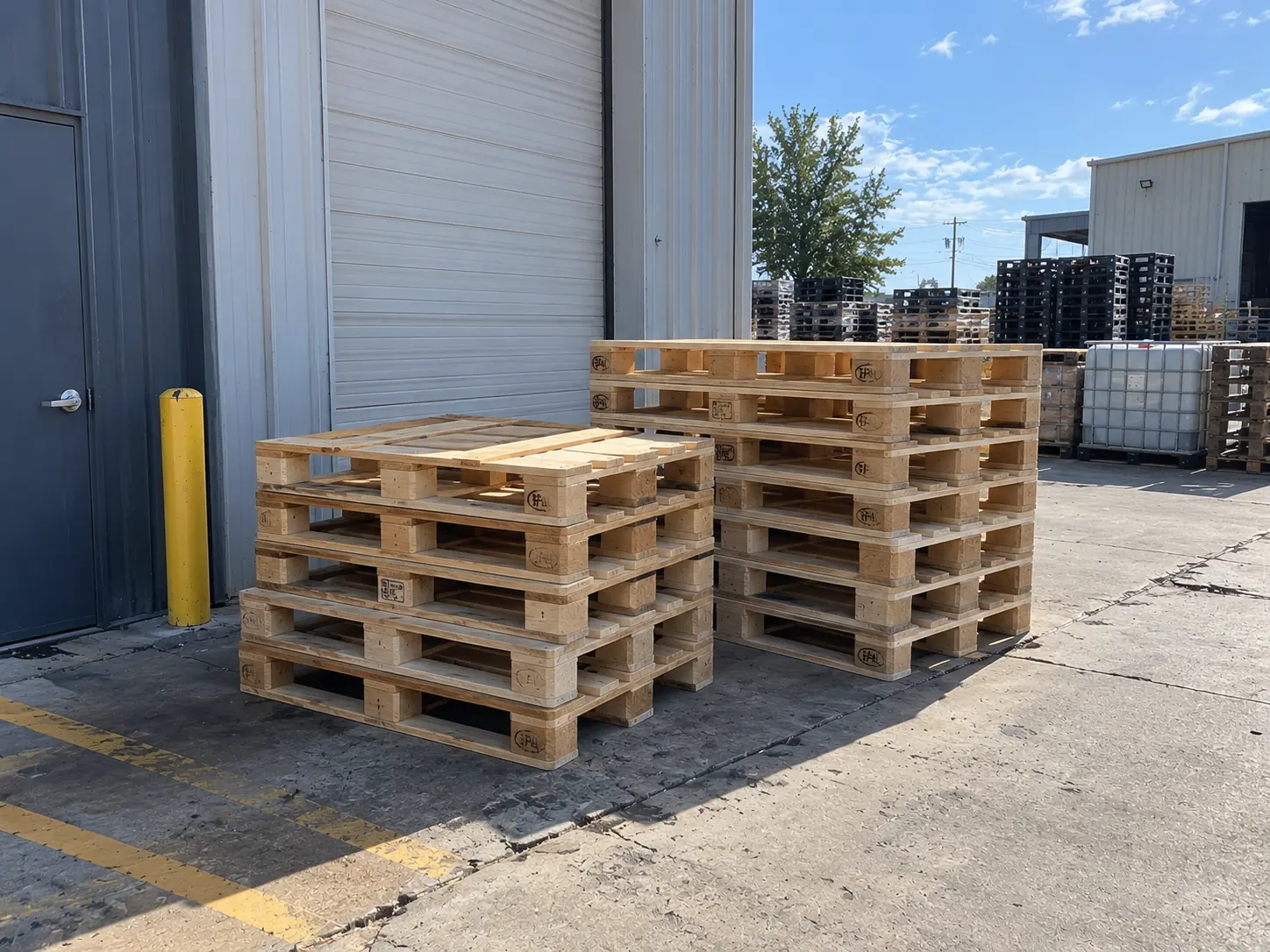
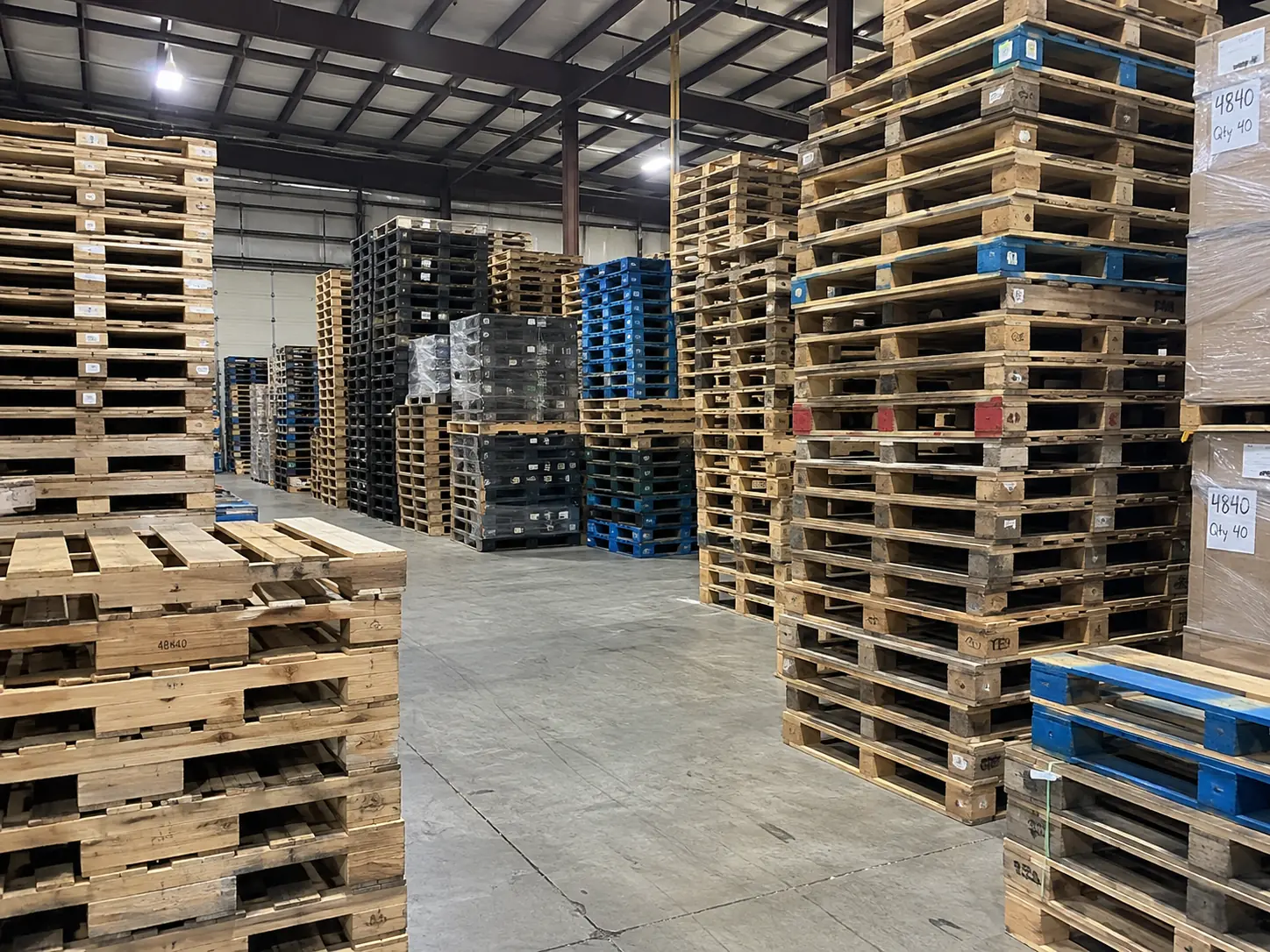
Ask why a pallet pile exists and you will rarely hear that somebody evaluated recovery and decided against it. You will hear that it is not anybody's job. Receiving thinks it is shipping's. Shipping thinks it is facilities'. Facilities thinks it is procurement's. The pile grows because a decision is required each time and no one is accountable for making it.
Every arrangement below works by eliminating the decision rather than by assigning it to somebody who does not have time.
Four arrangements that need no headcount
- A standing route day
A fixed day each week or fortnight. The truck comes whether anybody thought about it or not. Your team knows when; ours knows what to expect. This is the lowest-friction option once volume is even roughly predictable.
- A drop trailer
We park a 53-ft trailer at your dock. Your team loads it as pallets accumulate — which is the same amount of handling they already do, just into a trailer instead of onto a pile. We swap it when it fills. A weekly task becomes a monthly one.
- Net-of-service credit
If you also buy pallets, core value is applied directly against your purchase invoice. Nobody has to raise a sales order, chase a payment or explain a new revenue line to finance. It appears as a reduction on an invoice you already receive.
- A shared route day
If a neighbouring business also generates pallets, sharing a route day splits the trip cost. We arrange this more often than people expect, particularly in industrial parks where three or four tenants each have a pile nobody owns.
The first step is smaller than you think
Photograph the pile from two angles. Count one stack and multiply. Send both. That is the entire onboarding burden for every arrangement above, and it takes about four minutes.
From there we tell you what the load is worth, what equipment will fit your site, and which of the four arrangements suits your volume. If the honest answer is that you are too small or too remote to be worth a dedicated trip, we say that too — and usually we can still add you to an existing route in your area.
Appendix: the data behind this
Every piece on this site closes with the slice of our operating record that bears on what it argues. The full record is published at /resources/operating-record.
Equipment, and what each arrangement needs
The drop trailer row is the one that removes work rather than relocating it — no live load, no apron manoeuvre, no coordination.
| Equipment | Empty stacked | Floor positions | Apron | Right for |
|---|---|---|---|---|
| 53-ft dry van | ~560 | 28 | 110–130 ft | Dock-height volume, dry cores, banded stock |
| 53-ft flatbed + straps | ~480 | 26 | 90–120 ft | Outdoor piles, wet stock, mixed loads, oversize |
| 48-ft dry van | ~500 | 24 | 95–115 ft | Older sites with shorter aprons |
| 26-ft box truck + liftgate | ~140 | 12 | 45–70 ft | Urban docks, alleys, retail, no forklift on site |
| Drop trailer (customer loaded) | ~560 | 28 | Parking only ft | Irregular accumulation, weather protection, no live load |
| Walking floor | — | — | 100–130 ft | Bulk mulch, bedding, hog fuel by the cubic yard |