A short history of the 48×40, and why it is still here
In short
The 48×40 footprint exists because two of them fit across a North American trailer with loading clearance, because 40 inches matches the grocery aisle and display module that grew up around post-war retail, and because wartime materials handling established the pallet as a unit in the first place. It persists because the infrastructure built around it — racking, conveyors, trailers, forklifts — now costs far more to change than the pallet does.
Talk to us about this
If this piece describes a problem you actually have, describe it back to us in the message field. You will get a written answer from a person within one business day.
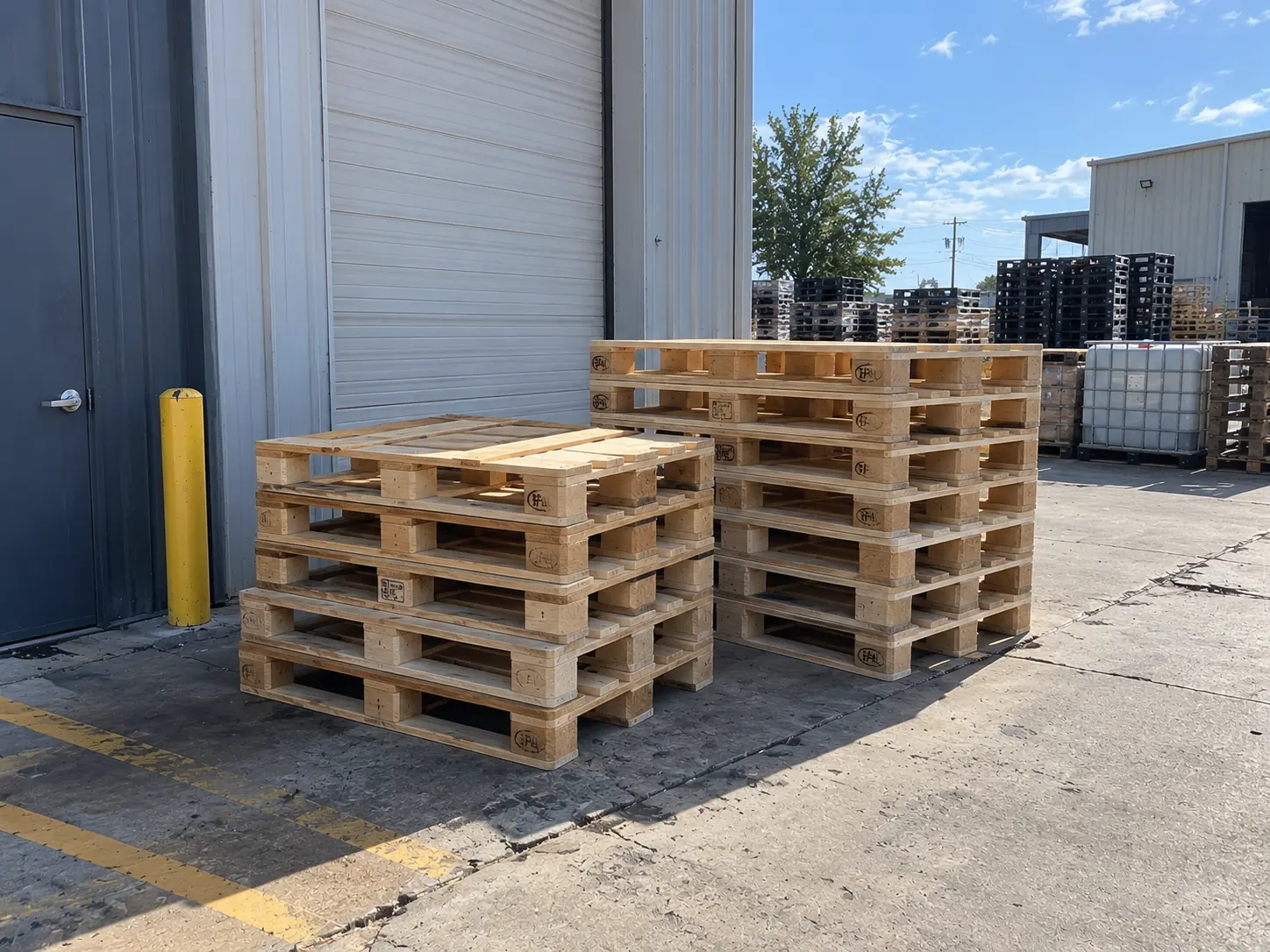
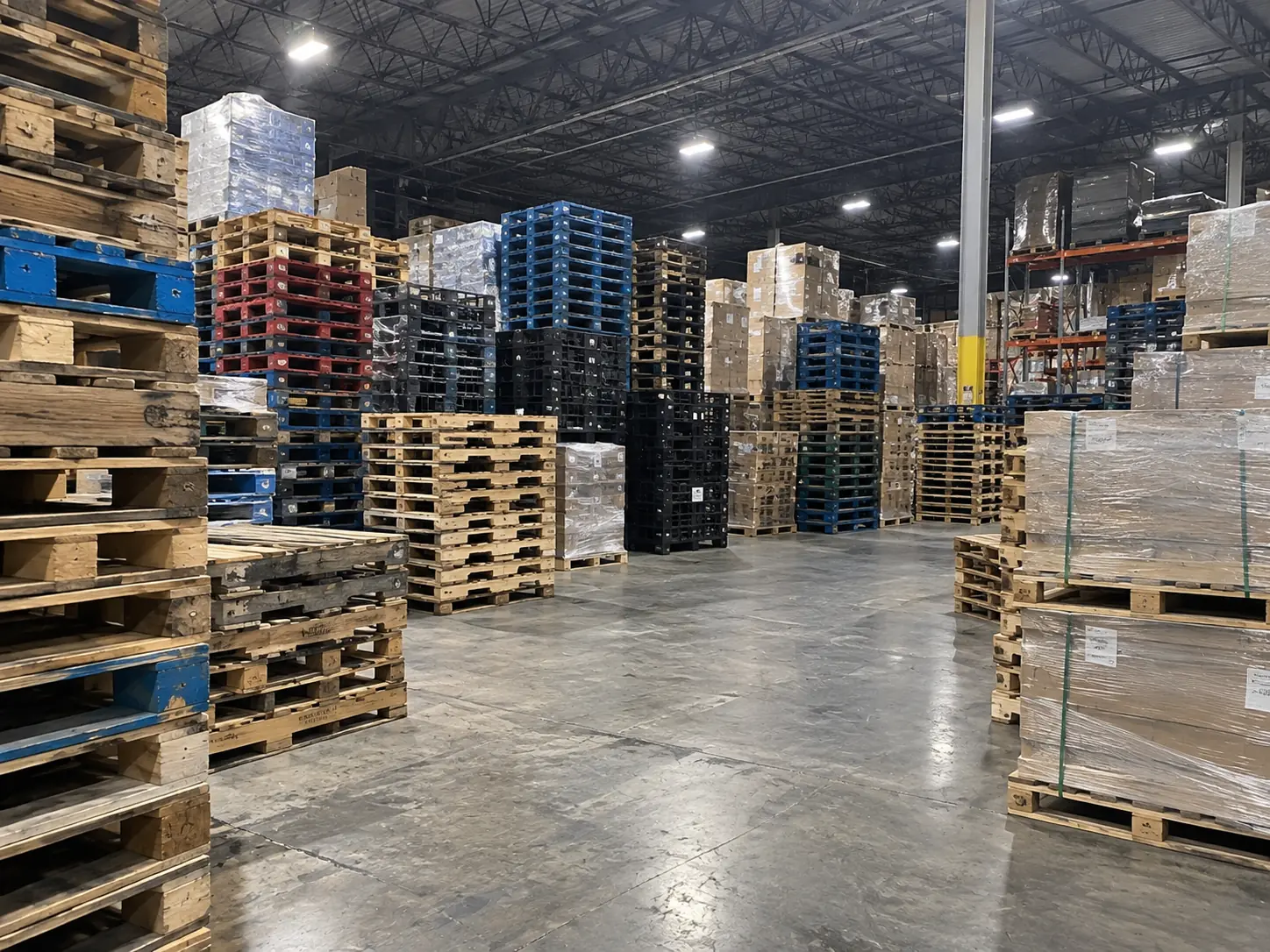
Before the pallet, there was the box
Freight moved as individual pieces, handled by people, for most of industrial history. A rail car was unloaded box by box. The forklift and the pallet together changed that, and the change was accelerated enormously by wartime logistics, where the ability to move a ton of materiel as a single unit was worth an enormous amount.
What emerged from that period was not a standard size but a standard idea: the unit load. Sizes remained chaotic for a long time afterward, with every industry and frequently every company running its own footprint.
Three constraints that happened to agree
- Trailer width
A North American trailer has an interior width of roughly 98 to 100 inches. Two 48-inch pallets side by side occupy 96 inches, leaving clearance to load without scraping the walls. Anything wider wastes the second position; anything much narrower wastes floor.
- Retail module
Post-war grocery retail standardised around aisle widths and shelf depths that made a 40-inch display footprint natural. A pallet that could go straight onto a shop floor as a display unit was worth more than one that had to be broken down.
- Handling
Forklift tine spacing, pallet jack geometry and the practical reach of a person all sit comfortably around these dimensions. A 60-inch deep pallet is awkward to reach across; a 30-inch one wastes a trip.
The Grocery Manufacturers Association formalised the specification afterward, which is why the pallet carries that name. But formalisation followed practice. The size was already winning because it fitted the three constraints simultaneously, and no other size did.
Why it has not been replaced
Better footprints exist for specific purposes, and this site has pages about several of them. The 48×48 handles drums and bulk bags better. The 1200×800 Euro is more efficient in European trucks. The 36×36 fits through doors that a 48-inch pallet cannot. Each is superior in its domain.
None of them will displace the 48×40 in North America, because the pallet is now the cheapest component in a system built around it. Racking beam spacing, conveyor widths, trailer loading patterns, forklift attachments, AS/RS bay dimensions, retail display fixtures and warehouse floor layouts were all designed to this footprint. Changing the pallet means changing all of that, and the pallet is the only part of it that costs tens of dollars rather than millions.
Appendix: the data behind this
Every piece on this site closes with the slice of our operating record that bears on what it argues. The full record is published at /resources/operating-record.
Why the dimensions are what they are
Twenty-eight positions per 53-ft trailer floor, two across with loading clearance. Read the first row and the historical argument becomes arithmetic.
| Footprint | 53-ft van | 48-ft van | 40-ft container | 20-ft container | 45-ft HC | Empty, 53-ft |
|---|---|---|---|---|---|---|
| 48 × 40 | 28 | 24 | 20 | 10 | 24 | ~560 |
| 48 × 48 | 24 | 22 | 18 | 9 | 22 | ~480 |
| 42 × 42 | 26 | 24 | 20 | 10 | 24 | ~600 |
| 36 × 36 | 39 | 33 | 30 | 14 | 34 | ~700 |
| 48 × 45 | 26 | 22 | 18 | 9 | 22 | ~520 |
| 1200 × 800 | 30 | 26 | 25 | 11 | 28 | ~520 |
| 1200 × 1000 | 24 | 22 | 20 | 10 | 24 | ~460 |